

On the surface, cast iron and cast steel look nearly identical. Both are ferrous metals. Both are produced through casting. Both are workhorses of industrial manufacturing.Although the two appear very similar on the surface, they have essential differences in mechanical properties, cost structure, and manufacturing characteristics. It is these core factors that will directly determine whether your finished components can perform flawlessly in real-world applications.
The Fundamental Difference Between Cast Iron and Cast Steel
The single most important difference between cast iron and cast steel comes down to carbon content.

Cast iron
Cast iron contains more than 2% carbon, typically between 2% and 4%.
This elevated carbon level causes the carbon to precipitate out as graphite during solidification, and it is precisely this graphite structure that gives cast iron its remarkable fluidity, machinability, and vibration-damping characteristics.
Cast steel
Cast steel, by contrast, contains less than 2% carbon.
With carbon remaining dissolved in the iron matrix rather than forming graphite, the resulting material is denser, tougher, and significantly stronger under tensile loads.
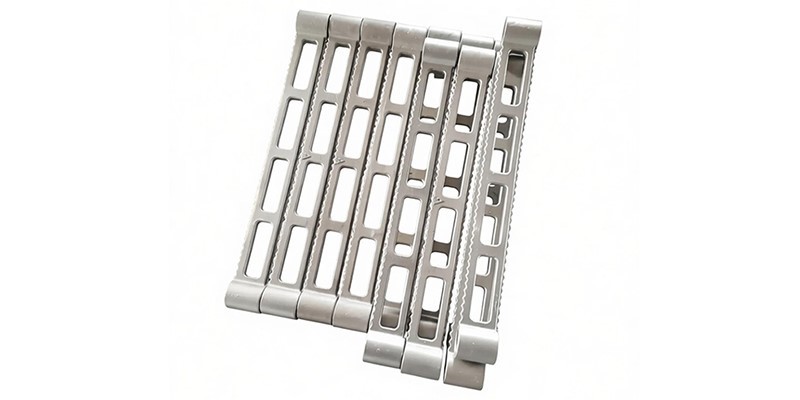
Cast Iron
Key Advantages of Cast Iron
Cost Effectiveness
Cast iron's lower melting point reduces energy consumption during smelting, raw material costs are inherently lower than steel, and its excellent fluidity minimizes reject rates and rework. For high-volume production runs, the cost advantage over cast steel typically reaches 20%–30%.
Excellent Machinability
The graphite particles distributed throughout cast iron's microstructure act as a natural lubricant during cutting operations. This dramatically reduces tool wear, shortens CNC cycle times, and makes it possible to achieve tight dimensional tolerances on complex geometries.
High Compressive Strength and Wear Resistance
Cast iron handles sustained compressive loads exceptionally well, with compressive strength reaching 150–400 MPa. Combined with its natural wear resistance, it performs reliably in high-friction, high-load environments over extended service lives.
Superior Vibration Damping
Cast iron can effectively absorb mechanical vibrations. The graphite matrix dissipates vibrational energy as heat and prevents resonance buildup
.
Main Types of Cast Iron
Not all cast iron is the same. There are two main types of cast iron in industrial customization services.
- Grey Iron is the widely used casting material. Its flake graphite structure delivers outstanding vibration damping, excellent machinability, and reliable dimensional stability. The ideal choice for machine bases, pump bodies, valve housings.
- The graphite in ductile iron consists of spherical nodules rather than flakes. The result is a material that combines cast iron's cost and machinability advantages with tensile strength and ductility approaching that of steel.
At Hansheng Automation, we specialize in both Grey Iron and Ductile Iron casting, delivering components with Level 5 dimensional accuracy backed by full CMM inspection on every batch.

Limitations of Cast Iron
Brittleness Under Impact Loading
Cast iron cannot deform plastically when subjected to sudden shock. Rather than bending to absorb energy, it fractures. It's unsuitable for application where unpredictable impact loads are part of the operating environment.
Lower Tensile Strength
With tensile strength typically ranging from 100–200 MPa, cast iron is significantly outperformed by cast steel under pulling or bending stress. It is not suitable for components subjected to high tensile stress or cyclic dynamic loads.
Poor Weldability
Cast iron's high carbon content makes it highly susceptible to thermal cracking during welding. Field repairs are difficult and unreliable.
Common Applications of Cast Iron
Cast Steel
Key Advantages of Cast Steel
Superior Tensile Strength
Cast steel dominates under tension. Standard carbon steel castings deliver tensile strength in the range of 400–600 MPa, two to four times that of grey iron. High-strength alloy steel castings can exceed 1,000 MPa.
Exceptional Impact and Toughness
Cast steel can absorb sudden shock loads without fracturing. Its low carbon content keeps the microstructure free of brittle graphite phases. It allows the material to deform plastically under impact rather than cracking.
Design and Metallurgical Flexibility
Cast steel's composition can be precisely engineered through alloying elements, e.g. manganese, chromium. By combining various heat treatment processes, engineers can control a material's hardness, toughness.

The Drawbacks of Cast Steel
Higher Production Costs
Cast steel has a significantly higher melting point than cast iron requires more energy per ton of output. It also shrinks more as it cools, requiring stricter process control to avoid internal defects, adding time, material, and cost to every production run.
Demanding Machinability
Higher-carbon steel grades increase tool wear and cutting resistance. Lower-carbon grades can become gummy during machining, extending cycle times and increasing tooling costs. Neither scenario is as clean or efficient as machining cast iron.
Poor Vibration Damping
Cast steel transmits vibration rather than dissipating it. In precision machinery and automation equipment, this can translate directly into accelerated component wear and reduced system accuracy over time.
Common Applications of Cast Steel
Cast Iron vs. Cast Steel
|
Property |
Cast Iron |
Cast Steel |
|
Carbon Content |
2.0%–4.0% |
Below 2.0% |
|
Melting Point |
~1,200°C |
~1,500°C |
|
Tensile Strength |
100–200 MPa |
400–600 MPa |
|
Compressive Strength |
150–400 MPa |
Moderate |
|
Impact Toughness |
Low |
High |
|
Vibration Damping |
Excellent |
Poor |
|
Machinability |
Excellent |
Moderate to difficult |
|
Weldability |
Poor |
Excellent |
|
Production Cost |
Lower |
Higher |
|
Casting Complexity |
Lower |
Higher |
|
Best For |
High-volume, complex, precision-machined parts |
High-stress, impact-loaded, structural parts |
How to Choose Between Cast Iron and Cast Steel for Your Project
Use the decision framework below to identify which path is right for your project.
Choose Cast Steel If
Your component must withstand sudden impact or shock loading, e.g. crane hooks, mining bucket teeth, heavy-duty structural brackets
The dominant stress mode is tensile or bending rather than compressive, e.g. think suspension components, load-bearing structural frames, or lifting hardware
Your part operates in extreme temperature environments, e.g. power generation or LNG equipment
The application involves pressure containment, e.g. valves, fittings, and pressure vessels
You need post-cast weldability for field assembly or repair
The component is large and low-volume
Choose Cast Iron If
Your component requires complex geometry with tight dimensional tolerances
The application demands vibration damping, e.g. machine tool bases, gearbox housings, automation equipment frames
You are running high-volume production
The load profile is primarily compressive, e.g. pump bodies, valve housings, hydraulic component casings, and engine blocks
Your part requires extensive post-cast precision machining
Cost efficiency is a primary project constraint
Still Unsure? Ask These Three Questions
If you are still evaluating whether iron or steel is the right material for your components, partnering with an experienced iron casting manufacturer in China early in the design phase can save significant cost and lead time through DFM (Design for Manufacturability) optimization.
Hansheng Automation: Your Trusted Partner for Precision Iron Castings
At Hansheng Automation, we provide end-to-end iron casting solutions built for B2B customers who cannot afford compromise on quality or lead time. We never sacrifice quality at any stage of the generation process.
Induction furnace melting with precise chemistry control
Custom mold and pattern development to your CAD specifications
5-axis CNC precision machining to Level 5 dimensional accuracy
Full CMM measurement on every outgoing batch
Whether your project calls for grey iron's cost efficiency or ductile iron's steel-like strength, our engineering team works from your CAD drawings to deliver components that are ready to install.
Ready to Start Your Casting Project?
Are you evaluating whether cast iron or cast steel is the right material for your next component? Send us your drawings today.
Our engineering team will provide a complimentary DFM (Design for Manufacturability) analysis and a competitive project quote, so you can move from material decision to production-ready parts with confidence.
FAQ
FAQ
Q: What is the main difference between cast iron and cast steel?
A: The fundamental difference is carbon content. Cast iron contains 2%–4% carbon, which creates a graphite structure responsible for its excellent machinability and vibration damping. Cast steel contains less than 2% carbon, resulting in a denser, tougher material with significantly higher tensile strength and impact resistance.
Q: Is cast iron cheaper than cast steel?
A: Yes, in most cases. Cast iron's lower melting point requires less energy to process, and its superior fluidity reduces casting defects and rework. For high-volume production runs, cast iron typically delivers a 20%–30% cost advantage over cast steel.
Q: When should I choose cast steel over cast iron?
A: Choose cast steel when your component must withstand sudden impact loads, high tensile stress, or extreme operating temperatures. Typical applications include crane hooks, pressure vessels, structural brackets, and heavy-duty mining equipment.
Q: Can cast iron be welded or repaired in the field?
A: Cast iron has poor weldability due to its high carbon content, making it susceptible to thermal cracking during welding. Field repairs are difficult and often unreliable.
Q: What are the main types of cast iron used in industrial parts?
A: The two most common grades for industrial applications are grey iron and ductile iron. Grey iron offers outstanding vibration damping and machinability at the lowest cost. Ductile iron adds significantly higher tensile strength and impact resistance.