A bouncing or vibrating pressure roll on a paper rewinder is not caused by one single fault. It usually comes from roll condition, bearing and mounting, pressure control, tension and winding control, or external vibration. Find the source before changing process parameters.
Roll condition
The roll body may be out of round, bent, or out of balance. Measure radial runout with a dial indicator. Total indicated runout should follow the OEM specification, often within 0.03 to 0.05 mm depending on machine type and roll size.
The rubber cover may be aged, hardened, cracked, or have flat spots. These conditions change the roll diameter and create periodic bounce.
Paper dust, adhesive, coating, or paper filler can build up on the roll surface. A local high spot acts like a bump and makes the pressure roll jump each revolution.
Check and clean the roll surface first. Inspect the cover. Grind or replace the roll if needed. Rebalance the roll after repair.
Bearings and mounting
Worn bearings, damaged races, insufficient grease, or wrong preload can cause vibration and runout. Check bearing temperature, noise, and play by hand.
A worn journal or bearing housing can also cause movement. Check the fit between the shaft and bearing, and between the bearing and housing.
Loose mounting bolts, a worn pivot, or a damaged cylinder rod end can let the pressure roll move unevenly. Torque all fasteners to the specified value. Replace worn pivot bushings and rod ends.
Pressure control
Air or hydraulic pressure fluctuation is a common cause. Check the regulator, control valve, cylinder internal leakage, and hoses. A weak cylinder seal can make pressure drop as the roll loads up.
Pressure that is too high increases bounce and can mark the paper. Pressure that is too low reduces contact and makes roll hardness uneven. Set pressure according to paper grade, roll diameter, and machine speed.
Pressure compensation as the roll diameter grows is also important. If the pressure curve is wrong, the pressure roll may jump at certain roll diameters. Recalibrate the pressure curve with the machine manual.
Tension and winding control
Tension sensor drift, encoder faults, or speed mismatch can change nip load and excite bounce. Calibrate tension sensors and check encoder signals.
Uneven winding hardness also causes pressure roll movement. Check rewind tension, torque, and taper tension settings. A web break or splice can create a sudden impact and start a bounce that continues.
Alignment and external vibration
The pressure roll should be parallel to the winding roll. If one side is closer than the other, nip pressure becomes uneven and the roll tends to bounce. Check alignment on both sides and adjust shims or pivot links.
Vibration from guide rolls, the bottom roll, or the drive train can transfer to the pressure roll. Check for worn couplings, unbalanced rolls, or loose foundations. Resonance at a certain speed can also amplify runout. Change speed or adjust mass and stiffness if the machine design allows.
Troubleshooting order
Stop the machine and apply lockout. Clean the roll surface. Measure radial runout. Check bearings, journals, and mounting points. Check air or hydraulic supply and cylinder condition. Calibrate tension and pressure sensors. Check parallel alignment. Run empty at low speed, then run with paper. Record vibration, pressure, and tension. Change one variable at a time.
Prevention
Keep a bearing lubrication and replacement schedule. Inspect and grind roll covers at intervals. Calibrate pressure and tension control regularly. Clean roll surfaces every shift. Use replacement parts with the correct material, hardness, and tolerance.
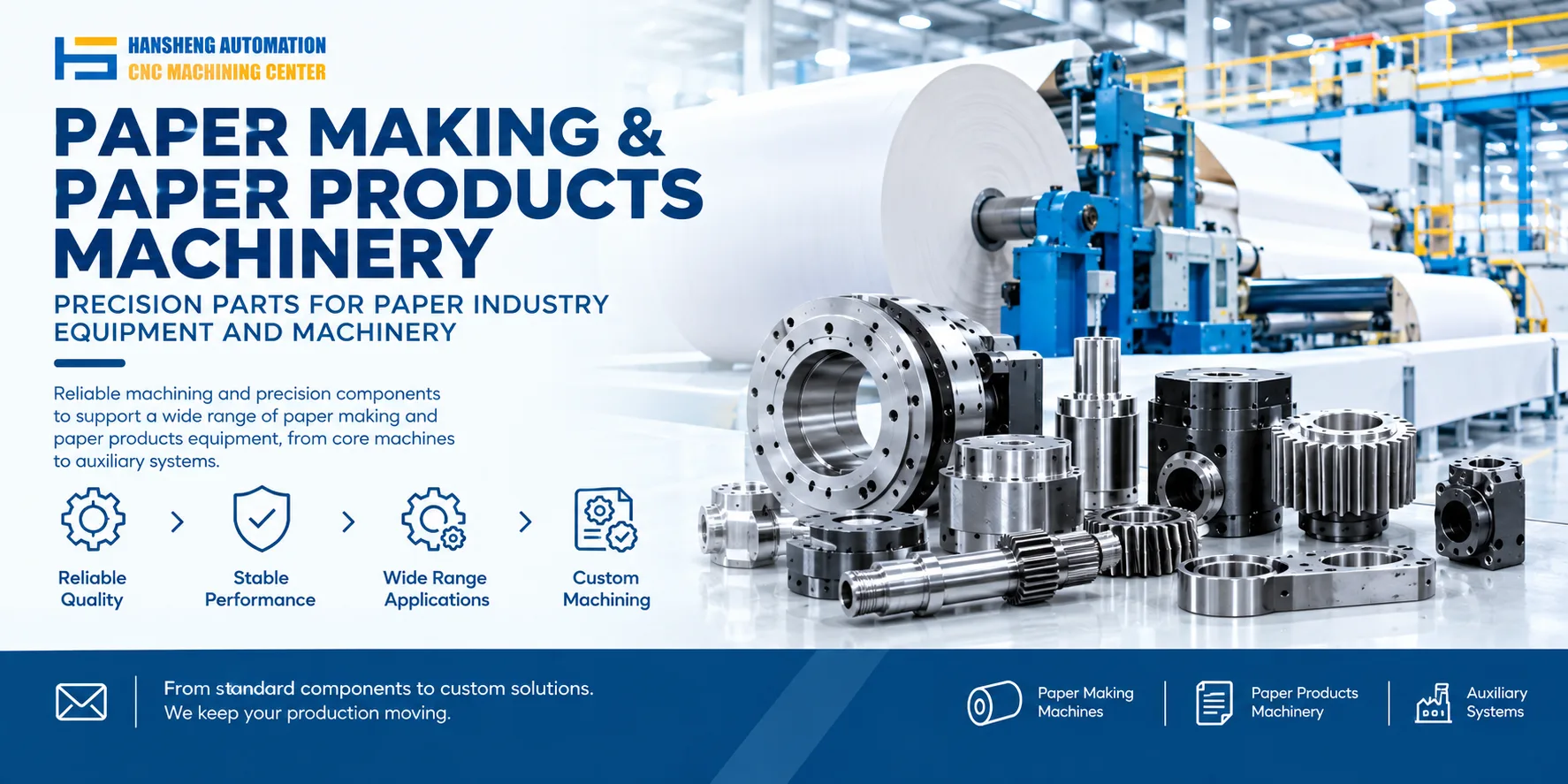
For rewinder pressure roll parts, Hansheng Automation can machine custom roll shafts, bearing housings, mounting brackets, and wear components from customer drawings, in single pieces or small batches.
Beyond rewinder pressure rolls, our precision component customization covers more than one industry. We machine yacht precision components, RC car precision components, filling machinery parts, tobacco packaging machinery parts, printing machinery parts, food machinery parts, and medical device parts. Hansheng Automation works from customer drawings and delivers one-off or batch parts to the required material, tolerance, and surface finish. Our scope is precision components, not complete machines.