A web break on a paper rewinder needs a fast stop, then a staged check of the cause, then a targeted fix. This keeps the same break from coming back.
Emergency stop and first response
Press the rewinder emergency stop button at once. Cut power to the main drive. Hang a "Maintenance in Progress" tag to prevent accidental startup and secondary damage from flying paper.
Open the safety guard door. Manually clear broken paper and paper lint inside the machine. Focus on guide rolls, the cutting blade, and the bottom roll surface. Remove adhesive and paper deposits.
Check the paper condition at the break point. After confirming no fragments remain, thread the paper again. Set initial tension. Run at low speed for 1 to 2 revolutions, then return to normal speed.
Root cause check and correction
(1) Process parameter problems
Tension mismatch: Tension settings on each roll may not match parent roll basis weight and width. A faulty tension sensor can also cause large fluctuation. Use a tension meter to calibrate each zone. For 80 g/m² cultural paper, traction roll tension should be 1.2 to 1.8 kN/m. Rewind tension should be 85% to 90% of unwind tension.
Line speed not synchronized: Encoder parameter deviation between drive rolls can make line speed difference exceed the limit. Calibrate roll speed parameters together. Keep line speed error at or below 0.1%. This prevents the sheet from being pulled apart.
Parent roll moisture out of spec: Moisture above 8% makes paper too weak. Moisture below 5% makes it brittle. Adjust dryer temperature and air volume on the upstream paper machine. Keep parent roll moisture at 6% to 7% as required by the process.
(2) Equipment faults
Guide roll sticking or worn: Worn guide roll bearings or a deformed roll body can stop the roll from turning. Friction on the sheet changes suddenly and causes a break. Replace worn guide rolls. Add lithium-based grease to bearings once a week.
Cutter precision insufficient: Too large a gap between the cutting blade and the bottom blade, above 0.1 mm, or a dull edge can tear the sheet during cutting. Set the cutter gap to 0.05 to 0.1 mm. Sharpen the blade once a month. Replace the blade when wear is severe.
Bottom roll surface damage: Raised scratches or adhesive residue on the bottom roll can overload a local area of the sheet and cause a break. Repair the bottom roll surface with a belt sander. Clean roll surface deposits once a week.
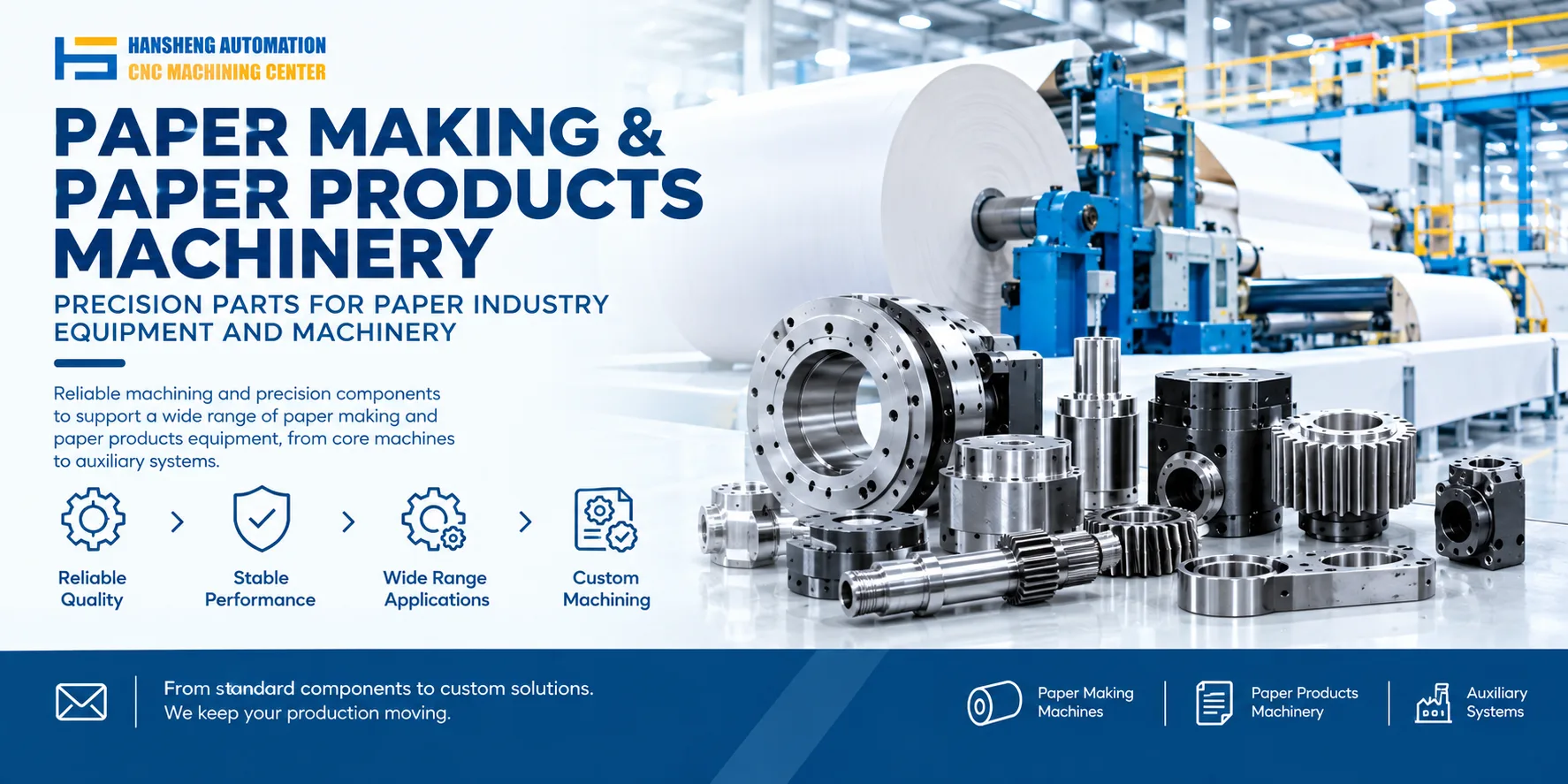
For rewinder builders, Hansheng Automation can machine custom guide rolls, cutter blades, tension roll components, roll shafts, and wear parts from customer drawings, in single pieces or small batches.
(3) Raw material defects
Parent roll appearance defects: Folds, cuts, and uneven thickness in the parent roll can cause breaks. Remove nonconforming parent rolls at the online inspection table before rewinding.
Width deviation over limit: If parent roll width exceeds the rewinder processing range, the edges can tear under stress. Check parent roll width against the rewinder process setting. Adjust the guide roll paper stop position in advance.
Daily prevention
Set up a per-shift inspection routine. Focus on guide roll rotation, cutter gap, and tension sensor readings.
Perform a full rewinder precision calibration once a month. This includes drive roll line speed and tension parameters.
Improve incoming parent roll inspection. Increase sampling for width, moisture, and appearance defects. The sampling rate should be at least 10%.
Beyond paper rewinder parts, our precision component customization is not limited to this topic. We machine yacht precision components, RC car precision components, tobacco packaging machinery parts, filling machinery parts, printing machinery parts, food machinery parts, and medical device components. Hansheng Automation works from customer drawings and delivers one-off or batch parts to the required material, tolerance, and surface finish. Our scope is precision components, not complete machines.