Dual-shaft shredders are widely used in solid waste treatment to process bulky, irregularly shaped materials that cannot easily enter subsequent processing stages. Two cutter shafts work together to grip, shear, and tear the material into smaller pieces, making it easier to convey, sort, recycle, or dispose of.
In solid waste treatment lines, dual-shaft shredders are generally used for initial size reduction and pre-treatment. They can handle different types of materials and are used in industrial waste processing, waste plastic recycling, bulky waste treatment, and municipal solid waste pre-treatment. Their main applications and operating characteristics are outlined below.
Main Applications of Dual-Shaft Shredders
Different types of solid waste vary in size, hardness, and toughness. The appropriate processing method depends on these material properties. By selecting suitable cutters, a dual-shaft shredder can handle a range of waste materials.
Industrial waste and refuse-derived fuel production: Industrial waste such as leather offcuts and textile scraps can be shredded and further processed into RDF (Refuse-Derived Fuel). After appropriate processing, RDF can be used as an alternative fuel, reducing dependence on traditional fossil fuels such as coal.
Waste plastic recycling: Plastic pipes, films, pallets, and other discarded plastic products are often bulky, and some materials are difficult to process because of their flexibility. A dual-shaft shredder reduces them to smaller pieces before subsequent washing, sorting, and pelletizing operations.
Bulky waste treatment: Discarded wood, furniture, and other large waste items can be shredded for use in biomass pellet production, papermaking, or composite board manufacturing, depending on the material and subsequent processing requirements.
Municipal solid waste pre-treatment: Large household waste items such as sofas and mattresses are difficult to convey and process directly. Initial shredding reduces their size and prepares them for subsequent incineration, landfill disposal, or sorting and recovery.
The required feed size, material composition, and final output size vary across these applications. Cutter configuration and shredding methods should therefore be selected according to the actual waste materials and processing requirements.
Key Operating Characteristics of Dual-Shaft Shredders
A dual-shaft shredder uses two cutter shafts working together to reduce material size. Unlike shredding methods that rely primarily on high-speed impact, its cutters process materials through gripping, compression, shearing, and tearing. This makes the equipment suitable for bulky, flexible, and irregularly shaped solid waste.
High Size Reduction Ratio
The cutters on the two shafts work together to continuously grip and tear material inside the shredding chamber. Bulky waste such as furniture and discarded plastic products can be reduced to pieces measuring several centimeters or even smaller. This reduces material size and makes subsequent conveying and sorting easier.
The actual output size depends on cutter design, cutter spacing, material properties, and equipment configuration. It cannot be determined by the equipment type alone.
Adaptability to Different Materials
Dual-shaft shredders can use cutters of different shapes, materials, and dimensions to accommodate waste with varying levels of hardness, toughness, and flexibility. For example:
For hard materials, such as certain types of construction and renovation waste, high-strength alloy steel cutters can be selected according to the material properties.
Flexible and resilient materials, such as plastic films, require cutter structures and cutting edges suited to their characteristics.
Fibrous materials, such as textiles in municipal solid waste, can be processed through the gripping and tearing action of the cutters.
When processing mixed solid waste, manufacturers and operators also need to consider the material composition and the presence of hard contaminants. These factors affect cutter selection and feeding arrangements.
Coordinated Shaft Operation for Continuous Processing
The two cutter shafts rotate synchronously, allowing the cutters to work together and continuously grip and tear the incoming material. A well-designed shaft arrangement helps reduce material buildup inside the shredding chamber and supports continuous operation.
Operating stability also depends on the transmission system, frame strength, and bearing quality. A high-quality transmission system, a rigid frame, and reliable bearings help the equipment withstand extended operation, reduce mechanical failures, and control maintenance and operating costs.
Noise and Dust Control
Noise and airborne dust are common concerns during solid waste shredding. The sealing structure and the design of the feeding and discharge systems affect the operating environment.
When processing dry construction waste or powdery industrial residues, a suitable structural design can help limit dust emissions and reduce their impact on operators and the surrounding environment.
How Dual-Shaft Shredders Support Solid Waste Treatment
Dual-shaft shredders mainly perform size reduction and pre-treatment at the front end of a solid waste processing line. Their role can be considered in terms of three waste management objectives: volume reduction, resource recovery, and environmentally sound disposal.
Volume Reduction
Bulky waste and industrial residues often have large dimensions and irregular shapes, making direct transportation and disposal less convenient. Shredding reduces material size and helps control the volume of waste during storage and handling. This makes transportation and subsequent processing more manageable and can reduce related transportation and disposal costs.
Resource Recovery
Shredded materials are easier to sort and process further. For example, waste plastics can enter recycling processes, certain types of industrial waste can be used to produce alternative fuels, and discarded wood may be processed into biomass fuel or other raw materials, depending on its properties.
Shredding prepares different waste streams for their respective recovery processes and supports the subsequent use of recyclable materials.
Preparation for Environmentally Sound Disposal
Some solid waste materials require incineration, landfill disposal, or other treatment processes. A dual-shaft shredder reduces large items into smaller pieces, making them easier to convey and handle during subsequent treatment. For mixed waste with complex compositions, shredding can also prepare the material for further sorting and help reduce the risk of secondary pollution caused by improper disposal.
Shredding alone does not make solid waste harmless. The actual treatment results depend on the downstream processes, waste classification, and overall production line configuration.
Equipment Selection and Component Requirements
A dual-shaft shredder should be selected according to the materials it needs to process. Shredding capacity and output size alone are not sufficient selection criteria. Material type, hardness, toughness, feed size, and downstream processing requirements all affect the choice of cutter configuration and equipment structure.
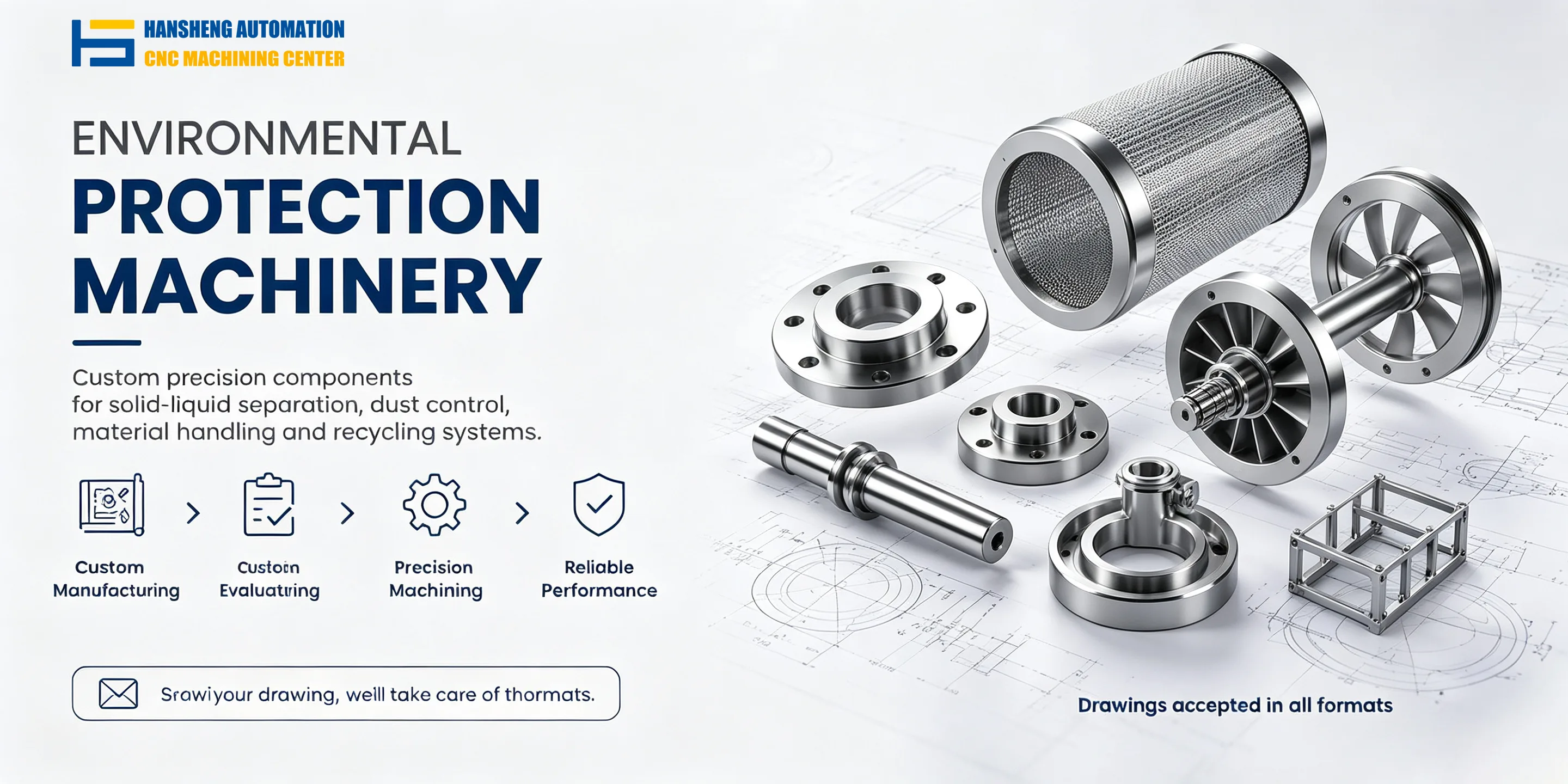
The mechanical components used in solid waste processing equipment must also meet the requirements of the intended assembly and operating conditions. We provide custom precision machining based on customer-supplied drawings, supporting single-piece and small-batch production of components for different structural and assembly requirements.
Conclusion
Dual-shaft shredders can process various types of solid waste and are used in applications such as bulky waste shredding, industrial waste pre-treatment, and waste plastic recycling. With suitable cutter configurations and transmission arrangements, they reduce large materials to sizes appropriate for subsequent conveying, sorting, and processing. This provides the necessary pre-treatment for waste volume reduction and resource recovery.
Our custom precision machining services also cover components used in industries beyond solid waste treatment. Hansheng Automation manufactures custom parts based on customer drawings, including precision components for yacht equipment and structural parts for radio-controlled racing cars, as well as non-standard components for tobacco packaging machinery and filling machinery. We support both single-piece and small-batch custom machining according to specific drawing requirements.