Delays in mold loading and unloading on a tire vulcanizing press generally stem from three factors: equipment condition, mold compatibility, and operating procedures. Problems in any of these areas can extend changeover time and reduce production efficiency.
Equipment condition
Faults in drive components
Hydraulic oil leakage can interfere with the smooth operation of the mold opening and closing mechanism. When cylinder seals are damaged, power transmission efficiency may decrease by 15% to 30%. Mechanical faults, such as gears sticking, can also delay mold tray movement.
Inadequate lubrication and maintenance
Failure to remove accumulated dirt from guide rails at the required maintenance intervals can increase the friction coefficient by 2 to 3 times. Bearings that do not receive the specified high temperature grease may experience an increase in operating resistance of more than 40%.
Regular inspection, cleaning, and lubrication help prevent unnecessary delays during mold handling.
Mold compatibility and condition
Mold design and dimensional issues
Molds that exceed standard dimensions by more than 5% can require additional positioning and alignment time. Molds with complex parting surfaces may also require 3 to 5 additional disassembly steps.
These factors make mold installation and removal more time consuming, particularly when alignment and positioning require repeated adjustments.
Excessive wear
Guide post misalignment exceeding 0.5 mm can increase the probability of mold jamming by 60%. Residual rubber in the mold cavity with a thickness of 1 mm or more can extend demolding time by 2 to 3 minutes.
Regular mold inspection and cleaning help identify these problems before they disrupt production.
Operating procedure and coordination
Delays between operating steps
Inexperienced operators may pause for an average of 8 to 12 seconds during mold turning. Experienced operators who understand the equipment can reduce auxiliary handling time to less than 5 seconds.
Familiarity with the equipment and a well-defined sequence of operations can reduce unnecessary pauses during mold changeover.
Coordination between operators
When two operators work together, unsynchronized instructions can lead to repeated adjustments. These actions may account for 18% of the total operating time. Rehearsing the work sequence in advance can reduce this proportion to below 7%.
Clear task assignments and coordinated operating procedures help avoid duplicated actions and delays.
Improving mold loading and unloading efficiency
To reduce delays, production managers should monitor hydraulic pressure fluctuations, maintain records of mold inspection and maintenance, and review standardized operating procedures through video recordings.
These measures help identify recurring delays, clarify responsibility for each step, and improve consistency during mold changeovers.
Custom precision component machining services
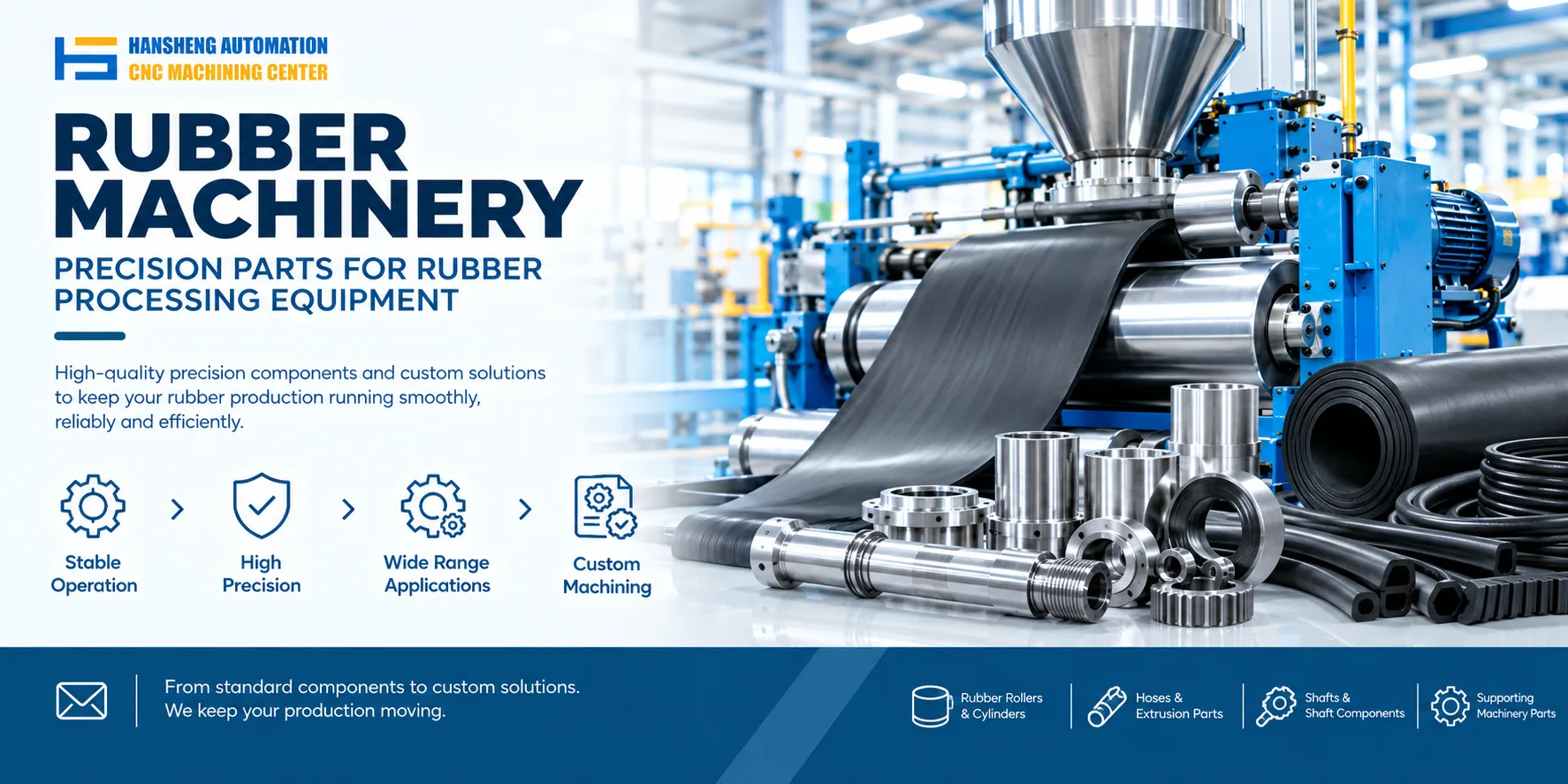
Beyond rubber and tire processing equipment applications, Hansheng Automation provides custom machining of precision components according to customer supplied drawings. Our services include nonstandard parts for tobacco packaging and filling machinery, precision components for yachts, and RC racing car parts. We manufacture components to customer specified dimensions and drawing requirements for different mechanical applications.