A rewinder running backward usually traces back to four areas: tension control, mechanical drive, electrical control, and material properties.
Tension control problems
Tension keeps material tight during rewinding. If the set value is too low, the material goes slack and can run backward. Sometimes the setting is fine, but the control system itself fails. A faulty tension sensor or wrong controller parameters can make the system lose its ability to hold stable tension.
Mechanical drive faults
Poor power transmission can also cause backward running. Belts and chains wear over time. Once they slip, roll speed becomes unstable or the roll briefly loses drive power. If a gearbox has a broken tooth or poor meshing, power transfer becomes intermittent and the roll turns abnormally.
Electrical control system faults
The motor is the power source. If its drive parameters are wrong or the drive fails, motor speed and direction can go out of control and cause reverse rotation. A deeper cause can be a logic flaw in the control program. It sends a wrong command and the machine performs the opposite action.
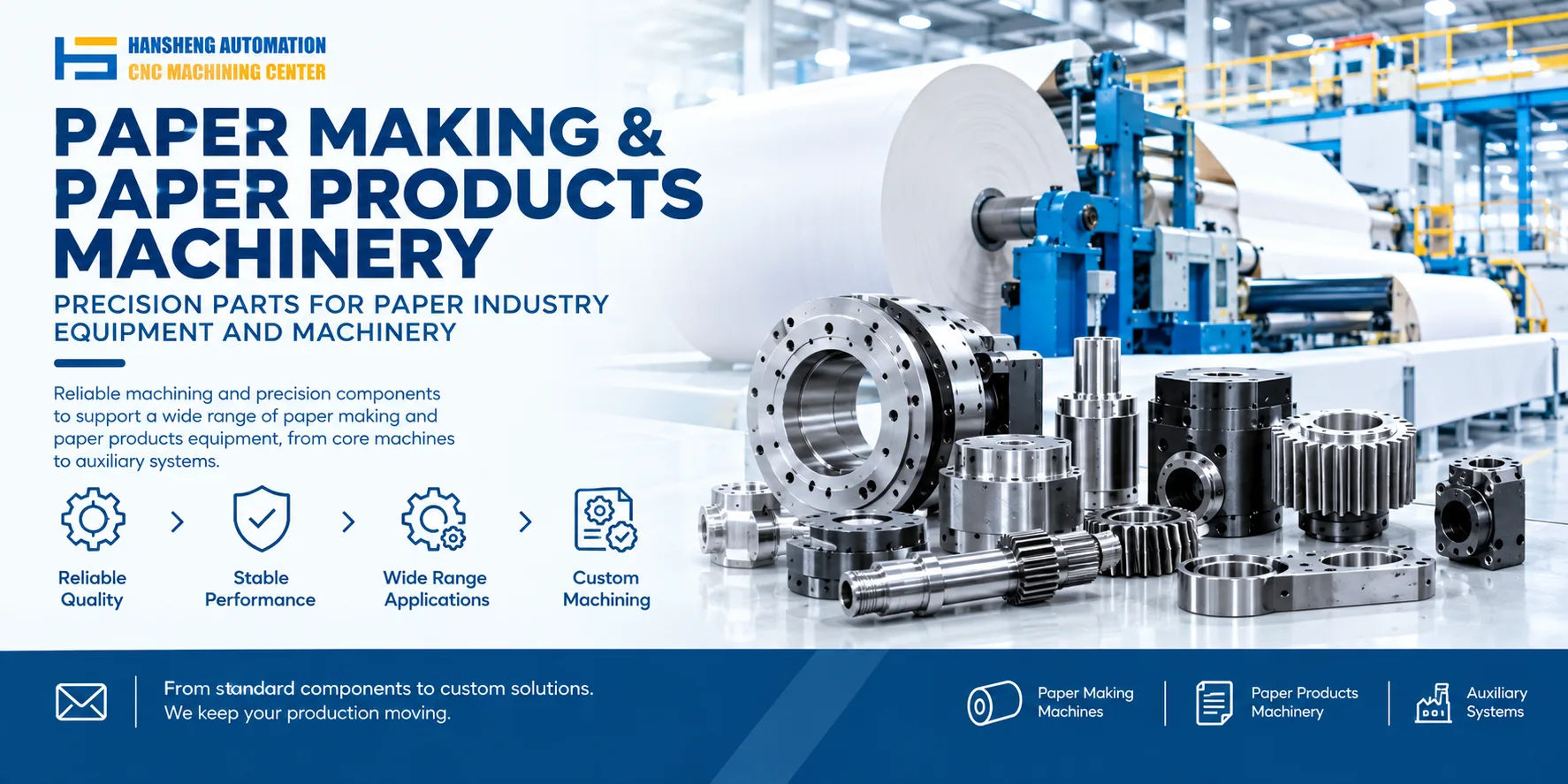
For rewinder builders, Hansheng Automation can machine custom tension rollers, drive shafts, gears, and wear parts from customer drawings, in single pieces or small batches.
Material factors
Material properties matter too. If roll thickness or density is uneven, different areas meet different resistance during rewinding. Thin areas are more likely to be pulled back. If the material surface is too smooth or has oil, friction with the rollers drops. The material cannot be driven effectively and may slide or run backward.
Beyond rewinder components, our precision component customization covers more than one industry. We machine filling machinery parts, tobacco packaging machinery parts, medical device components, yacht precision components, RC car precision components, printing machinery parts, and food machinery parts. Hansheng Automation works from customer drawings and delivers one-off or batch parts to the required material, tolerance, and surface finish. Our scope is precision components, not complete machines.