A slow rewinder usually has more than one cause. Check material and tension first, then clean and lubricate, then inspect the electrical system, then look at the cutter. These steps solve most slow rewinding problems without major teardown.
Check material and tension
Uneven material or abnormal tension is a common reason for lower rewinding speed. If the material wrinkles, reroute the web path and make sure feeding is smooth.
Adjust tension according to the equipment manual. Use the tension controller and increase or decrease gradually. The material should not be loose, and the rewind shaft should turn without obvious resistance.
Clean and lubricate key parts
Dust buildup or poor lubrication increases running resistance. Clean rollers, gears, and exposed surfaces. Use a brush to clear debris from gaps.
Lubricate drive chains and bearings with the specified oil or high-temperature grease. Do not over-lubricate, because excess grease attracts dust.
Check the electrical system
Voltage fluctuation can limit motor power output. Measure supply voltage and compare it with the rated range.
Watch the motor. Continuous abnormal noise or overheating means stop the machine and inspect. Also check whether control parameters were changed by mistake. Restore initial values and then match them to production needs again.
Adjust cutter performance
Cutting efficiency directly affects rewinding pace. A dull blade increases pulling time on the material. Sharpen or replace blades on a regular schedule.
Adjust blade angle and pressure at the same time. The cut should be smooth and free of jamming. This reduces stops during rewinding.
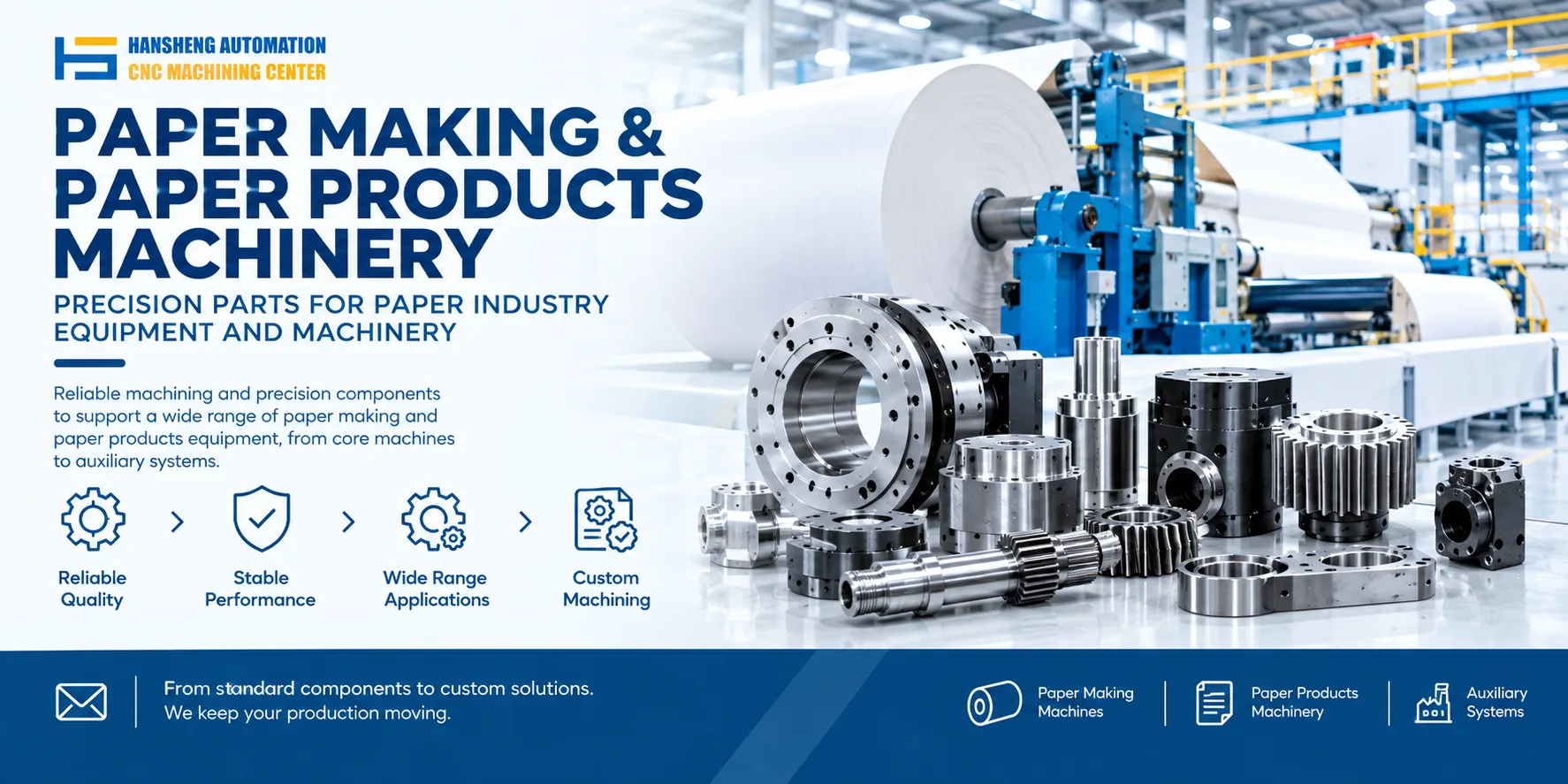
For rewinder builders, Hansheng Automation can machine custom slitting blades, rewind shafts, tension rollers, and wear parts from customer drawings, in single pieces or small batches.
Beyond rewinders, our precision component customization covers more than one industry. We machine medical device components, food machinery parts, yacht precision components, RC car precision components, printing machinery parts, filling machinery parts, and tobacco packaging machinery parts. Hansheng Automation works from customer drawings and delivers one-off or batch parts to the required material, tolerance, and surface finish. Our scope is precision components, not complete machines.