When a 3D motion mixer produces uneven mixing while blending multiple pharmaceutical materials, the problem is usually related to the physical properties of the materials themselves. Powders with relatively high moisture content, a strong tendency to form agglomerates, or poor flowability are more difficult to disperse evenly during mixing and are therefore more likely to produce localized areas of insufficient mixing.
Differences in the density, particle size, particle shape, and flowability of pharmaceutical powders can also significantly affect mixing uniformity. When the physical properties of different components vary considerably, the materials may separate, segregate, or accumulate locally during operation. Such materials generally require an appropriate extension of the mixing time to achieve the desired uniformity.
A 3D motion mixer uses compound multi-directional movement of the mixing vessel to continuously tumble, circulate, and disperse the materials. This movement helps reduce material segregation and accumulation caused by centrifugal forces in conventional single-direction mixers, thereby minimizing dead zones and improving overall mixing uniformity.
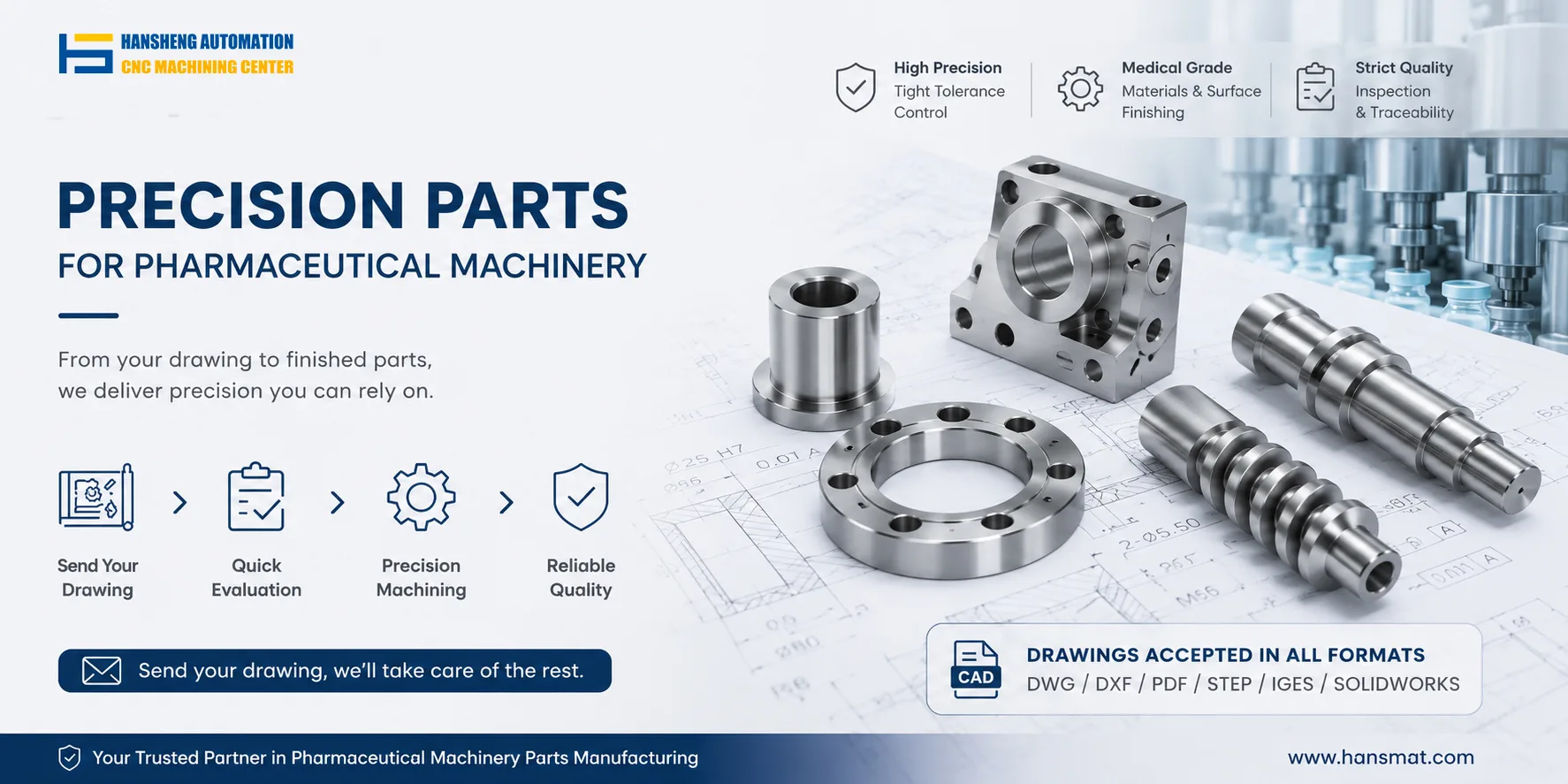
It is important to note that mixing performance depends not only on the motion pattern of the mixer but also on material characteristics, filling level, and mixing time. For special pharmaceutical powders, we can provide drawing-based custom machining services for related precision components according to the customer's equipment structure and technical requirements, helping ensure that critical mechanical parts meet the required assembly and operating conditions.