The main causes usually involve the power supply, control system, motor, drive mechanism, or rotor installation.
Power supply problems
Poor plug contact: the plug may not be fully inserted into the socket, which cuts power. Reinsert it and confirm a firm connection.
Damaged power cord: check the cable insulation for wear or breaks. Replace the cord if needed.
Blown fuse: open the fuse box and check the fuse. If it has blown, replace it with a fuse of the same specification.
Control panel abnormalities
Button failure: if individual keys do not respond, the internal contacts may be oxidized or mechanically damaged. Repair or replace the panel.
Incorrect program settings: check whether centrifuge parameters such as speed and time are outside the allowed range. Also confirm the device is in run mode, not standby mode.
Motor failure
Winding short or open circuit: damage to the internal coil can stop rotation. Use a multimeter to check resistance, and have a qualified technician repair the motor.
Bearing damage: if abnormal noise or jamming occurs during operation, the bearing lubrication may have failed or the bearing may be broken. Disassemble the unit and replace the bearing.
Mechanical transmission obstruction
Belt problems: a belt that is too loose can slip, so adjust the tensioner. If the belt is completely broken, replace it.
Coupling failure: if the coupling between the motor and shaft is misaligned or worn, power cannot be transmitted. Calibrate or replace the coupling.
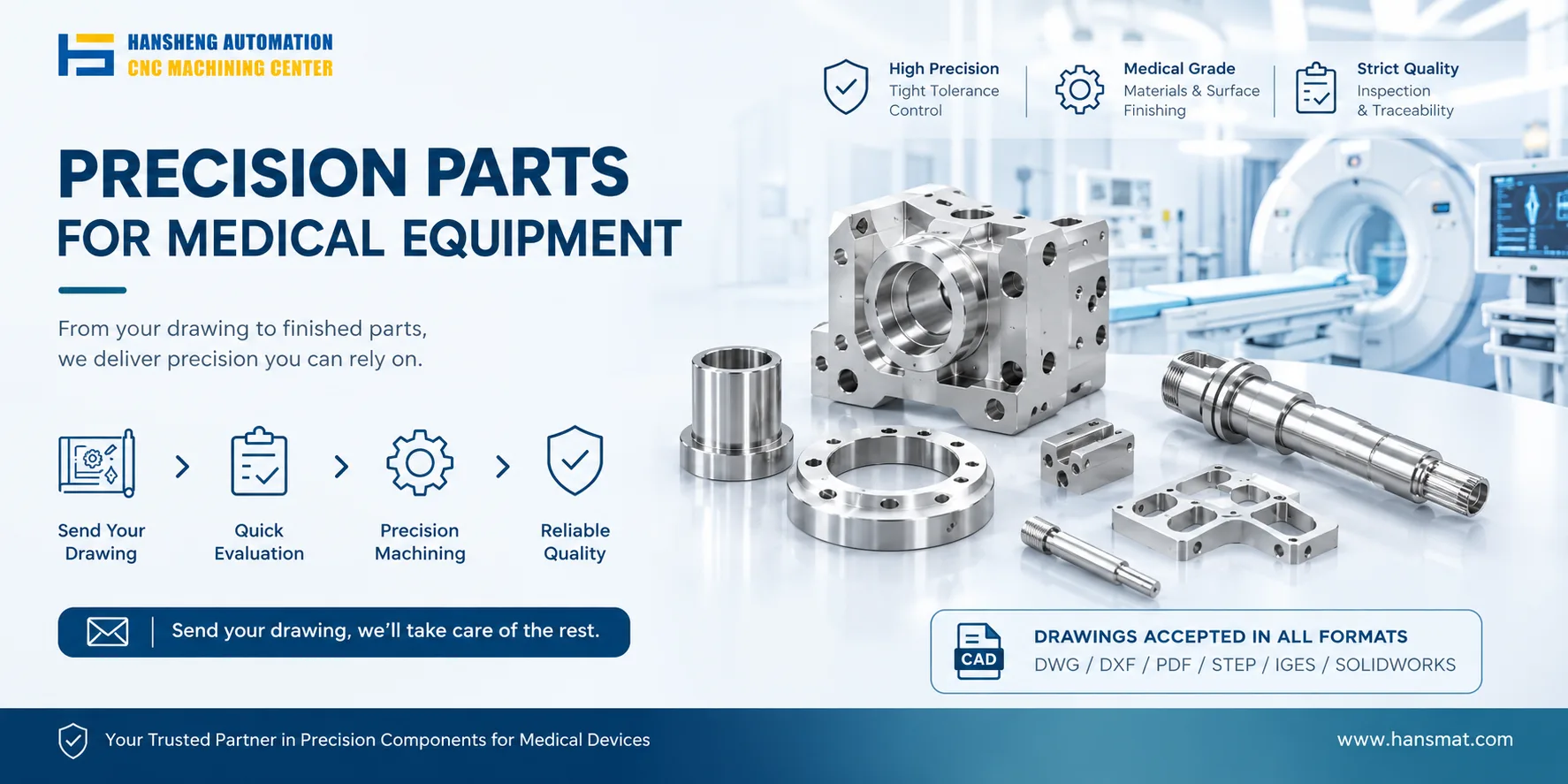
For rotor housings, drive couplings, adapters, and motor mounts used in medical centrifuges, Hansheng Automation can machine custom parts to customer drawings in single units or small batches.
Rotor status abnormalities
Improper installation: if the rotor is not seated in its slot or the fixing screw is not tightened, the rotor can seize. Reinstall the rotor and tighten it securely.
Sample overload: if the sample weight exceeds the rotor capacity, the motor stops under overload protection. Reduce the load and split samples according to the specification.
Electrical and mechanical checks should be performed by qualified service personnel. Do not force the rotor or restart the centrifuge repeatedly before the cause is identified.
Our precision parts machining service is not limited to medical centrifuge components. Hansheng Automation also machines custom parts for laboratory equipment, medical devices, filling machinery, printing equipment, tobacco packaging machinery, yacht hardware, and RC car structural parts. We work from customer drawings and deliver single units or small batches. The service stays within precision parts manufacturing and does not include complete equipment sales.