A filling machine chain that starts and stops intermittently, then shuts down on its own, usually points to one of four areas: the chain itself, the drive system, the control system, or the mechanical structure.
1. Chain problems
Chain wear. Links, rollers, and pins wear over time. The fit between the chain and sprocket gets worse. This causes sticking or sudden stops.
Wrong tension. A chain that is too loose can jump or come off the sprocket. A chain that is too tight raises motor load. Both lead to unstable running.
Foreign objects. Residue or debris caught between the chain and sprocket blocks normal rotation.
2. Drive system faults
Motor problems. A shorted winding or a damaged bearing makes power output unstable. The chain moves in an irregular start and stop pattern.
Reducer problems. Gear wear, low lubrication, or a loose coupling lowers power transfer efficiency. The chain may stop under load and start again when the load drops.
3. Control system faults
Sensor failure. A position or speed sensor sends a false signal. The controller then issues a wrong command and the chain stops.
Program error. Electrical interference or a software fault can confuse the control logic. The start and stop sequence no longer follows the set cycle.
4. Mechanical structure problems
Sprocket damage. Tooth wear or a deformed tooth profile lowers mesh accuracy and raises running resistance.
Bearing failure. A damaged drive bearing blocks chain rotation. In severe cases, it locks the shaft.
What to check
Stop the machine and cut power before inspection. Lock out the drive if the line allows it.
Check the chain for wear and elongation. Replace it if it is past the service limit.
Check chain tension and set it to the machine manual value.
Clean the chain and sprocket area. Remove debris and residue.
Check motor current, bearing noise, reducer oil level, and coupling tightness.
Check sensor signals and wiring. Reset or replace a faulty sensor.
Check sprocket teeth and bearing play. Replace worn parts.
After repair, run the machine without load first. Watch for noise, vibration, and current spikes. If the problem remains, check the controller parameters and program. Intermittent stops can also come from a thermal overload or a loose wire connection.
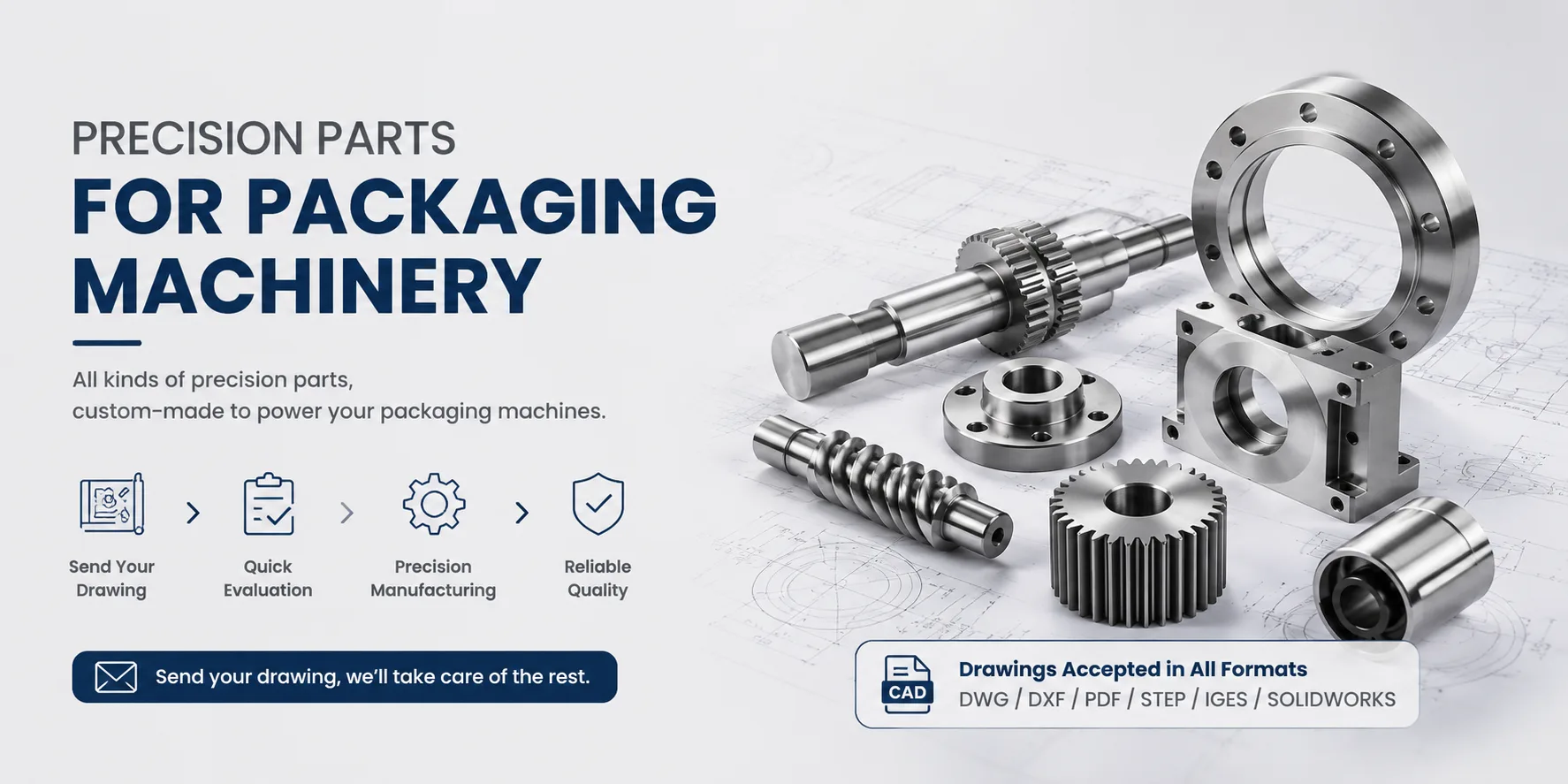
When a chain, sprocket, or bearing part reaches its wear limit, Hansheng Automation can machine a replacement from customer drawings. We match material, tolerance, and surface treatment to the machine and working conditions. Hansheng Automation also machines custom precision parts for filling machinery, tobacco packaging machinery, yacht components, and RC car components. We handle single pieces and small batches.