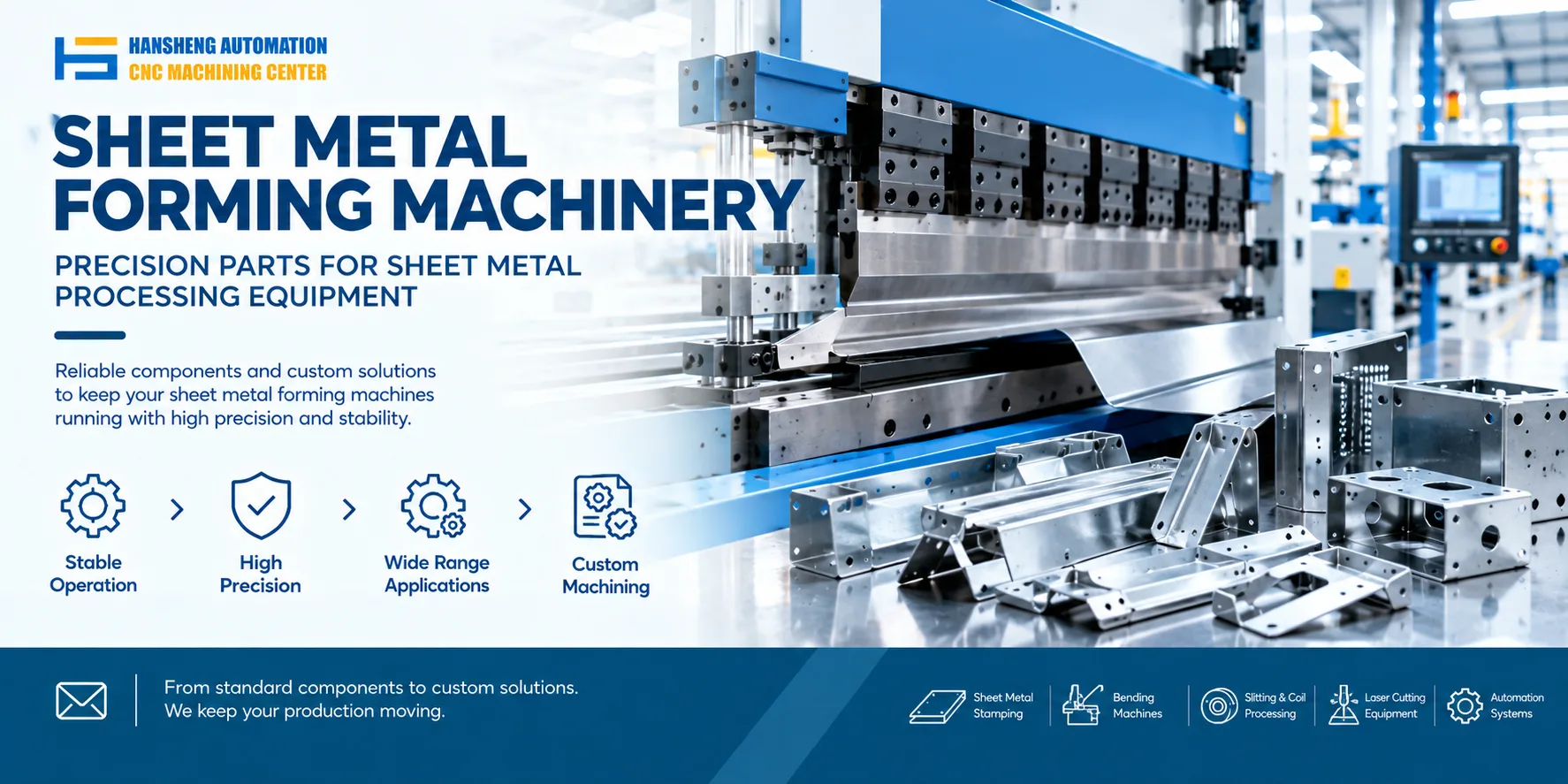
The appropriate equipment for cutting aluminum depends on the material form, required dimensional accuracy, production volume, and edge quality. Common options include general-purpose cutting tools for rough cutting and small batches, as well as specialized machines for precision sawing, tube cutting, laser cutting, shearing, and waterjet cutting.
General-Purpose Aluminum Cutting Equipment
General-purpose equipment can process different metals and is commonly used for rough cutting, workshop maintenance, and occasional cutting jobs.
Horizontal Metal Cutting Bandsaw
A horizontal metal cutting bandsaw is suitable for rough cutting large-diameter aluminum bars and large aluminum profiles to length. A bimetal bandsaw blade designed for nonferrous metals helps achieve suitable cutting performance.
The reference cutting accuracy is approximately ±0.5 mm, with a sawing feed rate of about 100 to 300 mm/min, depending on the cross-sectional dimensions. These figures are indicative and vary with the machine, blade, and cutting conditions.
This equipment is useful for preliminary stock preparation and batch cutting in manufacturing workshops.
Handheld Angle Grinder
A handheld angle grinder fitted with a cutting disc rated for aluminum can handle occasional cutting jobs involving small aluminum profiles and thin aluminum sheets.
Its main advantage is portability. It can be used on site without a dedicated cutting station, making it suitable for small quantities and repair work.
However, the cut edge may be uneven and require subsequent grinding or deburring. Operators should use the correct disc, secure the workpiece, and follow the grinder manufacturer's safety instructions.
Abrasive Cutoff Saw
An abrasive cutoff saw fitted with a resin-bonded cutting wheel designed for aluminum can cut small and medium-sized aluminum bars and profiles in batches.
Compared with a handheld angle grinder, a stationary cutoff saw generally provides more controlled positioning and can improve cutting consistency. It may also offer higher productivity for repetitive operations.
Operating noise can be relatively high, and suitable guarding, dust and spark control, and secure workpiece clamping are necessary.
Specialized Aluminum Cutting Equipment
Specialized equipment is designed around particular aluminum cutting requirements, including tight dimensional tolerances, automated production, thin-walled tubing, complex contours, and thick plates.
CNC Aluminum Profile Cutting Saw
A CNC aluminum profile saw uses a servo-driven feeding system to position the material before cutting. The programmed feed length allows the machine to cut profiles to repeatable dimensions with less manual positioning.
The reference cutting accuracy is ±0.1 mm. Actual accuracy depends on the machine model, profile geometry, clamping method, and operating conditions. Some models also support programmed multi-angle cutting.
These machines are commonly used in aluminum window and door manufacturing, curtain wall production, and industrial aluminum profile processing. <Cite refs={["turn146531search0","turn146531search4"]}/>
Rotary Shear Cutting Machine for Aluminum Tubes
A rotary shear cutting machine is designed for applications involving thin-walled aluminum tubes. It uses a shearing mechanism rather than conventional sawing to separate the tube.
On machines designed for this process, chipless cutting can produce clean edges with limited deformation. This makes the method suitable for batch processing of thin-walled tubing used in air conditioning systems and automotive components.
The achievable edge quality depends on the tube dimensions, wall thickness, material properties, and machine setup.
Fiber Laser Cutting Machine
A fiber laser cutting machine is suitable for aluminum sheet and plate components that require complex contours, curved edges, or detailed cutouts.
The reference equipment range covers aluminum thicknesses of 1 to 20 mm, with laser powers from 1000 W to 6000 W covering a broad range of common applications. These figures do not mean that every power rating can process the entire thickness range. The actual cutting capacity depends on the laser power, aluminum alloy, material thickness, assist gas, and process settings.
The reference surface roughness is Ra 1.6 to 6.3 μm under suitable cutting conditions. Whether the cut edge requires additional grinding or deburring depends on the required finish, material thickness, and cutting quality.
Fiber laser cutting is useful for customized components with complex geometries that are difficult to produce using straight-line cutting equipment.
CNC Hydraulic Shearing Machine
A CNC hydraulic shearing machine is designed primarily for straight-line cutting of aluminum sheets to specified dimensions. The upper and lower blades separate the material through a shearing action.
Some conventional machine configurations have a maximum rated cutting thickness of up to 20 mm. This is not a universal capacity limit. The actual maximum thickness depends on the machine's rated cutting force, cutting length, blade clearance, and the strength of the aluminum alloy.
CNC shearing is suitable for batch blanking operations where straight edges and repeatable dimensions are required.
Automatic Aluminum Bar Cutting Machine
An automatic aluminum bar cutting machine is used to prepare aluminum bars for subsequent machining. Machines equipped with carbide cutting blades can support rapid, repeatable cutting and reduce manual handling.
The reference production rate is 30 to 60 bars per minute, depending on bar diameter. Actual throughput also depends on the cutting length, feeding system, workpiece clamping, and machine cycle.
Cutting quality and burr formation depend on the blade design, its condition, and the selected cutting parameters. The finished bars may still require deburring if the application demands a specific edge condition.
Ultra-High-Pressure Waterjet Cutting Machine
An ultra-high-pressure waterjet cutting machine is suitable for thick aluminum plates and applications where thermal distortion must be minimized.
Abrasive waterjet cutting removes material through a high-pressure stream of water and abrasive particles. Because the process does not rely on thermal melting, it produces no heat-affected zone. This is useful when the material's condition near the cut edge must be preserved.
Waterjet cutting can also produce complex contours in thick plate. However, equipment investment and operating costs are relatively high, and cutting speed depends on material thickness, geometry, and the required edge quality.
Safety Requirements for Aluminum Cutting
Use cutting blades, abrasive wheels, and other consumables specifically rated for aluminum or the relevant nonferrous metal. Do not assume that a consumable intended for steel cutting is suitable for aluminum. Aluminum can cause certain abrasive wheels to load or clog, increasing heat generation and affecting cutting performance.
Secure the workpiece before cutting and use the guards and personal protective equipment specified by the equipment manufacturer. For work at height or in confined spaces, trained and authorized personnel must follow the applicable safety procedures.
The selected cutting equipment, blade or wheel, and operating parameters should match the aluminum alloy, workpiece dimensions, and required cutting quality.
Custom Precision Machining for Industrial Applications
Beyond equipment selection, Hansheng Automation provides custom precision machining based on customer drawings. Our work includes precision components for yacht equipment and RC racing cars, as well as nonstandard parts for tobacco packaging machinery and filling machinery. Each component is manufactured according to the supplied drawings and the specific dimensional and structural require