Gasoline stations generate volatile organic compound (VOC) emissions during fuel delivery, storage, and vehicle refueling. These emissions mainly consist of gasoline vapors containing hydrocarbons such as benzene, toluene, and other volatile components.
The main equipment used to control these emissions includes Stage I vapor recovery systems, Stage II vapor recovery systems, onboard refueling vapor recovery (ORVR) systems, and dedicated vapor recovery units (VRUs).
Depending on the installation, VRUs may use activated carbon adsorption, absorption, condensation, membrane separation, or a combination of these technologies to recover gasoline components and reduce VOC emissions.
Gasoline Vapor Recovery Systems
Vapor recovery systems are the primary equipment used to control gasoline vapor emissions at filling stations. Their main function is to collect displaced gasoline vapors and return them to a storage tank or a designated recovery system instead of releasing them directly into the atmosphere.
Two main stages of vapor recovery are commonly distinguished.
Stage I Vapor Recovery
Stage I vapor recovery controls gasoline vapor emissions during fuel delivery from tanker trucks to underground or aboveground storage tanks at gasoline stations.
When gasoline enters a storage tank, it displaces the vapor occupying the space above the liquid. Without a vapor recovery connection, these displaced vapors can escape through the tank vent system.
A Stage I system collects the displaced vapors through sealed vapor-return connections and transfers them back to the tanker truck. The recovered vapors are then transported to a terminal, where they can be processed by a vapor recovery unit.
Typical Stage I equipment includes:
Vapor recovery adapters and sealed connections on the storage tank.
Vapor return piping between the storage tank and tanker truck.
Dry-break couplings and associated valves to limit vapor leakage during connection and disconnection.
Pressure-vacuum (P/V) vent valves to help control storage tank pressure and vacuum.
Proper sealing and maintenance of the vapor return connections are important for preventing gasoline vapor losses during unloading.
Stage II Vapor Recovery
Stage II vapor recovery controls gasoline vapors displaced from vehicle fuel tanks during refueling.
When gasoline enters a vehicle's fuel tank, the incoming liquid displaces the vapor already inside. A Stage II system collects these vapors through a specially designed dispensing nozzle and returns them to the station's underground storage tank.
The main components generally include:
Vapor recovery nozzles.
Coaxial fuel and vapor recovery hoses.
Vapor return pipelines.
Vacuum pumps for assisted vapor recovery systems.
Flow control and monitoring components.
There are two common operating arrangements. Balance systems use pressure differences to return displaced vapors, while vacuum-assisted systems use a pump to draw the vapors back into the storage tank.
Stage II requirements vary by jurisdiction. In some regions, vehicle-mounted onboard refueling vapor recovery systems have reduced the need for station-based Stage II equipment.
Onboard Refueling Vapor Recovery (ORVR)
ORVR is a vehicle-mounted vapor recovery system. It captures gasoline vapors inside the vehicle's fuel system during refueling, preventing them from escaping through the filler neck.
The system commonly uses an activated carbon canister to retain gasoline vapors. When the vehicle operates, the stored hydrocarbons are purged into the engine intake and burned during normal engine operation.
ORVR is installed by vehicle manufacturers and works independently of the station's vapor recovery equipment. Its adoption has affected Stage II requirements in several markets.
Gasoline Vapor Recovery Units
A vapor recovery unit processes collected gasoline vapors to recover hydrocarbon components or control their emissions. Depending on the system design, it may be installed at a gasoline distribution terminal, bulk storage facility, or another suitable collection point.
Common recovery technologies include activated carbon adsorption, absorption, condensation, and membrane separation.
Activated Carbon Adsorption Systems
Activated carbon adsorption systems use the porous structure and large internal surface area of activated carbon to capture hydrocarbons from gasoline vapor streams.
As the vapor passes through the carbon bed, gasoline components are retained on the adsorbent surface. Once the carbon approaches its adsorption capacity, the system switches to a regeneration cycle.
During regeneration, vacuum, heat, or another suitable method is used to desorb the captured hydrocarbons. The concentrated vapor can then be recovered through downstream processing or returned to the appropriate recovery system.
Advantages:
Activated carbon adsorption can recover gasoline components while reducing hydrocarbon emissions. The adsorbent can be reused through controlled regeneration.
Limitations:
The adsorption capacity is limited and depends on vapor composition, temperature, humidity, and operating pressure. Excessive hydrocarbon loading or unsuitable substances can affect adsorbent performance.
The system also requires appropriate temperature monitoring, pressure control, and fire and explosion protection.
Condensation Systems
Condensation systems recover gasoline vapors by lowering their temperature until part of the hydrocarbon vapor stream condenses into liquid.
The system generally includes a refrigeration unit, heat exchanger, condenser, and liquid collection equipment.
As gasoline vapor passes through the cooling section, heavier hydrocarbon components condense and are collected for recovery. The remaining gas may require further treatment before discharge.
The operating temperature depends on vapor composition, inlet concentration, pressure, and the required recovery rate. A temperature of approximately -40°C may be used in some process configurations, but it is not a universal operating requirement.
Advantages:
Condensation allows part of the gasoline vapor to be recovered directly as liquid hydrocarbons. It can also be combined with adsorption or membrane separation to improve overall recovery performance.
Limitations:
The refrigeration system requires additional energy. The achievable recovery rate depends on the vapor composition, cooling conditions, and equipment design. Further treatment may be necessary for the residual gas.
Membrane Separation Systems
Membrane separation uses selective permeation to separate hydrocarbon vapors from air and other gas components.
The gas mixture passes through a membrane module. Hydrocarbon molecules permeate through the membrane more readily than other components, depending on the membrane material and operating pressure difference.
The concentrated hydrocarbon stream can then be compressed, condensed, absorbed, or returned to another recovery stage. The remaining gas is handled according to the system design and applicable emission requirements.
Advantages:
Membrane separation can reduce the volume of gas requiring further treatment and can be integrated with condensation or adsorption systems.
Limitations:
Separation performance depends on membrane selectivity, pressure difference, gas composition, and operating conditions. Membrane modules also require protection from liquid carryover and contaminants that may affect their performance.
Absorption Systems
Absorption systems use a suitable liquid absorbent to capture hydrocarbon vapors from the gas stream.
The vapor contacts the liquid inside an absorber, allowing selected hydrocarbon components to transfer from the gas phase into the liquid phase.
Depending on the system, chilled gasoline or another compatible absorption medium may be used. The recovered hydrocarbons can subsequently be separated and returned to the fuel recovery process.
Advantages:
Absorption can recover hydrocarbon components and can be combined with compression and refrigeration to improve recovery performance.
Limitations:
The equipment requires liquid circulation, temperature control, and appropriate pressure conditions. Absorbent selection and regeneration or recovery arrangements also affect operating costs.
Other Equipment Used for Specialized Gasoline Vapor Treatment
Catalytic oxidation and thermal oxidation can destroy hydrocarbon vapors rather than recover them as fuel. These technologies may be used in certain centralized petroleum processing or vapor disposal applications when required by the process design.
However, they are not the primary equipment typically installed at retail gasoline dispensing points. Gasoline vapor is combustible and has recovery value, so closed collection and hydrocarbon recovery are generally preferred where technically and economically appropriate.
UV photocatalytic equipment and biological filters are also not standard gasoline vapor recovery systems. They should not be treated as direct substitutes for Stage I, Stage II, or dedicated VRUs.
Selection and Operating Considerations
Selecting gasoline vapor recovery equipment requires an assessment of the emission source, vapor composition, fuel throughput, and site operating conditions.
Emission source: Fuel delivery, vehicle refueling, and storage tank breathing produce different vapor streams. The appropriate collection and control arrangements should be selected for each source.
Gasoline throughput: The quantity of fuel delivered and dispensed affects the volume of displaced vapor and the required capacity of the recovery system.
Recovery technology: Activated carbon adsorption, condensation, membrane separation, and absorption should be evaluated according to the vapor composition, recovery requirements, and operating costs.
System compatibility: Vapor return piping, storage tank connections, dispensers, pressure-vacuum valves, and recovery equipment must work together without causing excessive pressure or vacuum in the storage tanks.
Safety requirements: Gasoline vapors are flammable. Equipment selection and installation must account for leakage prevention, grounding and bonding, suitable electrical equipment, pressure control, and fire and explosion protection.
Inspection and maintenance: Regular inspection of vapor recovery nozzles, hoses, valves, piping connections, pumps, and recovery units helps identify leakage and equipment faults. Required testing and maintenance intervals depend on local regulations and equipment specifications.
The final system configuration should comply with the applicable environmental, fire safety, and petroleum storage requirements in the installation location.
Custom Machining for Industrial Equipment Components
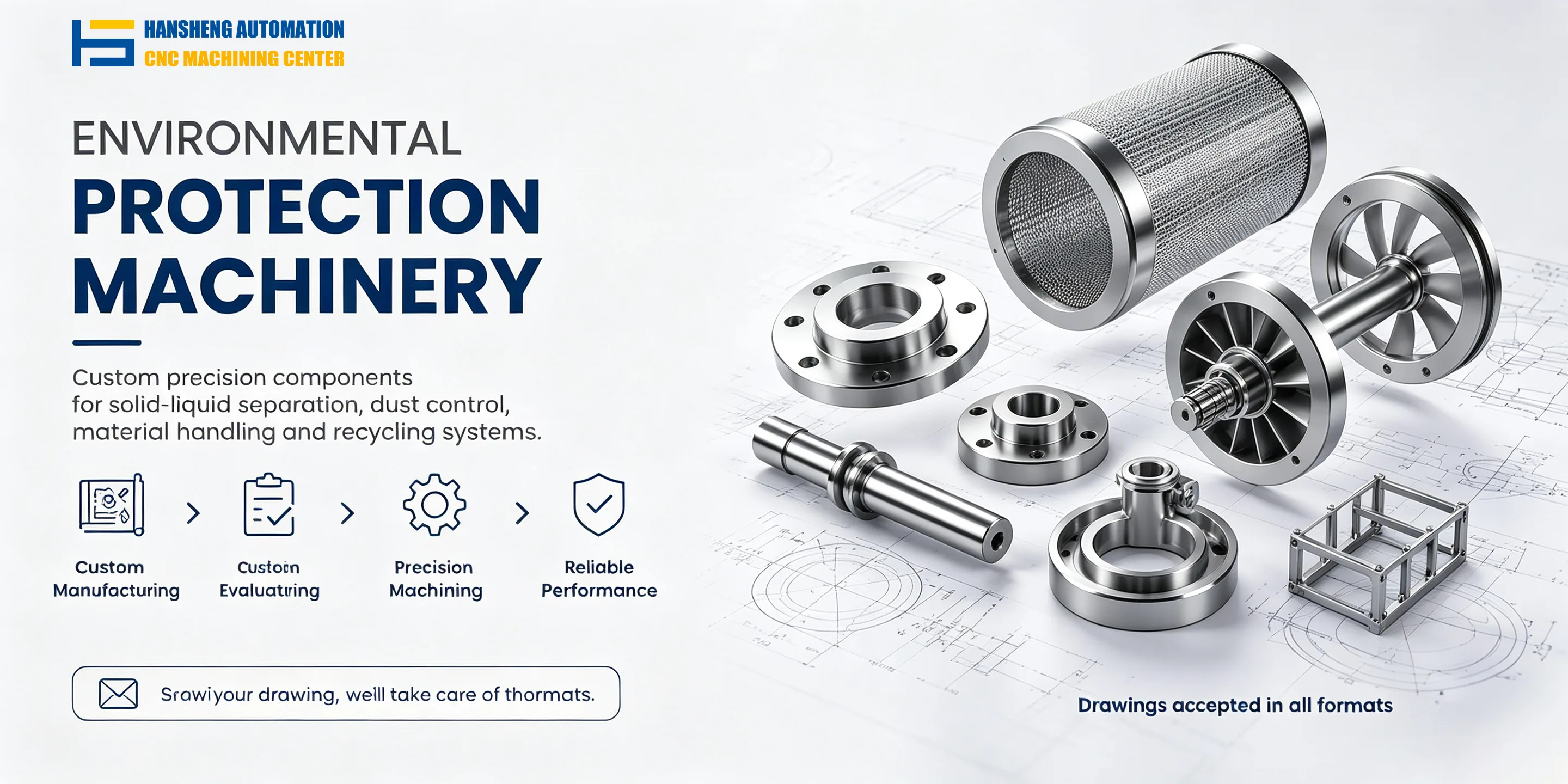
In addition to components used in environmental protection and vapor recovery equipment, Hansheng Automation provides drawing-based precision machining for non-standard industrial parts.
Our machining services also cover precision components for yacht equipment, remote-controlled racing cars, tobacco and packaging machinery, and filling equipment. We support single-piece and small-batch manufacturing according to customer drawings, dimensions, and assembly requirements.