A coating machine needs four core steps before startup: safety verification, media preparation, linked system testing, and process parameter confirmation. Only equipment operators with a special equipment work certificate may perform these steps. Unauthorized people must stay out of the operating area.
I. Safety pre-checks
(1) Machine appearance and guard checks
Check all guard doors, safety light curtains, and emergency stop buttons. Confirm they are intact and reset. Pressing an emergency stop button must trigger an audible and visual alarm. The alarm clears automatically after reset.
Check that guards at drive rollers, the coating head, and oven inlet and outlet are firmly installed. No looseness, damage, or missing parts.
Inspect air supply, power supply, hydraulic and heat transfer oil lines. Confirm no liquid or air leaks and no damaged insulation. All valves should be in their initial closed position.
Clear debris and leftover coating material from the coating area. Keep flammable, explosive, and scratch-prone items away from the equipment.
(2) Auxiliary system safety checks
Oven system: check that the oven temperature controller and over-temperature interlock alarm are calibrated and working. Manually trigger the over-temperature test to confirm the equipment cuts heating power when the alarm trips. Clean leftover coating material and dust inside the oven.
Exhaust system: start the exhaust fan briefly. Check that exhaust ducts from the oven and coating room are clear, with no blockage or abnormal noise.
Fire protection: confirm dry powder extinguishers and fire sand boxes in the coating area are valid and accessible. Keep fire lanes clear.
II. Process media preparation
(1) Substrate and coating material preparation
Verify that the substrate model, width, and thickness match the production work order. Place the substrate securely on the unwinding stand. Confirm the unwind tension brake is in the released state.
Mix coating adhesive or coating liquid according to the production formula. Use a filter to remove impurities. Pump the mixed material into the coating supply tank. Start the tank agitator at low speed to prevent settling and separation.
If solvent-based coating material is used, confirm solvent storage meets production needs and the storage area meets explosion-proof safety requirements.
(2) Utility preparation
Open the compressed air main valve. Check that pressure at each pneumatic component line stays within 0.5 to 0.7 MPa.
Start the circulating cooling water system. Check cooling water flow and inlet temperature for oven rollers and the coating head against equipment process requirements. Look for leaks.
For heated coating machines, start the heat transfer oil or steam preheating system in advance. Raise temperature slowly to 50% of the set value. Wait until residual air in the lines is fully released.
III. Standalone and linked system tests
(1) Standalone no-load test
Start the drive motors for unwinding, rewinding, and drive rollers one by one. Check that rotation direction matches equipment labels. Listen for abnormal noise or jamming during operation.
Start the coating supply pump. Manually jog the coating head to test discharge uniformity. Adjust the coating gap to the initial reference value.
Start the oven circulation fan. Check that air speed distribution is even, with no local overheating or fan noise.
(2) Linked dry run test
Set low-speed operating parameters (line speed within 20% of rated value). Run the machine empty for 3 to 5 minutes. Watch roller synchronization and tension control feedback for stability without jumps.
Test the edge correction system response. Manually shift the substrate slightly. Confirm the correction mechanism returns to position automatically.
Check lubrication point temperatures at drive parts. No overheating or smoke.
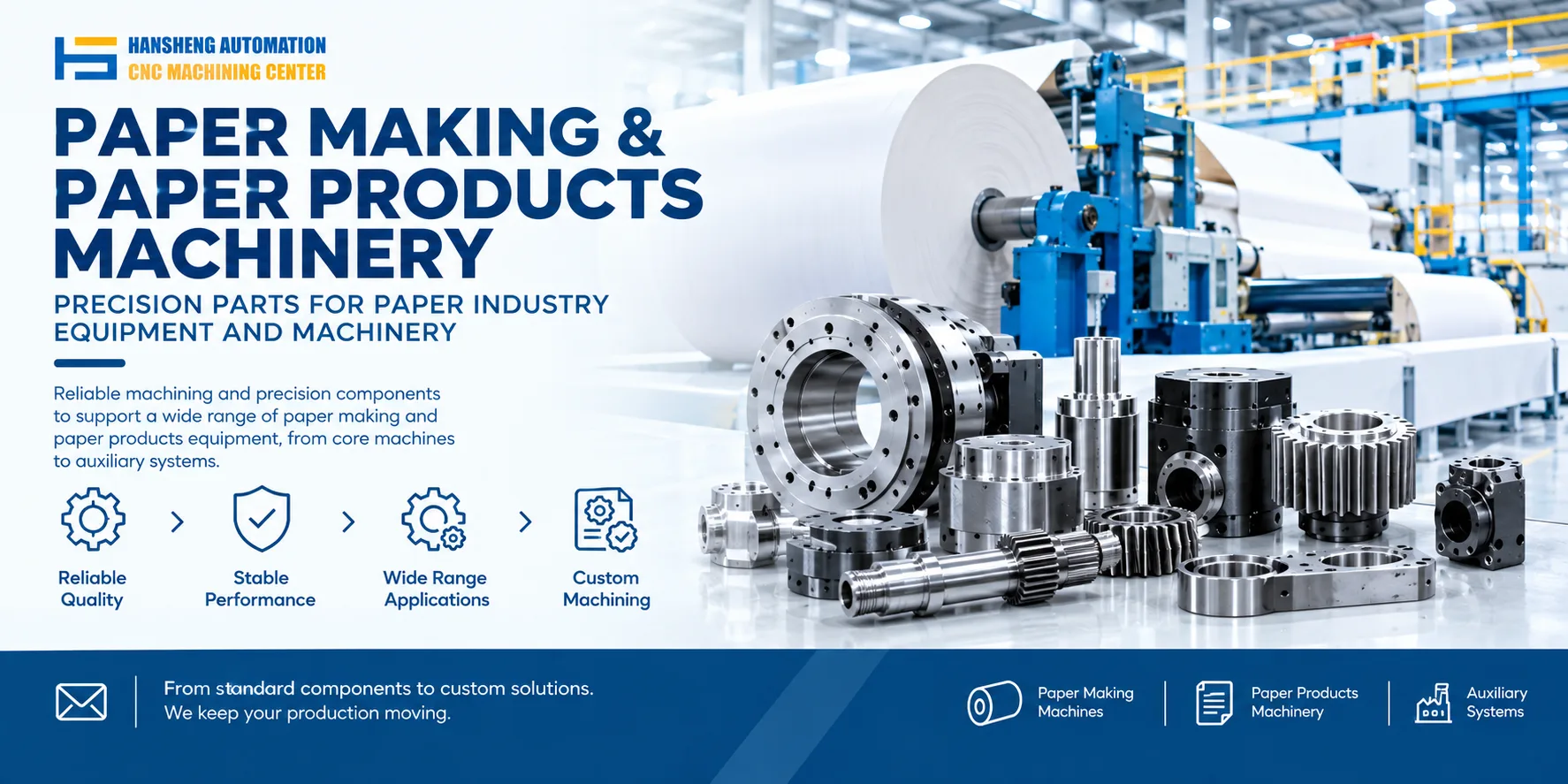
When coating heads, doctor blades, or rollers need replacement, we machine these precision parts from customer drawings in single pieces or small batches.
IV. Final process parameter confirmation
Check production work order parameters: coating thickness, line speed, oven zone temperatures, and unwind/rewind tension values. They must match the settings on the equipment touch screen.
Fine-tune the coating gap to the initial value for the substrate. Confirm the fit between doctor blade and coating roller meets process requirements.
Confirm all emergency stop buttons are reset and no unauthorized people remain in the operating area. Only then start the formal startup procedure.
Our precision parts custom machining is not limited to coating machine components. We also produce non-standard parts for filling machinery, tobacco packaging machinery, yacht hardware, RC car parts, printing equipment, food machinery, and medical devices. Hansheng Automation supports single-piece and small-batch production from customer drawings. We focus on precision parts machining and delivery, which helps maintenance and replacement across different industries.