In an optical image sorting machine, light is the foundation of the entire inspection process. A controlled light source illuminates the product surface, creating contrast between normal areas and defects such as cracks, burrs, or dimensional deviations. The camera then captures the reflected or transmitted light to form clear images for analysis. Without stable and properly angled illumination, the system cannot reliably detect fine defects.
Optical sorting machines are mainly used to replace manual inspection for product dimensions, cracks, surface burrs, appearance defects, and other quality issues. Their key advantages include:
High inspection speed: Up to 4,000 pieces per minute.
High accuracy: Detection precision can reach 0.001 mm.
Strong stability: The equipment does not suffer from fatigue or subjective influences such as emotion, allowing continuous and consistent rejection of defective products.
Low environmental requirements: It can operate normally in high or low temperatures, radiation, toxic gases, and other environments harmful to humans without affecting inspection efficiency.
High cost-effectiveness: One machine can replace five workers, and the investment can typically be recovered within one year.
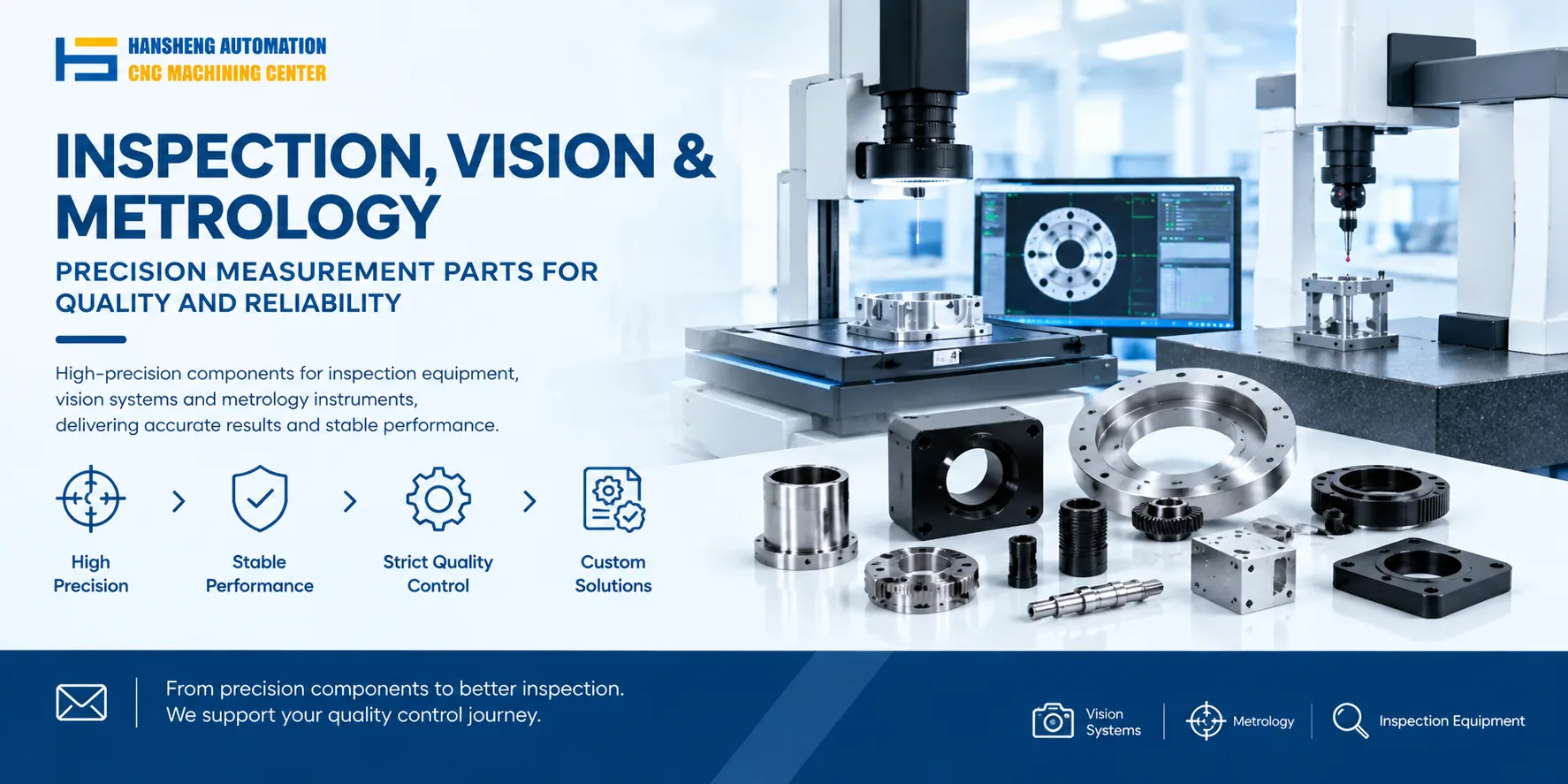
For integration into such equipment, Hansheng Automation provides custom-machined components including light source brackets, camera mounting plates, and precision guide rails according to customer drawings.