Maintenance of the ZB416 cigarette packaging machine requires first cutting off power and applying lockout/tagout procedures. Tobacco-specific equipment maintenance regulations must be strictly followed, while also preventing production contamination and ensuring safe working conditions.
I. Power Shutdown and Safety Protection
(A) Power System Control
Disconnect the main power switch and install locks. Hang warning signs stating "Under Maintenance – Do Not Close Switch." When multiple personnel work together, each person must use a personal lock to prevent accidental energization.
Open the exhaust valve of the pneumatic system to release residual compressed air and prevent unexpected movement of cylinders, pneumatic grippers, and other components.
(B) Personal Protection and Work Management
Wear safety shoes and cut-resistant gloves. Wear a safety helmet when repairing rotating parts, and use a safety harness when working at height on upper machine components.
Set up warning barriers around the maintenance area and prevent unauthorized personnel from entering.
II. Maintenance Specifications for Precision Components
(A) Record Information Before Disassembly
Use photographs, markings, and measurements to record precision fit clearances, component installation positions, and wiring routes. Examples include the axial runout of the forming drum and the radial clearance of the label roller. This helps avoid misalignment during reassembly.
Number and label easily confused pins, springs, and sensor connectors to prevent incorrect installation.
(B) Maintenance Operation Details
Do not strike precision transmission parts such as cutting knives and forming drums directly with a steel hammer. Use a copper bar or rubber hammer to apply force with cushioning.
Before repairing electrical components, disconnect the corresponding control circuit. Use a multimeter with an appropriate voltage rating to test components. Live operation is strictly prohibited.
(C) Replacement Standards for Wear Parts
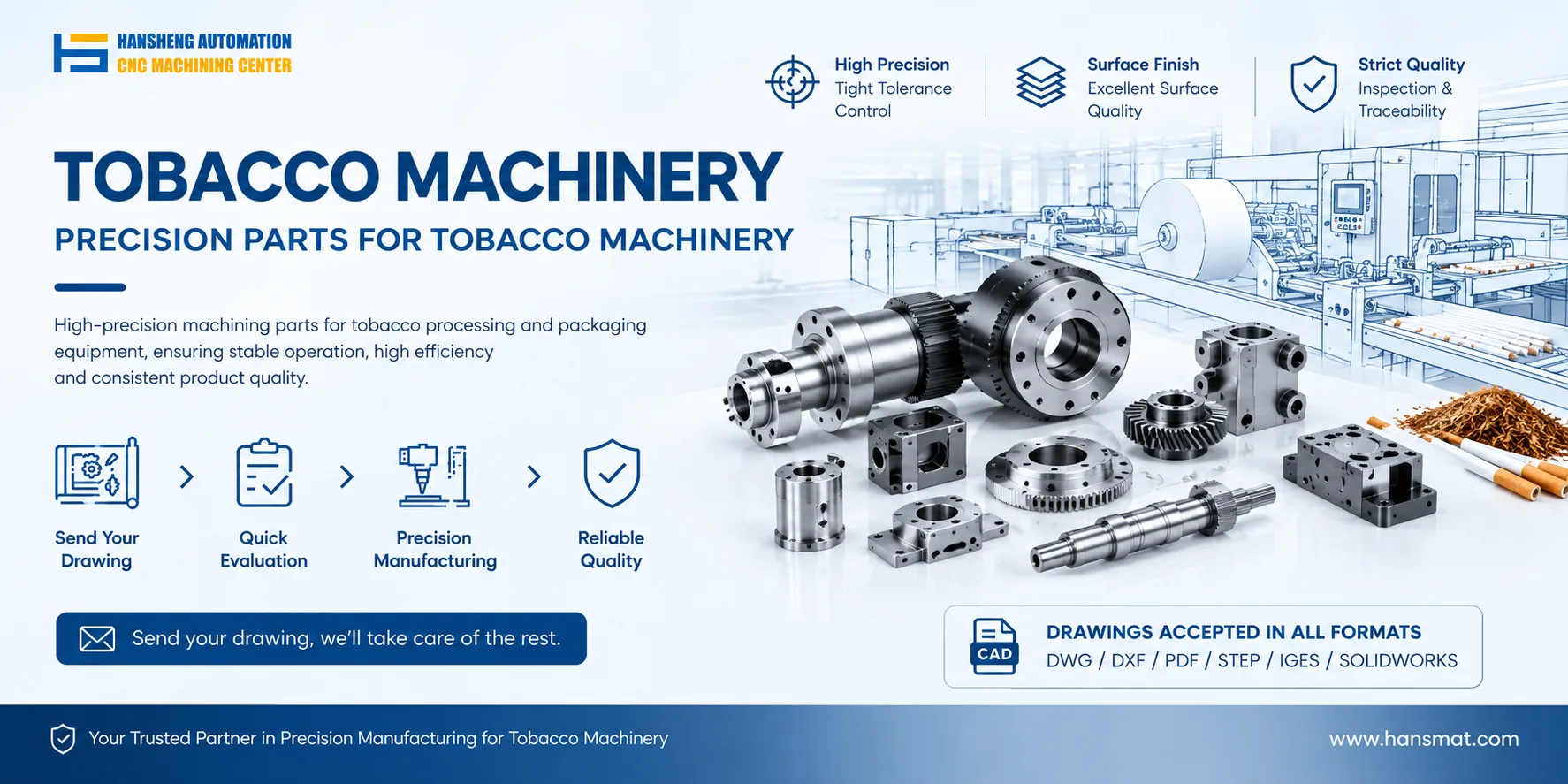
When replacing seals, clean oil and debris from the installation groove and apply food-grade silicone grease to ensure reliable sealing without contaminating cigarette packs. For worn shafts, bushings, folding turrets, or other non-standard replacement parts, Hansheng Automation can provide custom machining services based on customer drawings.
After replacing cutting tools, calibrate the blade edge clearance. Tolerances must comply with the relevant provisions of GB/T 23827-2019, Safety Requirements for Packaging Machinery.
III. Production Contamination Prevention
(A) Work Area Control
Lay oil-proof and leak-proof mats in the maintenance area to prevent oil or metal debris from dripping onto the cigarette pack conveying path.
Components that come into direct contact with cigarette packs should be placed in dedicated clean storage boxes after removal. They must not be placed directly on the floor or production line.
(B) Cleaning and Compliance Inspection
After maintenance, use filtered compressed air to clean dust and debris from the entire machine. Do not blow compressed air directly onto the cigarette pack forming area.
Components that contact cigarette packs must be wiped with food-grade cleaning agents and comply with food contact material safety standards for the tobacco industry.
IV. Trial Run and Acceptance Process
(A) No-Load Trial Run
Connect control power and run the machine without load for 15 minutes. Check for abnormal noise in transmission mechanisms and the synchronization of cylinder movements. Confirm that safety doors and emergency stop buttons function correctly.
Check the accuracy of sensor signal feedback and eliminate false limit triggering.
(B) Trial Run with Materials
Load qualified packaging materials and cigarettes, and run continuously for three production batches. Check label adhesion, cigarette pack forming qualification rate, and packaging speed stability.
Record equipment operating parameters after maintenance and compare them with baseline values before maintenance to confirm that performance has been restored.
(C) Formal Production Confirmation
Remove all tools and debris from the maintenance area, and confirm that all protective devices are reset and in place.
Formal production can only begin after joint acceptance and signature by the equipment administrator and process engineer.