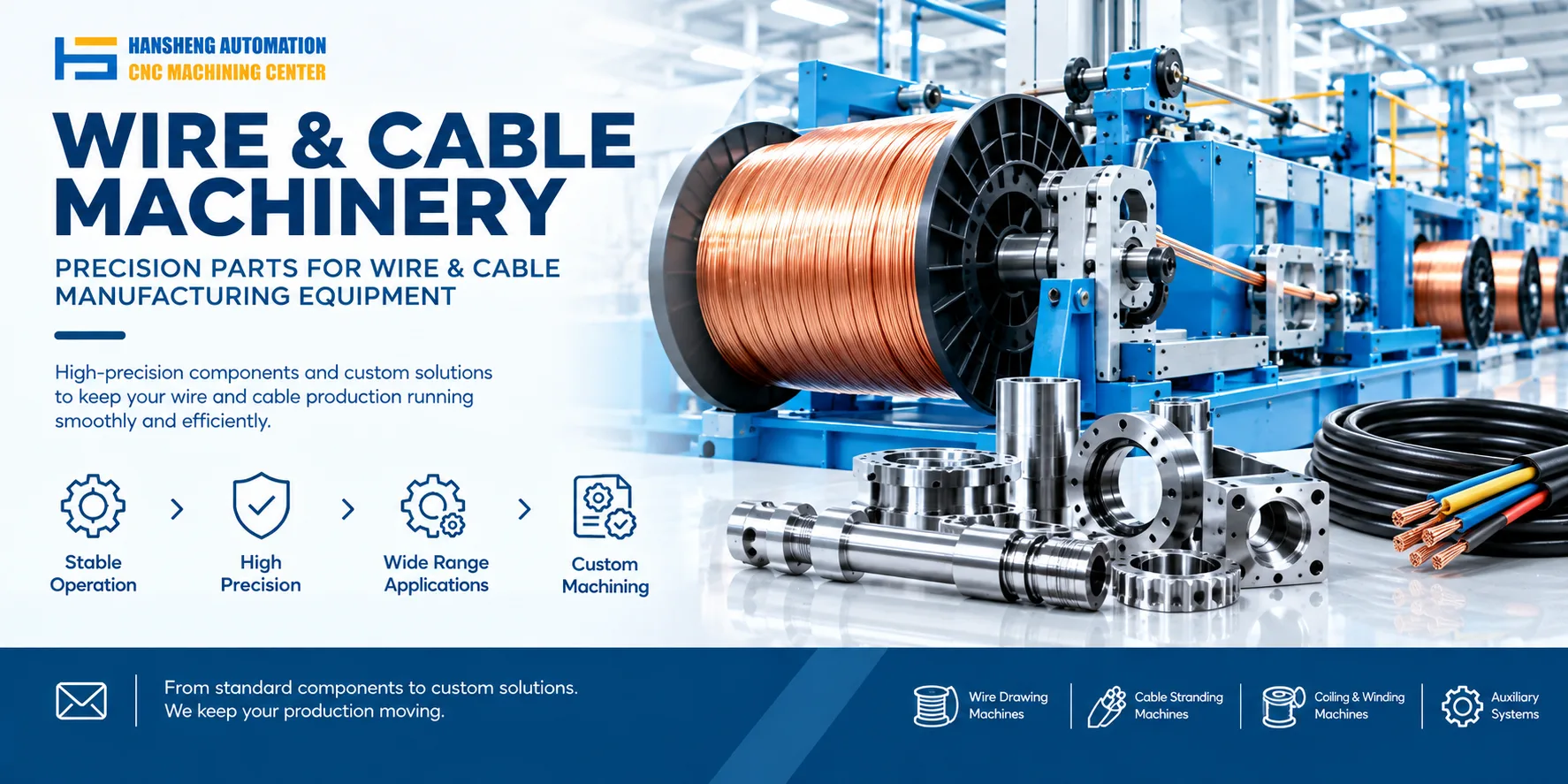
The main machine of a plastic pelletizing line is the extruder. It consists of the extrusion system, drive system, and heating and cooling system. We can machine screws, barrels, heads, dies, and breaker plates from customer drawings, in single pieces or small batches.
1. Extrusion system
The extrusion system includes the screw, barrel, hopper, head, and die. Plastic is plasticized into a uniform melt in the extrusion system. Under the pressure built up in this process, the screw pushes it continuously out through the head.
(1) Screw: The screw is the most important part of an extruder. It directly affects the extruder's application range and output. It is made of high-strength, corrosion-resistant alloy steel.
(2) Barrel: The barrel is a metal cylinder. It is usually made of heat-resistant, pressure-resistant, strong, wear-resistant, corrosion-resistant alloy steel, or a composite steel tube lined with alloy steel. The barrel works with the screw to crush, soften, melt, plasticize, vent, and compact the plastic. It also delivers the compound continuously and evenly to the forming system. The barrel length is generally 15 to 30 times its diameter. The goal is to heat and plasticize the plastic fully.
(3) Hopper: The bottom of the hopper has a cut-off device to adjust and stop material flow. The side has a sight hole and a calibrated metering device.
(4) Head and die: The head consists of an alloy steel inner sleeve and a carbon steel outer jacket. A forming die is installed inside the head. The head changes the rotating plastic melt into parallel linear movement. It guides the melt evenly and steadily into the die sleeve and gives the plastic the forming pressure it needs. The plastic is plasticized and compacted in the barrel. It passes through a porous filter plate, follows a flow channel through the neck of the head, and enters the forming die in the head. The mandrel and die sleeve fit together to form an annular gap that narrows along the path. This makes the plastic melt form a continuous, dense tubular covering around the core wire. To keep the plastic flow channel in the head reasonable and remove dead spots where plastic can collect, a splitter sleeve is often installed. A pressure equalizing ring is also used to reduce pressure fluctuation during extrusion. The head also has a die alignment and adjustment device. This makes it easier to adjust and align the concentricity of the mandrel and die sleeve.
2. Heating and cooling system
Heating and cooling are necessary for the plastic extrusion process.
(1) Extruders now usually use electric heating, divided into resistance heating and induction heating. Heating elements are installed on the machine body, neck, and head. The heating device heats the plastic in the barrel from outside to raise its temperature to the temperature required by the process.
(2) The cooling device keeps the plastic within the required process temperature range. It removes excess heat generated by the shear friction of the rotating screw. This prevents the plastic from decomposing, scorching, or becoming hard to shape due to excessive temperature. Barrel cooling is divided into water cooling and air cooling. Air cooling is more suitable for small and medium extruders. Large extruders often use water cooling or a combination of both. Screw cooling mainly uses center water cooling. The purpose is to increase the solid conveying rate of the material, stabilize the output, and improve product quality. Cooling at the hopper has two purposes. First, it strengthens the conveying of solid material and prevents plastic pellets from becoming sticky and blocking the feed opening due to rising temperature. Second, it keeps the drive section working normally.
3. Four categories of interlock shutdown causes
In a plastic pelletizing line, causes of friction clutch disengagement and interlock shutdown fall into four categories.
(1) Main motor system faults: Main motor torque too high or too low; main motor speed too low; main motor bearing temperature too high; main motor winding temperature too high; main motor water cooler inlet or outlet temperature too high; main motor bearing lube oil pump outlet flow too low; main motor bearing lube oil pump outlet pressure too low; main motor water cooler water leakage too high.
(2) Drive system faults: Gearbox shift lever position deviation; friction clutch instrument air pressure too high; friction clutch speed difference too large; gearbox lube oil pump outlet pressure too low; gearbox lube oil pump outlet oil temperature too high; friction clutch internal fault.
(3) Screw process section faults: Melt pressure before and after the throttle valve too high; head melt pressure too high; melt pressure difference before and after the screen changer too large; start-up valve rotation fault.
(4) Underwater pelletizing system faults: Pelletizer motor winding temperature too high; pelletizer speed too low; pelletizer torque too high; pellet water bypass automatic switching fault; pellet water pressure too high or too low; pellet water flow too low; pelletizer clamping bolts not tightened; pelletizing chamber bypass water valve not closed; pelletizer hydraulic clamping pressure too low; pelletizer motor fault; hydraulic cutter axial feed pressure too low.
The most frequent causes are: main motor torque too high or too low; friction clutch failure in the drive system; high melt pressure in the screw process section; underwater pelletizing system faults.
4. Common problems and fixes
Main motor torque too high
Causes: Oil lubrication system faults, poor alignment between the main motor output shaft and gearbox input shaft, and motor or clutch vibration can damage the main motor bearings and cause high torque. Excessive feed load or poor material melting can also cause high main motor torque.
Solutions: Check and clean the lubrication system regularly. Measure the main motor bearings with a vibration meter and infrared thermometer, and build a trend chart. If the value exceeds the trend, measure the main motor no-load current or power to see if it exceeds the specified value, and decide whether to replace the bearings. Check alignment between the main motor output shaft and gearbox input shaft regularly. After the first startup or three months after bearing replacement, alignment must be checked. Perform electrical tests to find the cause of rotor imbalance. Test clutch vibration speed. If it exceeds the specified value, re-adjust dynamic balance. Check barrel heating and cooling systems regularly to ensure uniform heating and full melting. If the main motor power curve and melt pressure curve rise instantly at startup, the feed rate is too high at that moment. Reduce the feed rate.
Main motor torque too low
Causes: Feed system faults cause the twin screws to run empty, which leads to low main motor torque.
Solutions: Check the additive system or main material feeding system for faults and clear blockages.
Friction clutch failure
Causes: Low instantaneous starting voltage, overheated friction discs and plates, aging friction discs and plates, and low air pressure on the friction disc can all cause clutch disengagement.
Solutions: Avoid peak power hours when starting the main motor. Reduce feed load. The minimum restart interval is 30 minutes. In summer, when starting the main motor more than twice, extend the interval further or use a fan for forced cooling. Blow with instrument air and wipe dust from the friction plate and disc surfaces. If wear is heavy or the surface shows a "glazed" appearance, replace the friction disc and plate. Confirm whether the air pressure can make the friction disc and plate fit together.
High melt pressure
Causes: High filter screen mesh, low melt index of polypropylene powder with high feed rate, low barrel zone temperatures causing incomplete melting, and low die plate opening rate blocking melt extrusion can all cause high melt pressure.
Solutions: When producing low melt index products, use a low mesh filter screen and increase the throttle valve opening to reduce back pressure. Replace the filter screen in time. Monitor the quality of additives and the ash content in polypropylene powder. Reduce feed load. Without affecting extrusion quality, raise barrel zone temperatures to increase polypropylene melt temperature and improve material flow. After the extruder stops, raise the head temperature and hold it for a period, then thoroughly flush and clean the die plate.
Underwater pelletizing system faults
Causes: Excessive cutter wear or cutting edge damage, low pellet water flow, excessive pelletizer vibration, poor cutter-to-die plate contact, large melt index fluctuation causing inconsistent output flow, and high pellet water temperature can all cause the underwater pelletizing system to stop, leading to interlock shutdown of the whole line.
Solutions: After shutdown, visually inspect the cutter edges for excessive wear or damage. If found, replace all cutters. Check whether pellet water leaks internally and whether the pellet water tank filter and cooler are blocked. If blocked, clean manually. Check whether pellet water pump inlet and outlet pressures are normal. If not, service the pellet water pump and valves on the pump line. Check whether alignment between the cutter shaft and pelletizer motor is out of tolerance, whether the cutter shaft bearing assembly is damaged, and whether the cutter rotor dynamic balance is off. During operation, check whether there is a gap between the four moving wheels of the pelletizer cart and the guide rail. Control volatiles in polypropylene powder to eliminate vibration on the cutter and cutter shaft when passing through die plate holes. Lower the hot oil temperature at the die plate. Check barrel and die plate temperature distribution and whether barrel cooling water flow, pressure, and temperature are normal. Confirm the time setting for "water, cutter, and material" to reach the die plate. This prevents pellet water from arriving too early and freezing the die plate holes. After the pelletizer is closed on the head, quickly raise the feed rate to the extruder's set load.
Beyond plastic pelletizing equipment, our precision custom machining capability is not limited to one industry. Hansheng Automation can machine non-standard metal parts for medical devices, food machinery, and printing equipment from customer drawings. We also machine yacht components, RC car components, and specialized parts for tobacco packaging and filling machinery. We focus on build-to-print custom machining and produce single pieces or small batches according to customer drawings. We do not sell complete machines.