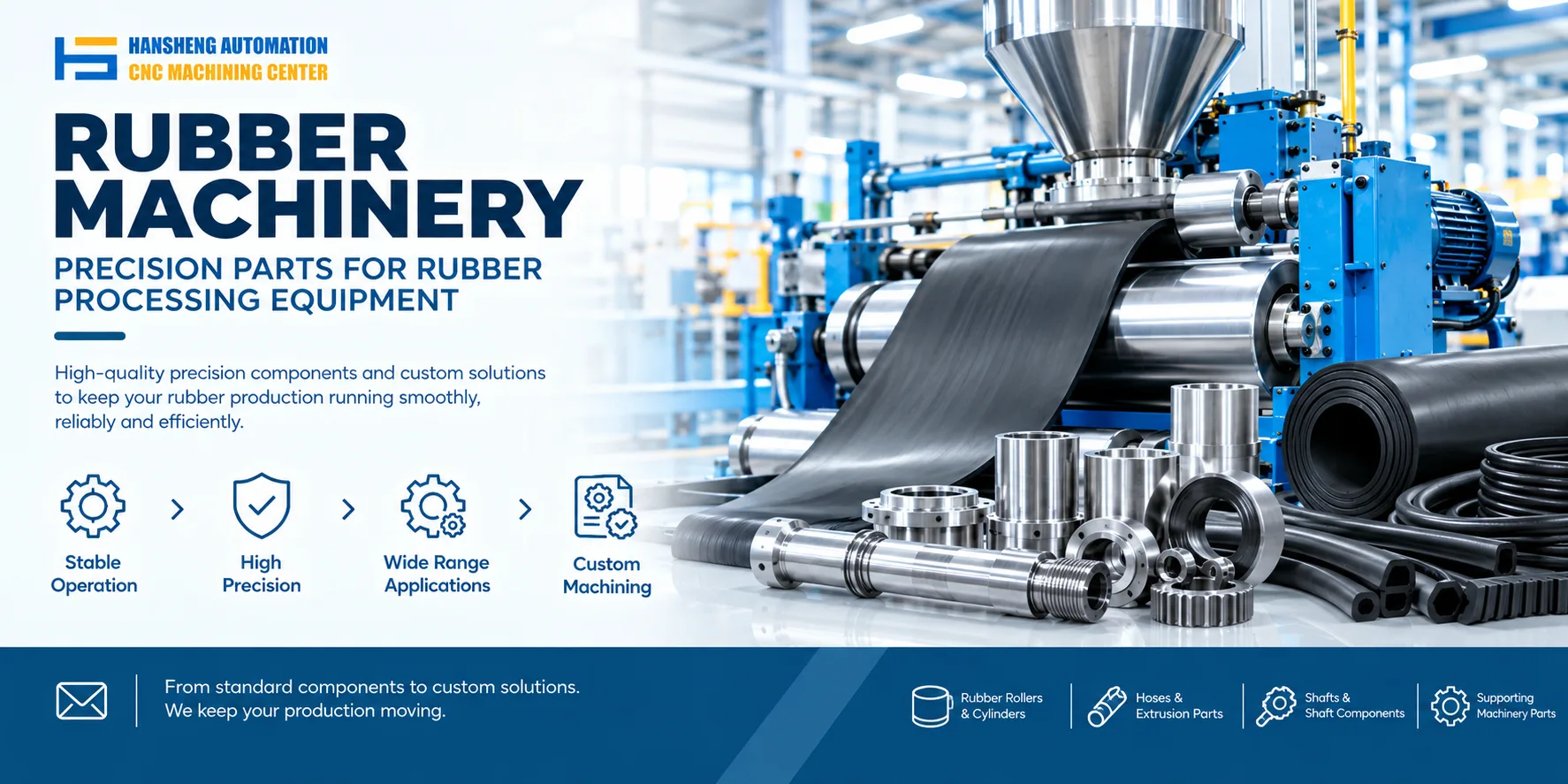
Rubber mixing and sulfur vulcanization require two main types of equipment: mixing machines and vulcanizing machines. The appropriate configuration depends on production volume, rubber compound, product design, and manufacturing requirements.
1. Rubber mixing equipment
Mixing equipment combines raw rubber with sulfur and other ingredients to produce a compound with the required composition and processing properties.
1.1 Open mill
An open mill, also called a two roll mill, is commonly used for small batch production, trial runs, and laboratory work. It uses two steel rolls rotating at different speeds to compress and shear the rubber compound.
The source reference gives a typical roll diameter range of 230 to 610 mm and a roll speed ratio of approximately 1:1.2. The difference in roll speeds helps generate the shear needed for mixing.
The machine must have suitable safety guards and protective devices to reduce the risk of operators becoming caught in the rotating rolls.
1.2 Internal mixer (Banbury mixer)
An internal mixer is widely used for industrial rubber compounding. It mixes rubber and additives inside an enclosed chamber, helping contain dust and providing consistent mixing conditions.
The batch capacity specified in the source ranges from 30 L to 500 L, depending on the machine model. Internal mixers can be used with different rubber formulations and are suitable for production environments that require repeatable mixing results.
2. Rubber vulcanizing equipment
Vulcanizing equipment applies heat and, where required, pressure to convert mixed rubber into a cured product. The machine should match the product geometry, compound characteristics, and production method.
2.1 Hydraulic platen vulcanizing press
A platen vulcanizing press uses heated upper and lower platens to apply heat and pressure to rubber placed inside a mold. It is commonly used to produce sealing rings, rubber pads, and small tire components.
The reference gives a typical working pressure of 10 to 20 MPa and a vulcanization temperature range of 140°C to 180°C. The actual temperature and curing time depend on the rubber formulation and process requirements.
Available configurations include manual, semi automatic, and fully automatic hydraulic presses.
2.2 Vulcanizing autoclave
A vulcanizing autoclave is used for batch vulcanization of larger rubber products, including hoses, belts, and large rubber linings. It is an enclosed pressure vessel that uses a heating medium such as steam, electricity, or heat transfer oil, depending on the equipment design.
The source specifies a working pressure range of 0.5 to 1.6 MPa and a maximum temperature of up to 200°C. The heating method and operating conditions should be selected according to the product and the autoclave specifications.
2.3 Rubber injection molding machine
A rubber injection molding machine is suited to automated production of precision molded rubber components. It injects prepared rubber compound into a mold cavity, where the material is heated and vulcanized.
The process is commonly used for automotive seals and precision rubber components for medical applications. Mold design, injection conditions, and curing parameters must be matched to the material and product requirements.
2.4 Continuous vulcanization line
Continuous vulcanization lines are used for long rubber products, including cables and extruded profiles. Depending on the production process, the line may use microwave heating, a hot air vulcanization tunnel, or a combination of heating methods.
The material passes continuously through the curing section, making this equipment suitable for high volume production of products with a consistent cross section.
3. Equipment for laboratory testing and product development
For laboratory research and small batch trials, integrated mixing and vulcanization testing equipment can be used to prepare compounds and evaluate their curing behavior.
This setup is useful during rubber formulation development, when small quantities of material need to be tested before a production process is established. The equipment capacity and test conditions should match the purpose of the evaluation.
4. Safety considerations
Operators must follow the equipment manufacturer's operating procedures and use the required protective devices. Open mills require effective protection against entanglement, while heated platens and other hot surfaces present a burn hazard.
Vulcanizing autoclaves are pressure equipment and must be operated in accordance with applicable safety regulations. Where certification or specific operator qualifications are required, personnel must meet those requirements. Equipment inspections and maintenance should follow the relevant regulations and manufacturer's recommendations.
5. Custom machining for rubber machinery components
Rubber mixing and vulcanization equipment also relies on precision mechanical components that must fit the machine design and operating conditions. When a replacement part is non-standard or an original component is difficult to source, Hansheng Automation can assess custom machining based on customer drawings and technical specifications.
Our machining services also cover components for packaging machinery, filling equipment, and tobacco machinery, as well as precision parts for yacht equipment and RC racing cars. Customers can submit drawings, dimensions, and material requirements for an assessment of machining feasibility and the appropriate manufacturing process.