The appropriate extrusion temperature depends on the type of extruder, the raw material, and the processing requirements. Rubber extrusion and plastic extrusion use different temperature control methods, so the settings should be selected according to the material and equipment.
1. Rubber extruder temperature
A hot-feed rubber extruder processes rubber that has been preheated and worked through a separate heating or milling process. The supplied reference specifies a feed temperature of 50 to 70°C.
Hot-feed extruders support continuous production and are used to produce tire components such as treads and profiled rubber sections. They are also used for rubber coating and blank extrusion in hose and cable manufacturing.
The rubber temperature should remain within the process requirements for the specific compound. Excessive temperature can affect the material's processing behavior, while insufficient preheating may make extrusion more difficult.
2. Plastic extruder temperature
Plastic extrusion typically uses a temperature profile that rises through the feeding and plasticizing sections, then stabilizes or decreases toward the die, depending on the resin and equipment configuration.
The following table provides the reference temperature ranges for several plastics.
|
Plastic material |
Feed section (°C) |
Plasticizing section (°C) |
Metering section (°C) |
Neck (°C) |
Head (°C) |
Die opening (°C) |
|---|---|---|---|---|---|---|
|
Soft PVC |
130 to 140 |
150 to 170 |
175 to 180 |
170 to 180 |
170 to 175 |
170 to 180 |
|
Rigid PVC |
150 to 160 |
160 to 170 |
175 to 185 |
175 to 180 |
170 to 175 |
170 to 180 |
|
Polyethylene sheathing compound |
140 to 150 |
180 to 190 |
210 to 220 |
210 to 215 |
190 to 200 |
200 to 210 |
|
Fluorine-46 |
260 |
310 to 320 |
380 to 400 |
380 to 400 |
350 |
250 |
|
Foamed polyethylene |
150 to 160 |
180 to 190 |
200 to 220 |
210 to 215 |
200 to 210 |
210 to 220 |
These figures are reference settings from the supplied material. Actual operating temperatures should be confirmed against the resin specifications, extruder design, and production process.
3. Factors affecting polyethylene film extrusion temperature
For polyethylene film extrusion, the melt flow rate affects the required processing temperature. According to the supplied reference, a higher melt flow rate generally corresponds to a lower extrusion temperature.
From the feed opening to the screen pack, the temperature typically increases along the extruder barrel. At the die head, the temperature is generally close to the screw tip temperature or 10 to 20°C lower.
The reference also states that linear low density polyethylene (LLDPE) is usually extruded at a higher temperature than low density polyethylene (LDPE). The actual settings should be determined according to the resin grade and film production requirements.
4. Custom machining for extrusion equipment components
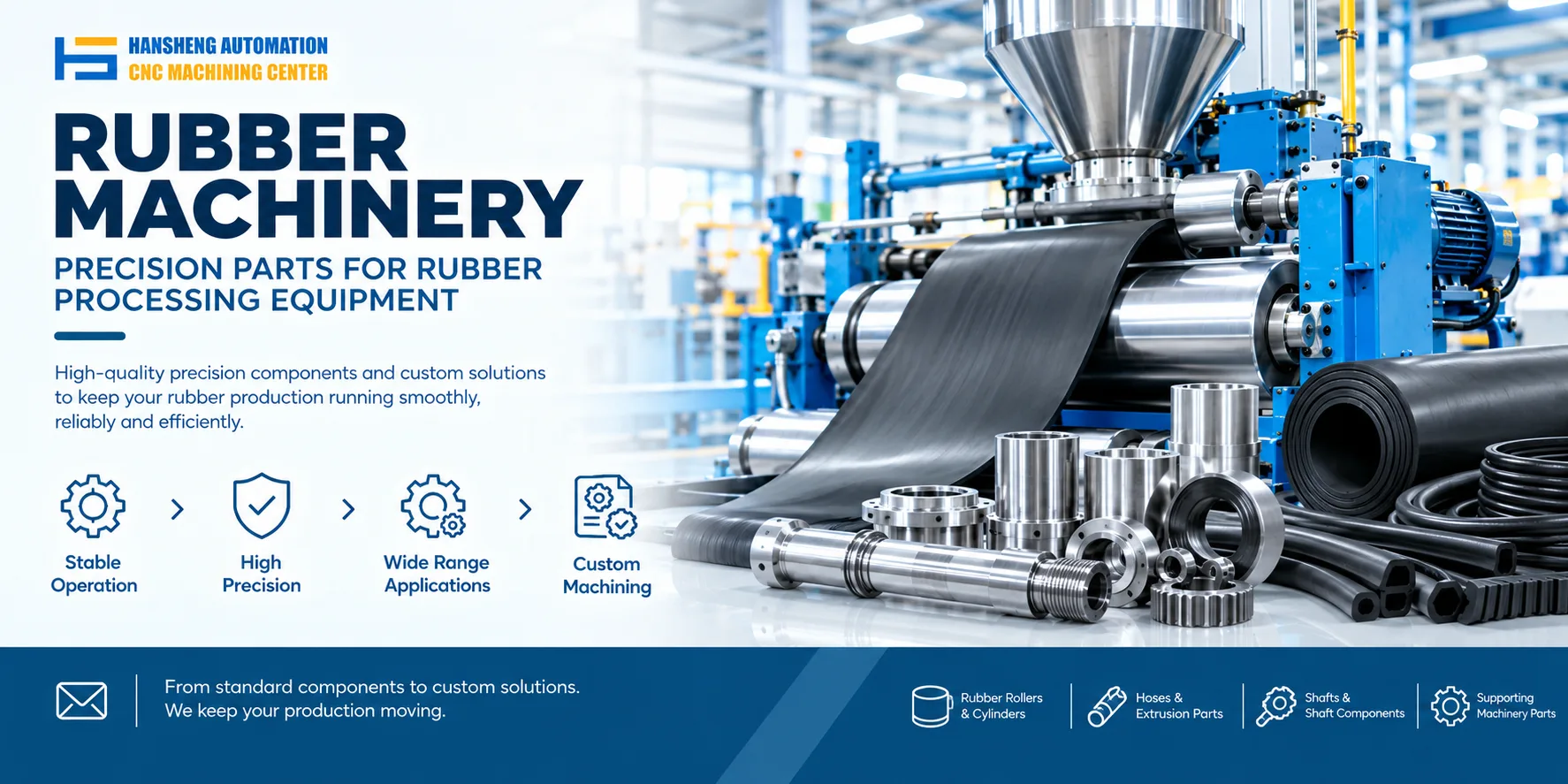
Extrusion equipment may require precision metal components manufactured to specific dimensions and fitting requirements. Hansheng Automation can assess custom machining based on customer drawings, material specifications, and dimensional requirements.
Our machining services also cover non-standard components for rubber processing, packaging, and tobacco machinery. We can assess precision parts for filling equipment, yacht equipment, and RC racing cars according to the supplied drawings and machining requirements.