The motor speed of an ultrafine pulverizer is not fixed. It varies according to the machine design, grinding mechanism, material characteristics, and required particle size. Different equipment models may use significantly different speed ranges.
1. Equipment Design and Model
Different ultrafine pulverizers use different drive systems based on their structural design and processing requirements. Some models use variable-frequency control to adjust the grinding speed, with certain machines operating within a range of approximately 2,000–8,000 rpm.
Some laboratory-scale pulverizers may use high-speed turbine structures with speeds exceeding 30,000 rpm. These values are model-specific and should not be treated as universal operating standards.
2. Material Characteristics
The material being processed also affects the appropriate motor speed. For harder mineral materials, some pulverizers operate within a medium-to-high speed range to provide sufficient impact force while maintaining stable operation.
For fibrous or tough materials, some specialized herbal medicine pulverizers use multi-stage grinding structures. Different stages may operate at different speeds for coarse crushing and fine grinding, allowing the machine to balance processing efficiency and final particle size.
3. Processing Requirements
Different grinding methods require different speed configurations. Airflow pulverizing systems may use independent speed control for the classifier and induced-draft fan. The classifier speed can be adjusted according to the required particle size, while the fan speed controls airflow and material transport.
Food and pharmaceutical applications may place greater emphasis on temperature control, noise reduction, and stable operation. In these cases, the equipment may use variable-speed control to optimize the grinding process according to material properties.
How to Determine the Correct Motor Speed
The motor nameplate is the first source for checking the rated speed of a specific machine. For example, a particular pulverizer may have a rated motor speed of 2,840 rpm, while another model may be designed for approximately 5,500 rpm.
During material trials, operators should follow the manufacturer's operating manual and use the recommended relationship between load, feed rate, and rotational speed rather than selecting a speed solely based on the motor's maximum rated value.
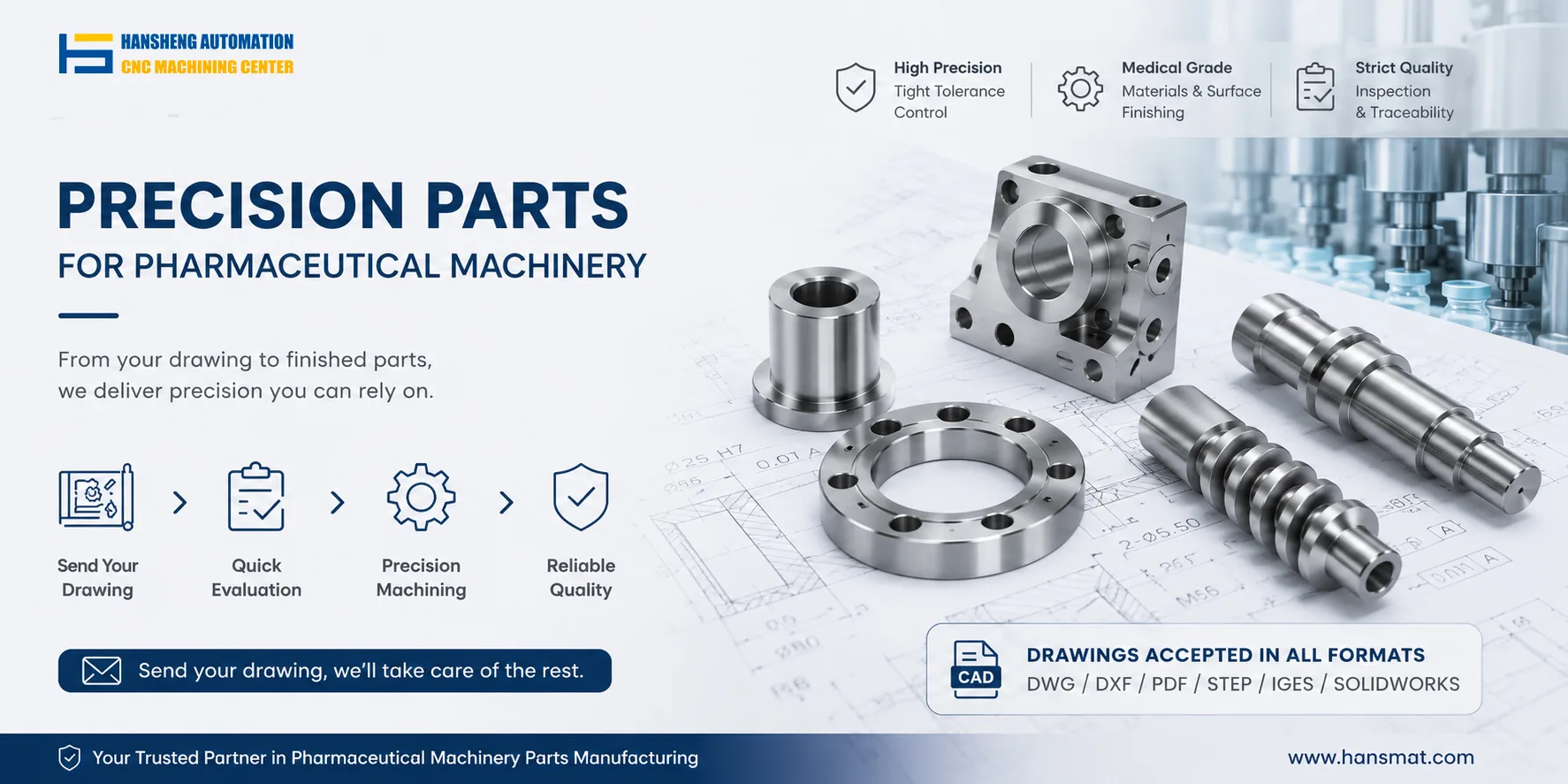
For customers developing or modifying pulverizing equipment, Hansheng Automation can also provide custom-machined precision components according to customer drawings and technical specifications, supporting non-standard shafts, housings, rotating components, and other mechanical parts used in pulverizing systems.