Mixing mills and internal mixers are both used in rubber processing, but they differ in their working principles and typical applications.
1. How do mixing mills and internal mixers work?
Mixing mill
A mixing mill typically uses a two-roll structure. The two rolls rotate and create friction and compression to blend rubber materials. Operators use this equipment to incorporate fillers, plasticizers, curing agents, and other additives into rubber compounds.
The mixing mill is commonly used during compound preparation, helping distribute ingredients throughout the rubber before subsequent processing and forming.
Internal mixer
An internal mixer processes rubber inside an enclosed chamber using a rotor system. The rotating components apply mechanical shear and compression to the material under controlled processing conditions.
The source material describes the internal mixer as equipment that uses elevated temperature and pressure to process rubber with curing agents, accelerators, and other additives. The specific function depends on the formulation and processing stage.
2. What are their main applications?
Applications of mixing mills
Mixing mills are mainly used to blend rubber raw materials with various compounding ingredients. This preparation stage helps achieve the required compound consistency before the material moves to subsequent production processes.
Applications of internal mixers
Internal mixers are used to process rubber compounds in a closed chamber. Their enclosed mixing environment and rotor action support compound preparation and help distribute ingredients throughout the material.
The equipment selected for a particular production line depends on the rubber formulation, required mixing quality, production capacity, and process requirements.
Custom precision machining for rubber processing equipment
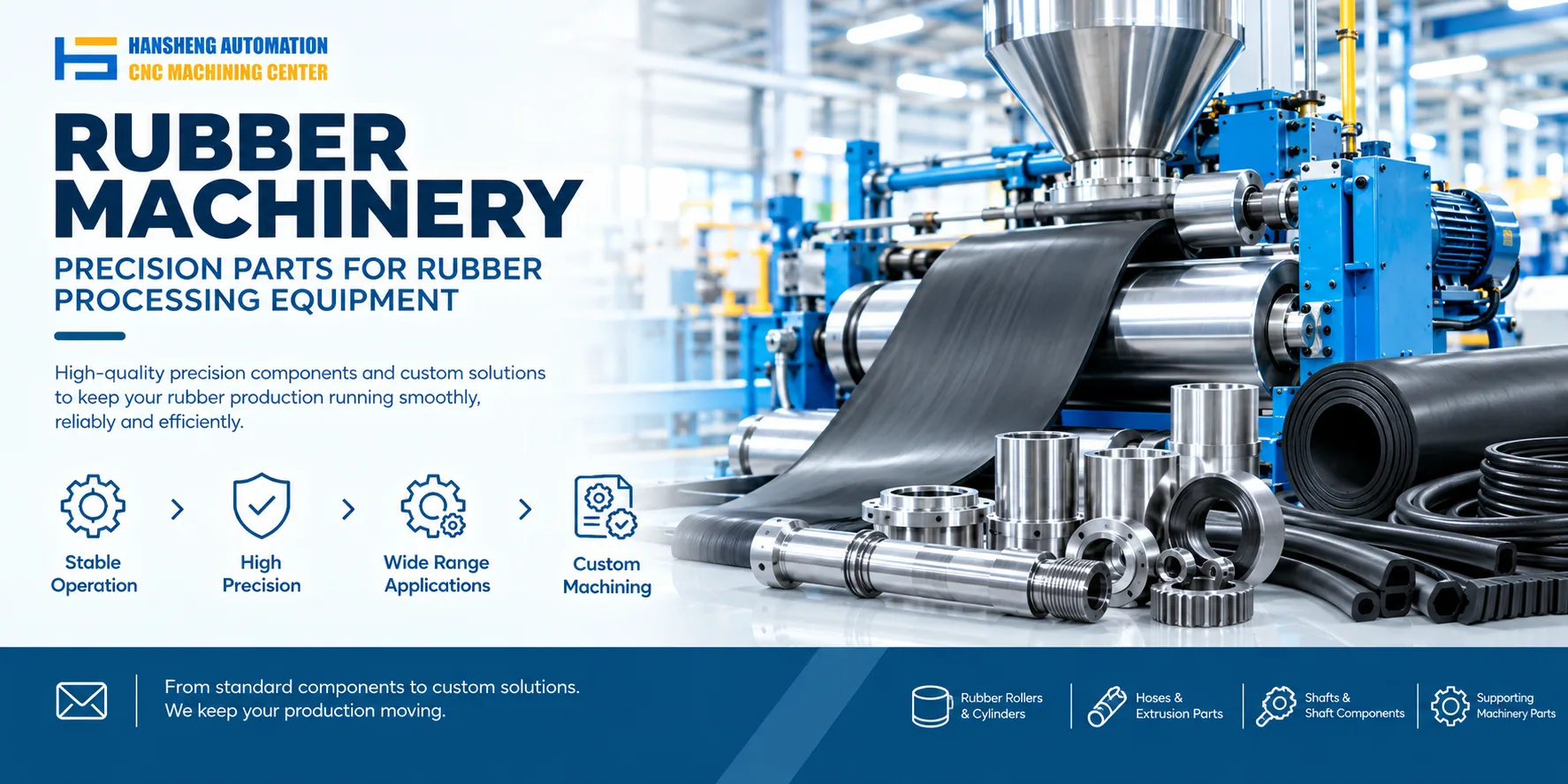
Mixing mills, internal mixers, and other rubber processing equipment rely on mechanical components that must meet specific dimensional and assembly requirements. Hansheng Automation provides custom precision machining based on customer drawings, with manufacturing processes selected according to component geometry, material specifications, and dimensional tolerances.
Our machining services also cover components for packaging and filling machinery, tobacco processing equipment, yacht systems, and RC racing cars. We support prototype development and small batch production of non-standard mechanical parts according to customer drawings and technical requirements.