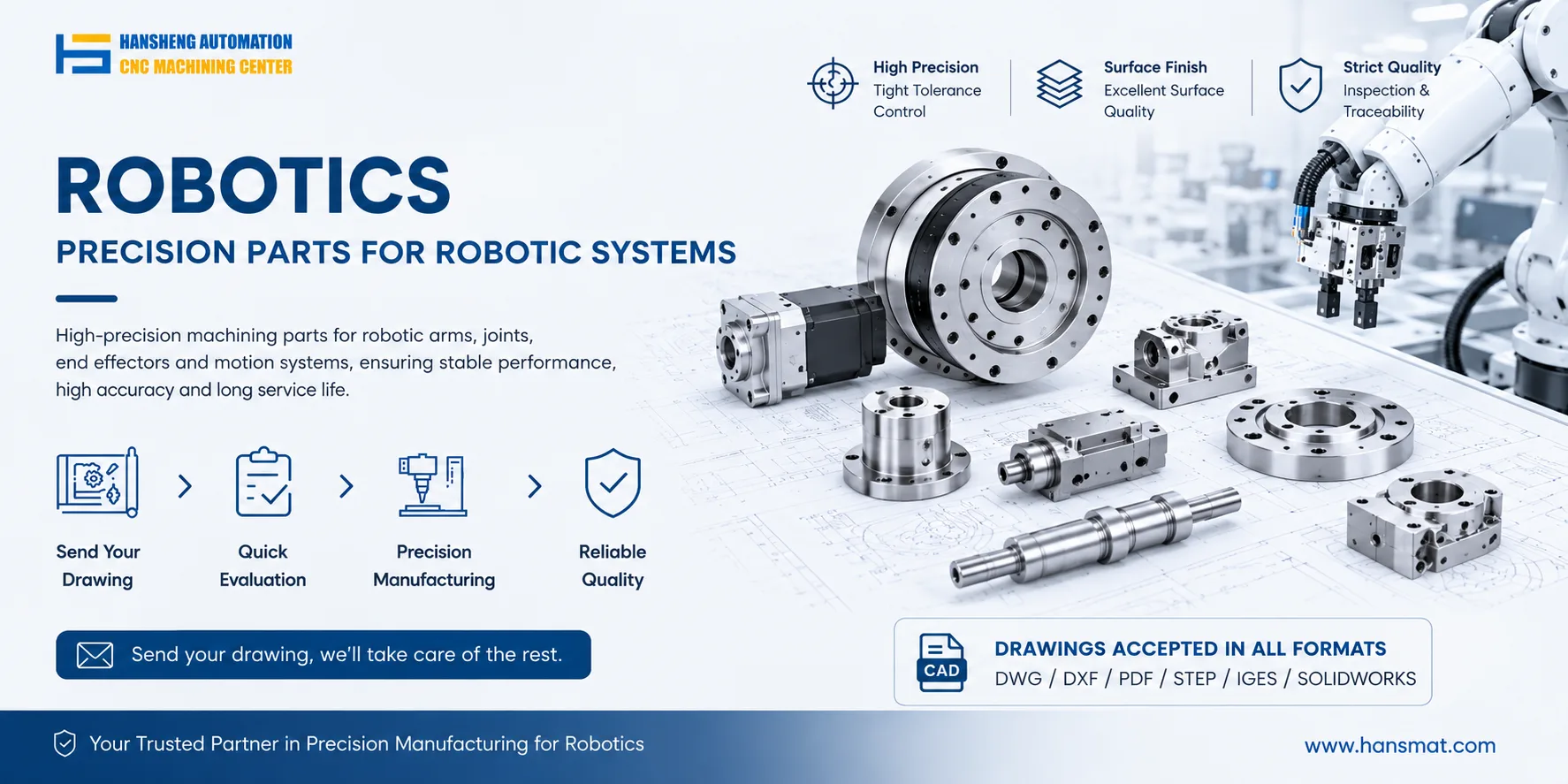
An assembly robot is the core equipment of a flexible automated assembly system. It is used for assembling parts or components in the later stages of product manufacturing. It is an industrial robot that integrates optics, mechanics, microelectronics, automatic control, and communication technologies.
Composition
Robot Manipulator: This is the mechanical body of the assembly robot. It comes in various structural types, including horizontal joint type, Cartesian coordinate type, multi-joint type, and cylindrical coordinate type. Different manipulator types suit different assembly scenarios and task requirements. For example, horizontal joint manipulators have a small footprint and flexible movement, making them suitable for assembling small parts such as electronic devices. Multi-joint manipulators offer higher degrees of freedom and can complete assembly movements along complex spatial paths.
Controller: The controller generally uses a multi-CPU or multi-level computer system. Its main function is motion control and motion programming. Through the controller, operators can precisely program and control the movements of the assembly robot so that it completes various assembly tasks according to preset programs. For example, in automotive engine assembly, the controller can accurately control the robot's gripping, transferring, and installation actions to ensure that every part is installed correctly.
End Effector: End effectors are designed as various grippers and wrists to adapt to different assembly objects. The end effector is the part that directly contacts the assembly object, and its design directly affects assembly quality and efficiency. For example, precision electronic component assembly requires micro grippers that can grasp and place components accurately, while large mechanical part assembly requires grippers with sufficient gripping force. For non-standard grippers or precision end effector components, Hansheng Automation provides custom machining services based on customer drawings, supporting both prototype development and small-batch production.
Sensing System: The sensing system obtains information about the interaction between the assembly robot, the environment, and the assembly object. It may include vision sensors, force sensors, tactile sensors, and others. Through these sensors, the assembly robot can perceive changes in the surrounding environment and the state of the assembly object, enabling more intelligent assembly operations. For example, vision sensors help the robot identify the position and orientation of parts, while force sensors monitor the force applied during assembly in real time to prevent part damage from excessive force.
Classification
General-Purpose Assembly Robots: These are suitable for production scenarios where assembly accuracy requirements are not particularly high and the assembly environment is relatively simple. They usually feature lower cost and simple operation, meeting the assembly needs of general manufacturing. For example, on some home appliance assembly lines, general-purpose assembly robots can complete simple part assembly tasks.
Precision Assembly Robots: These are mainly used in production processes that demand extremely high assembly accuracy, such as electronic chips and precision instruments. Precision assembly robots offer high accuracy and high stability, and can perform precise assembly operations in very small spaces. For example, in semiconductor manufacturing, precision assembly robots can accurately place tiny chips onto circuit boards.