Assembly robots are core components of modern flexible automated assembly systems, combining mechanical intelligence with precise operation. Their structure generally includes the manipulator, controller, end effector, and sensing system.
Manipulator
The manipulator forms the mechanical body of the assembly robot. It comes in several structural types, including the horizontal joint type for flexible movement, the Cartesian coordinate type for precision, the multi-joint type for versatile motion, and the cylindrical coordinate type for high efficiency. Each type is designed to suit specific assembly scenarios and space constraints.
Controller
The controller acts as the command center of the assembly robot. It usually uses a multi-CPU or multi-level computer system to ensure accurate motion control and flexible programming, allowing the robot to perform assembly tasks according to preset programs.
End Effector
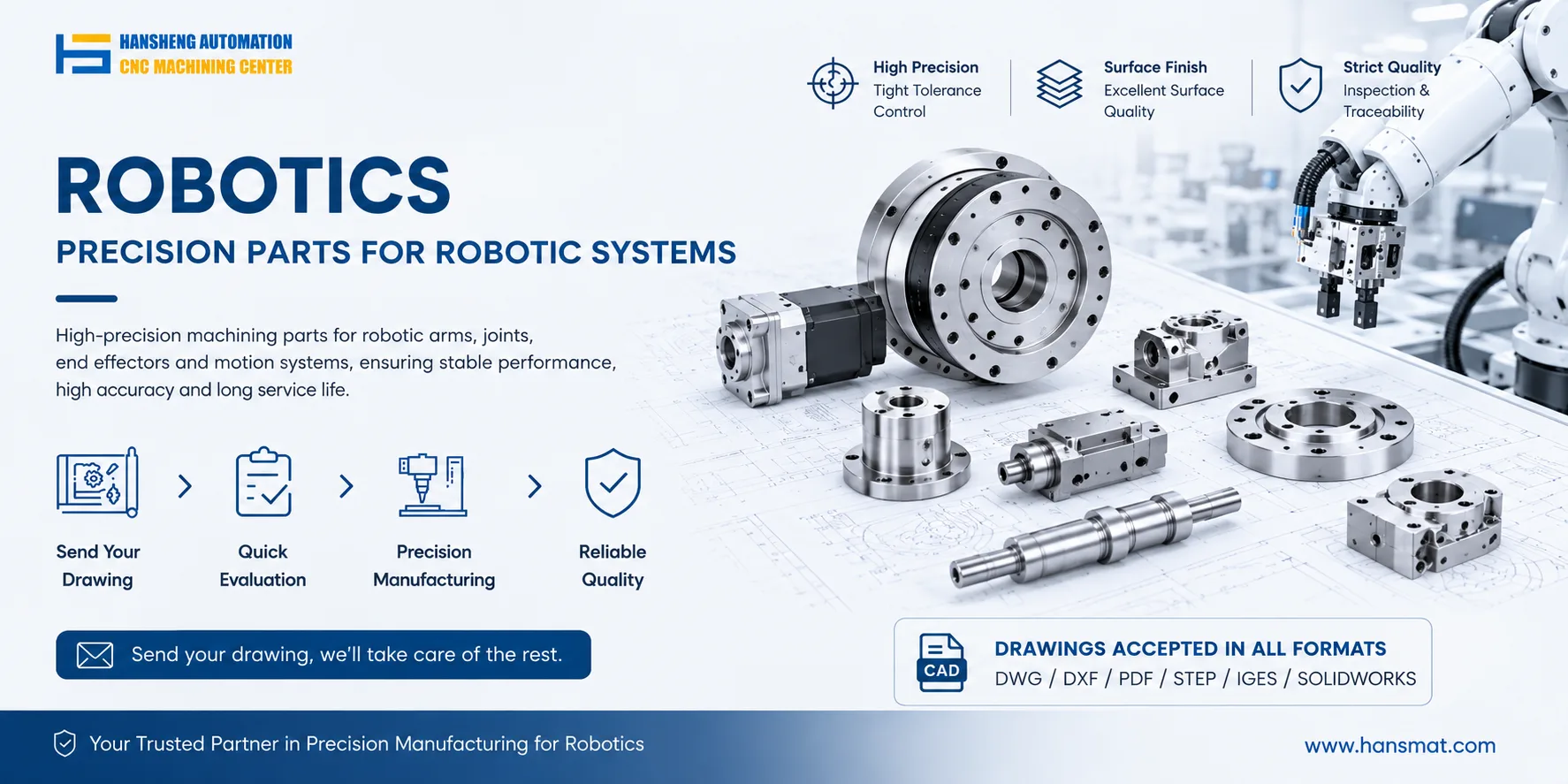
The end effector includes various grippers and wrists that can be changed according to the assembly object. For non-standard grippers, adapter flanges, or precision end effector components, Hansheng Automation provides custom machining services based on customer drawings, supporting both prototype development and small-batch production.
Sensing System
The sensing system captures real-time interaction between the robot, the environment, and the assembly object. It provides feedback to maintain assembly accuracy and prevent errors during operation.
Together, these components enable efficient and precise automated assembly.