A slitting machine cuts wide paper or film into multiple narrow strips. It is common in papermaking machinery and in printing and packaging machinery.
How it works
The traditional control scheme uses one large motor to drive the unwind and rewind shafts. Magnetic particle clutches are mounted on those shafts. By adjusting the current through the clutch, the resistance changes. That resistance controls surface tension in the material.
Key parts
The magnetic particle clutch and brake are special automated actuators. Torque is transmitted through magnetic powder in the working gap. Changing the excitation current changes the magnetic state of the powder and adjusts the transmitted torque.
Main features
The magnetic particle clutch acts as a resistance device. The system outputs a DC voltage to control the resistance it produces. It is a passive device, so it can control relatively small tension.
Advantages
It allows stepless speed regulation from zero to synchronous speed. It suits high-speed trim and small to medium power drive systems. In an unwind or rewind tension control system, current adjustment changes torque. This keeps tension constant during winding.
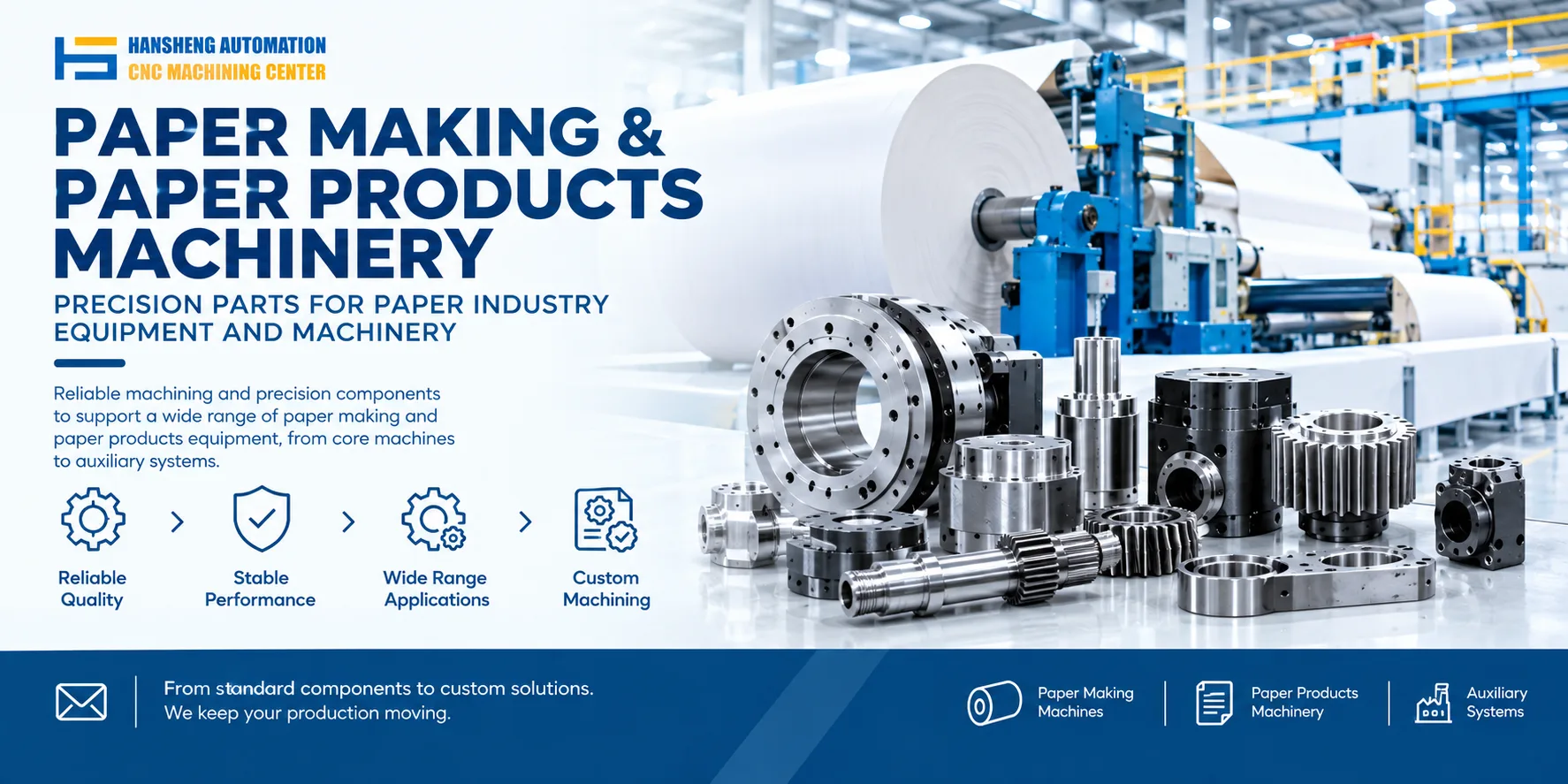
For slitting machine builders, Hansheng Automation can machine custom slitting blades, tension shafts, magnetic particle clutch components, and roll parts from customer drawings, in single pieces or small batches.
Disadvantages
Speed cannot be too high. At high speed, the magnetic powder rubs quickly and generates heat. The clutch heats up, and its service life gets shorter.
Summary
A slitting machine is efficient and flexible. It is widely used in papermaking and printing and packaging. It meets slitting needs for materials of different widths.
Our precision component customization is not limited to slitting equipment. We also machine parts for tobacco packaging machinery, filling machinery, printing machinery, food machinery, medical devices, yacht systems, and RC cars. Hansheng Automation works from customer drawings and delivers one-off or batch parts to the required material, tolerance, and surface finish. Our scope is precision components, not complete machines.