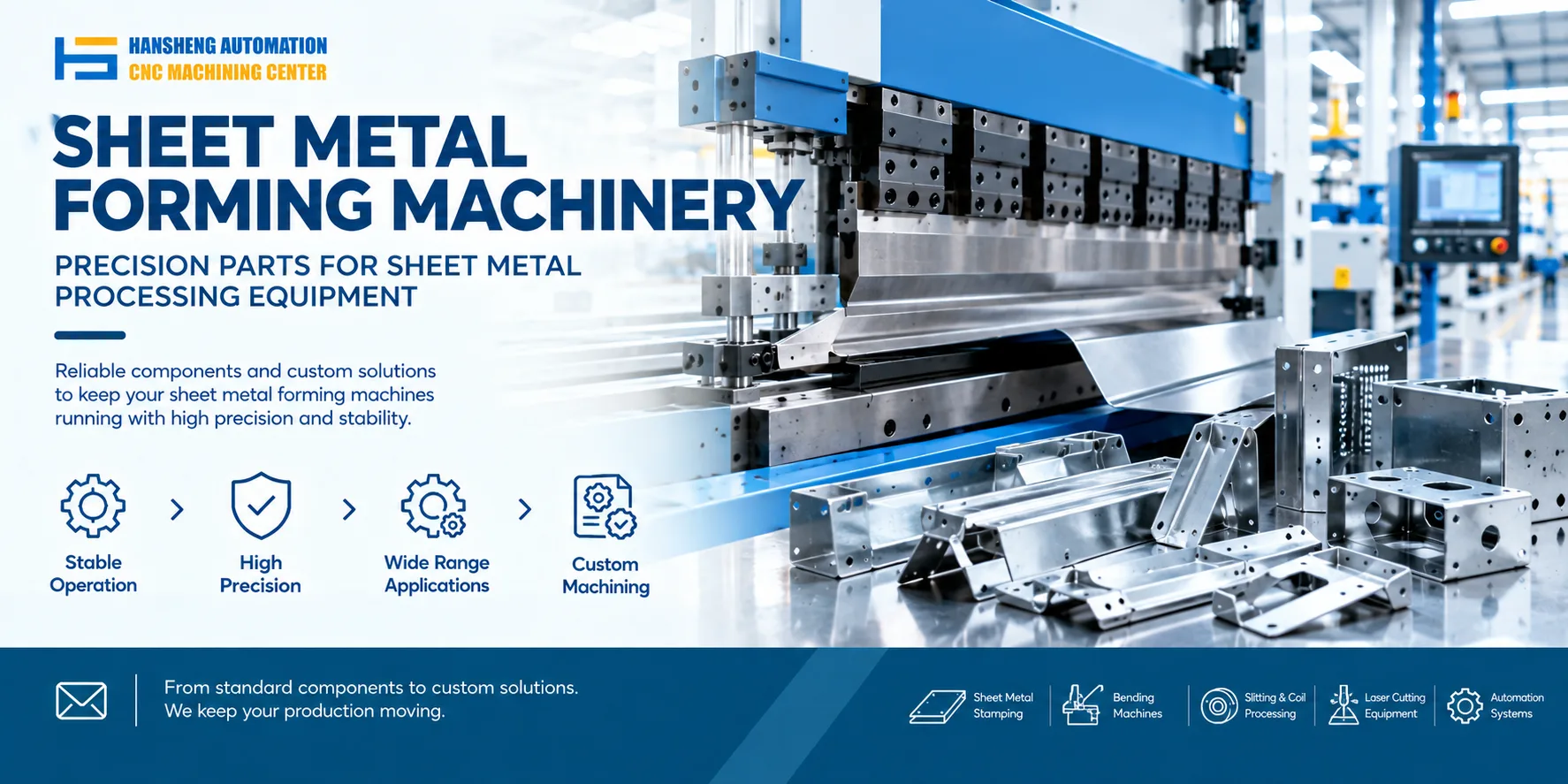
A CNC turret punch press is a sheet metal processing machine that combines mechanical, electrical, and numerical control systems. It uses a rotating turret containing multiple punch and die stations to perform different operations on sheet metal without requiring a manual tool change for every operation.
The CNC system controls the sheet position along the X and Y axes and selects the required tooling from the turret. This allows the machine to produce holes, slots, cutouts, and shallow formed features according to a programmed sequence. CNC turret punching is widely used for sheet metal components that require repeated features, consistent dimensions, and flexible production.
Main Functions of a CNC Turret Punch Press
Multiple sheet metal operations
A CNC turret punch press can perform a range of operations, including punching, corner notching, blanking, embossing, beading, lettering, flanging, and, on suitably equipped machines, tapping.
Each operation requires compatible tooling. Although specialized tooling can increase the initial investment, durable tools can be used repeatedly for suitable production runs. The ability to perform several operations on one machine can also reduce workpiece handling and secondary processing.
Accurate and consistent processing
The machine uses programmed positioning and controlled punching movements to produce parts with repeatable dimensions. A rigid machine frame helps withstand punching loads, while the CNC system coordinates sheet movement and tool selection.
Actual accuracy depends on the machine configuration, tooling condition, sheet thickness, material properties, and positioning system. Regular tooling inspection and correct machine setup are necessary to maintain consistent results.
Large working area
Some CNC turret punch presses can process large sheets measuring approximately 1.5 m × 5 m, depending on the model and configuration. This capacity supports the production of larger sheet metal components and can reduce the need for repositioning during processing.
The actual working area, maximum sheet thickness, and permitted punching force should be checked against the manufacturer's specifications.
High level of automation
Once the part program and tooling setup are established, the machine can perform repeated punching operations with limited manual intervention. Automated positioning and turret indexing reduce the need for frequent manual tool changes.
Operators still need training in program setup, tooling selection, material handling, and safety procedures. Basic computer skills are useful for working with the CNC interface and production programs.
Multi-axis movement
The CNC system coordinates the movement of the sheet along the X and Y axes and controls the selection or rotation of tooling stations where required.
This coordinated movement allows the machine to produce complex hole patterns, closely spaced features, and profiles formed through successive punching operations. More advanced configurations may also support additional controlled axes or specialized forming functions.
Flexible production setup
When the part design changes, production can often be adapted by modifying the CNC program and selecting the appropriate tooling. This reduces setup time for products that share compatible tooling and machine requirements.
New or unusual features may still require specialized punches and dies. The amount of preparation required depends on the part geometry, tooling availability, and machine configuration.
Wide range of applications
CNC turret punch presses are used in many sheet metal manufacturing sectors. Typical applications include:
Electrical and electronic equipment: Electrical enclosures, control cabinets, high and low voltage switchgear, communication equipment, computer housings, and electrical control boxes.
Building and architectural products: Metal decorative panels, curtain wall components, elevator parts, and sheet metal fittings.
Automotive and transportation components: Car and bicycle parts, as well as metal components used in related manufacturing equipment.
Appliances and household products: Air conditioner housings, kitchen equipment, metal furniture, and lighting fixtures.
Industrial equipment: Machinery covers, instrument panels, can manufacturing lines, ventilation components, and sound-absorbing panels.
Specialized products: Screens, cap manufacturing components, solar water heater panels, and steel sheet parts used in battery products and textile machinery.
The suitable application depends on the required part geometry, material, sheet thickness, production volume, and available tooling.
Lower tooling costs for varied production
Compared with conventional stamping processes that require dedicated dies for specific part designs, CNC turret punching can use standard and interchangeable tooling to produce a wide range of features.
This can reduce the need for custom tooling when manufacturing varied products or small batches. However, specialized forming operations may still require dedicated tools, and tooling costs should be evaluated against production volume and part complexity.
Adaptability to changing product requirements
CNC turret punch presses can produce round holes, square holes, oblong slots, and other profiles by selecting suitable tooling and programming successive punching movements.
Larger openings and irregular contours can sometimes be produced through nibbling, in which a series of overlapping punches gradually forms the required outline. The resulting edge quality and achievable geometry depend on the punch size, tool path, material, and machine capabilities.
This flexibility allows manufacturers to accommodate product changes without redesigning a dedicated stamping die for every part.
Custom Precision Machining for Industrial Applications
Hansheng Automation provides custom precision machining based on customer drawings for a range of industrial applications. Our work includes precision components for yacht equipment and RC racing cars, as well as nonstandard parts for tobacco packaging machinery and filling machinery. Each component is manufactured according to the supplied drawings and the specific dimensional and structural requirements.