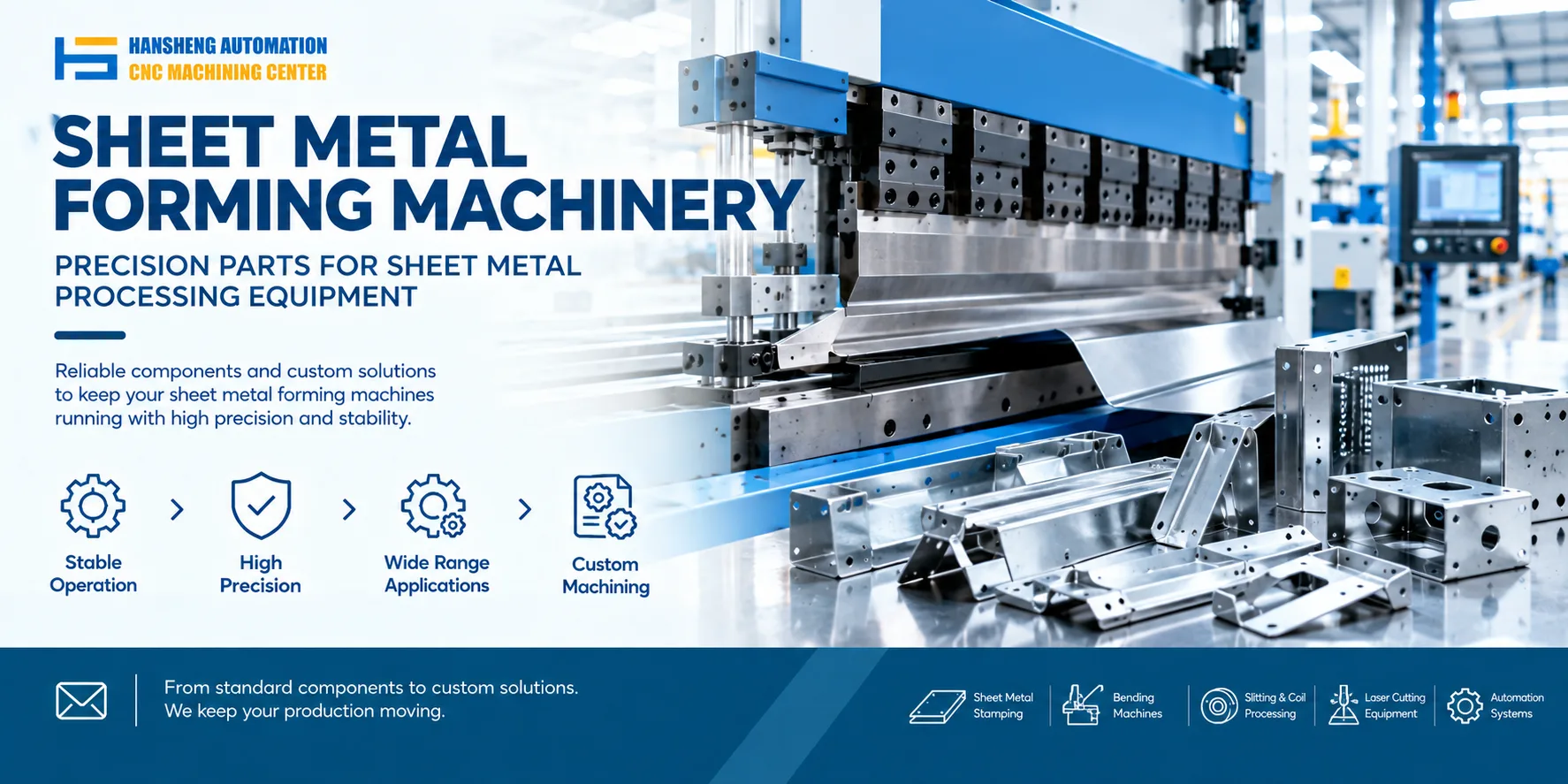
A CNC turret punch press can perform different sheet metal operations by combining programmed tool selection, sheet positioning, and punching movements. Common processing methods include single punching, continuous punching, multidirectional punching, nibbling, single forming, continuous forming, and array processing. The appropriate method depends on the workpiece geometry, tooling, and production requirements.
Single punching
Single punching uses one stroke of the punch to produce a hole or feature. The machine can create holes arranged in straight lines, along arcs, in circular patterns, or in a grid layout through programmed positioning.
This method is suitable for producing individual holes and other features at specified locations.
Continuous punching in the same direction
This method uses a rectangular punch to make successive, partially overlapping cuts in the same direction. The overlapping strokes form elongated holes, straight cutouts, or trimmed edges.
It is useful when the required feature is longer than the punch dimensions.
Multidirectional continuous punching
Multidirectional punching uses a smaller punch to produce a larger hole or opening through a series of programmed strokes from different positions.
The CNC system controls the sheet movement between strokes to create the required shape. The final contour depends on the punch geometry, stroke spacing, and programmed punching path.
Nibbling
Nibbling uses a small round punch to make a series of closely spaced, overlapping punches along a curved path.
This method allows the machine to produce arcs and irregular contours without requiring a dedicated punch for the complete profile. The punch size and spacing affect the smoothness of the resulting edge.
Single forming
Single forming produces a shallow formed feature in one stroke using a specially shaped punch and die.
The resulting shape follows the tooling geometry. The method is suitable for forming features that can be completed within the dimensions and forming capacity of the selected die set.
Continuous forming
Continuous forming uses repeated forming strokes to create a feature larger than the dimensions of a single tool. Depending on the tooling and machine configuration, this method can produce large louvers, ribs, and stepped features.
The forming sequence and spacing must be programmed to achieve the required geometry while avoiding interference between the tooling and the workpiece.
Array processing
Array processing produces multiple workpieces or repeated features on a single large sheet. The CNC program defines the position and sequence of each operation, allowing the machine to process identical or different parts within the same sheet layout.
This method can improve material utilization and reduce repeated setup work in batch production.
Custom Precision Machining for Industrial Applications
Hansheng Automation provides custom precision machining based on customer drawings for a range of industrial applications. Our work includes precision components for yacht equipment and RC racing cars, as well as nonstandard parts for tobacco packaging machinery and filling machinery. Each component is manufactured according to the supplied drawings and the specific dimensional and structural requirements.