The main instruments for detecting hidden cracks in photovoltaic modules include electroluminescence (EL) detectors, drone-based EL detectors, infrared thermal imagers, visual AI inspection systems, and ultrasonic detectors.
1. Electroluminescence (EL) Detector
This is currently the most mainstream and accurate equipment for hidden crack detection. It applies a reverse bias voltage to the module to excite internal luminescence, then uses a high-sensitivity camera to capture images. Dark lines and dark spots in the image correspond to defects such as hidden cracks and broken grid lines. Its advantages are non-contact and non-destructive testing, and it can detect micron-level cracks. It is suitable for all scenarios from production to power plant operation and maintenance.
2. Drone-Based EL Detector
This integrates EL detection equipment onto a drone platform and is designed specifically for inspection of large photovoltaic power plants. It solves the low efficiency of ground-based EL detection and can quickly scan large areas of modules from above. It is especially suitable for complex terrain such as ground-mounted and mountain power stations, greatly reducing labor costs.
3. Infrared Thermal Imager
This device indirectly identifies hidden cracks by detecting abnormal hot spots on the module surface. When a hidden crack causes partial failure of a cell, the resistance in that area increases and it heats up, appearing as a hot spot in the thermal image. The advantage is fast, real-time scanning of large areas, and it is often used in routine inspections. However, it cannot directly show the crack shape and is easily affected by ambient temperature and light.
4. Visual AI Inspection System
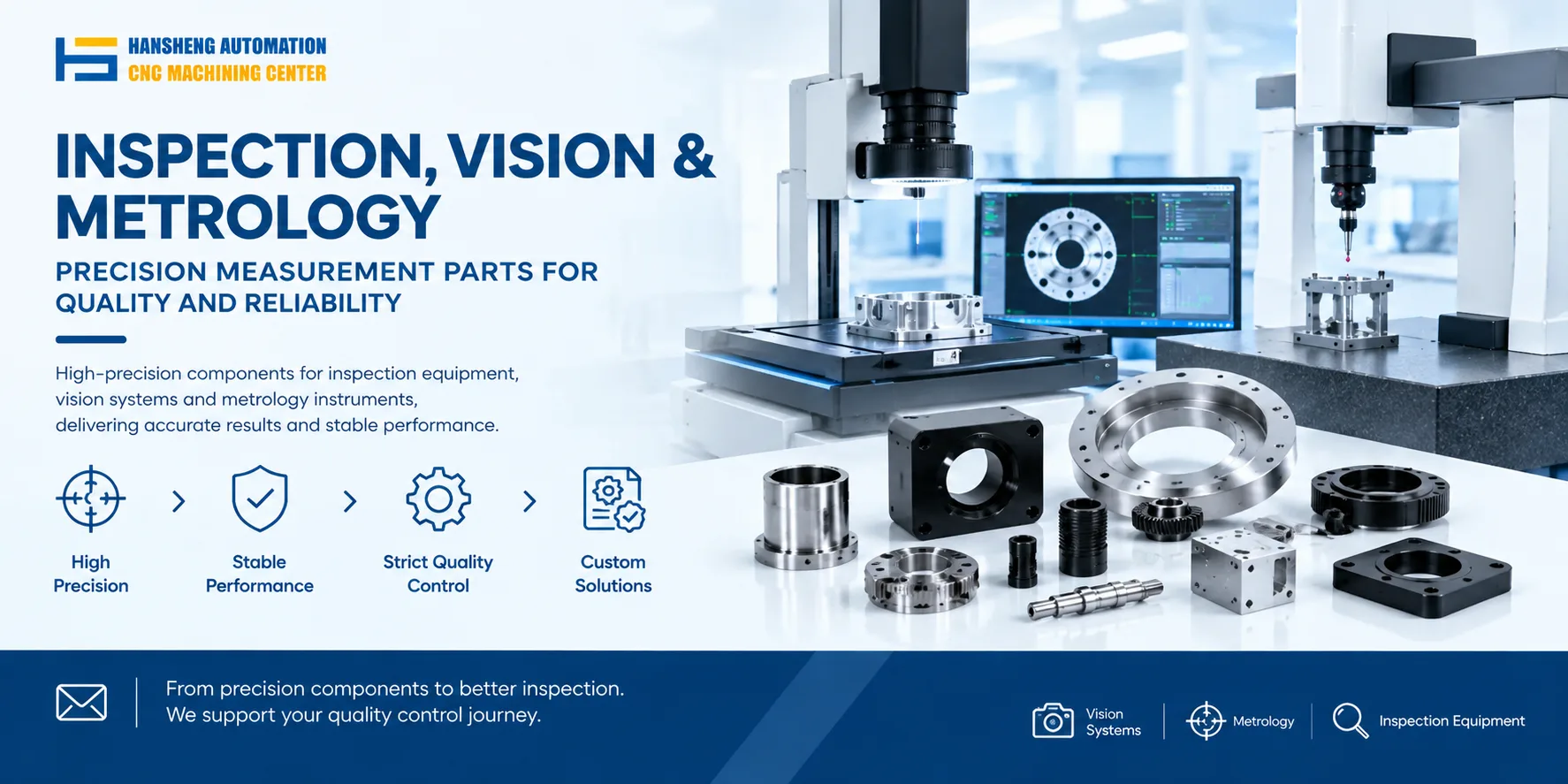
This system uses high-resolution industrial cameras to capture images of the module surface, and trained AI algorithms automatically identify and classify defects such as hidden cracks and fragments. Its core advantages are automation and high efficiency. It can be integrated into production lines for 100% online quality inspection and is also commonly used for incoming inspection at power plants. For camera mounting brackets, light source housings, and precision structural parts used in these visual AI inspection systems, Hansheng Automation provides custom machining according to customer drawings.
5. Ultrasonic Detector
This instrument transmits ultrasonic waves into the module and receives the echoes, analyzing the acoustic signals to identify internal cracks, delamination, and other defects. Its advantage is that it is not affected by surface dirt. However, it requires a coupling agent, is complex to operate, has slow inspection speed, and is expensive. It is therefore mostly used in laboratory research and development or sampling inspection during production, rather than large-scale field application.