A multigrain processing plant needs a set of machines that handle peeling, degerming, grits making, milling, cleaning, conveying, packing, dust collection, and noise control. The right configuration depends on the grains and the finished products.
Basic processing equipment
Corn peeling machine: Uses dry peeling and degerming. Friction and screening separate corn skin and germ. Peel and germ removal rate reaches 98%. It can produce corn grits, corn germ, and coarse corn flour. With auxiliary equipment, it can further process refined corn flour at 100 mesh, corn porridge flakes, and other products. Features: low energy consumption, high automation, and continuous operation.
Corn grits machine: Breaks and screens corn into different grit sizes, such as large, medium, and small grits, for food processing or feed. Some models integrate peeling for a combined peeling and grits making operation.
Cone mill: Uses shear force from a rotating conical grinding disc to mill multigrain particles into powder. It handles wheat, corn, soybean, and other crops. Adjusting the disc gap controls fineness, producing flour or coarse powder.
Multigrain flour mill: A general-purpose machine. It uses roller or hammer milling to process rice, broomcorn millet, proso millet, tuber crops, and other coarse grains. It produces whole wheat flour, multigrain flour, or mixed flour. Some models include an air separation system to separate bran and germ, which improves flour purity.
Sorghum processing equipment: Designed for sorghum. It includes dehusking, milling, and polishing modules. It can produce sorghum rice, sorghum flour, and raw material for sorghum liquor. Key point: low-temperature dehusking preserves nutrients such as tannins and avoids flavor loss from high heat.
Millet processing equipment: Through cleaning, destoning, dehusking, and milling, it processes foxtail millet into millet. It can further grind millet into flour. A color sorter can remove impurities and improve product cleanliness.
Flour mill for multigrain: Optimized from traditional wheat flour mills to handle the low-gluten nature of coarse grains. Through multiple roller and screening stages, it produces multigrain noodle flour, baking flour, and similar products. Some models include a tempering function to improve water absorption and extensibility.
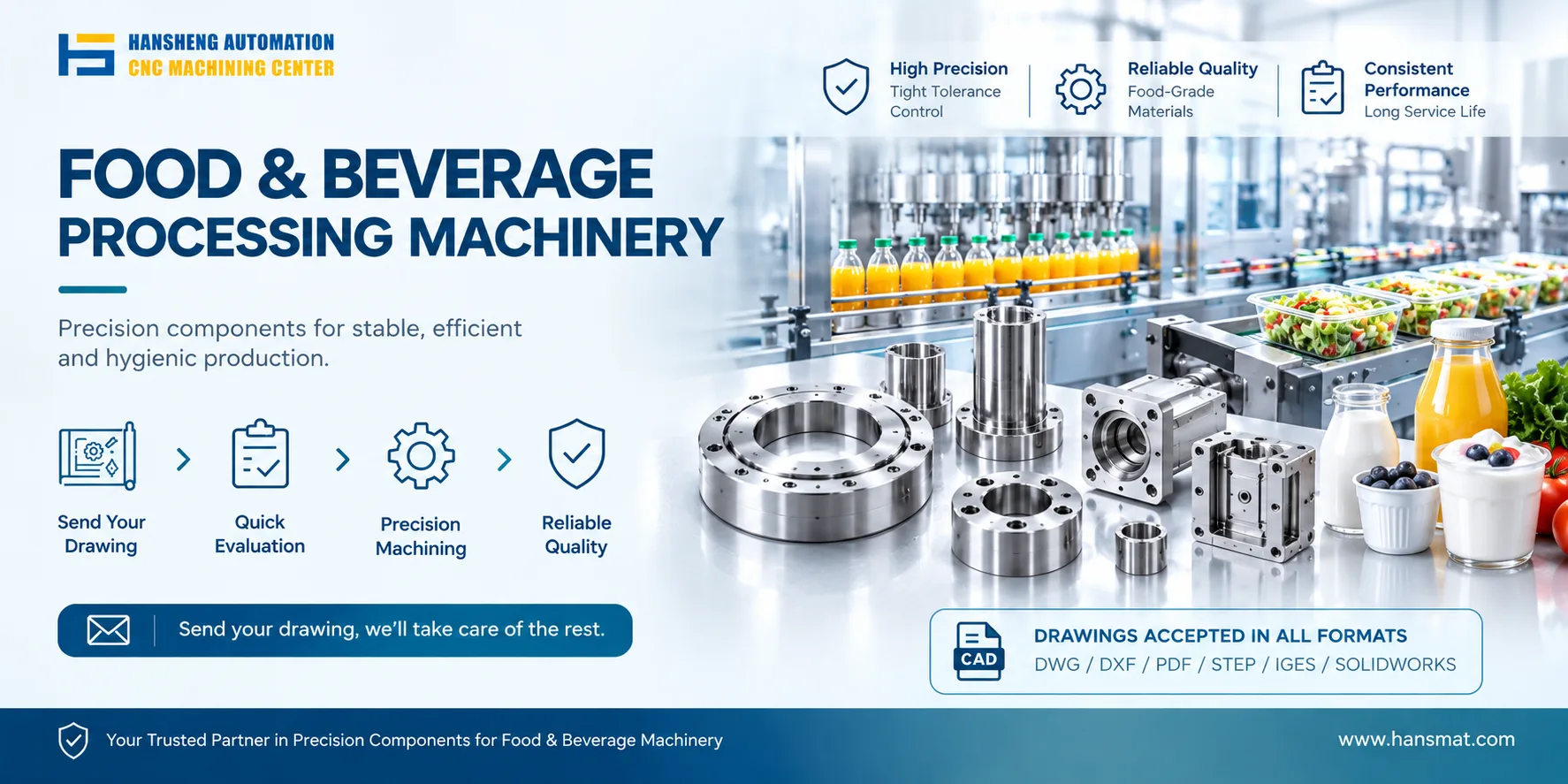
For equipment builders, Hansheng Automation can machine custom screens, rollers, wear parts, and food-contact components from customer drawings, in single pieces or small batches.
Auxiliary equipment and systems
Cleaning equipment: Includes vibrating screens, destoners, and air separators. They remove impurities, stones, metal particles, and imperfect kernels from coarse grains. Pretreatment extends main equipment life and reduces failure rate.
Conveying and packing system: Conveying equipment includes belt conveyors and bucket elevators for automated transfer of raw material and finished products. Packing equipment includes automatic weighing and packing machines that support bagged or bulk output in different specifications, such as 5 kg and 25 kg.
Dust collection and noise reduction: Pulse dust collectors capture dust produced during processing and meet environmental requirements. Soundproof enclosures or silencers reduce equipment noise and improve the workshop environment.
Selection points
Multigrain compatibility: Prioritize equipment that can process corn, wheat, soybean, tuber crops, and other coarse grains to lower investment cost. For example, a cone mill can adapt to different particle sizes by changing screens.
Automation level: Fully automatic equipment, such as a PLC-controlled grits machine, reduces manual intervention and improves production efficiency and stability. Modular design makes it easier to expand capacity or adjust the process later.
Energy consumption and floor space: New equipment designs optimize the transmission structure to lower energy consumption per unit output, which suits small and medium plants. A compact layout saves workshop space and rent cost.
Typical process flow, using corn as an example
Raw material cleaning. 2. Corn peeling. 3. Skin and germ separation. 4. Corn grits making. 5. Milling, optional. 6. Finished product packing.
Note: To produce refined corn flour, add screening and impurity removal after milling.
With the right equipment configuration, a multigrain processing plant can automate the full flow from raw material cleaning to finished product packing and meet market demand for diverse coarse grain products.
Beyond grain processing equipment, our precision component customization serves more than one industry. We machine tobacco packaging machinery parts, filling machinery parts, medical device components, yacht precision components, RC car precision components, printing machinery parts, and food machinery parts. Hansheng Automation works from customer drawings and delivers one-off or batch parts to the required material, tolerance, and surface finish. Our scope is precision components, not complete machines.