Laser cutting is not the right fit for every job. Mechanical cutting, die cutting, waterjet cutting, and plasma cutting can replace it under specific conditions. The choice depends on material, volume, cost, and accuracy requirements.
Mechanical cutting
Applications: high-volume production, cost-sensitive work, and medium accuracy.
Reasons:
Equipment investment and operating costs are lower than laser cutting. Lathes and milling machines suit long-term high-volume production.
It has few limits on material type. It can process very hard or very thick materials that laser cutting struggles with.
Presses and similar machines can run continuously, with shorter cycle times.
Limitations: lower accuracy and tolerance than laser cutting, complex designs need multiple operations, and material waste is higher.
Die cutting (mainly rotary die cutting)
Applications: high-volume, standardized parts, such as packaging materials and labels.
Reasons:
Rotary die cutting uses a die to complete multiple operations at once. It runs much faster than laser cutting and suits long batch orders.
After the die is made, unit part cost drops significantly as volume rises. Laser cutting needs continuous energy and maintenance.
Limitations: long die development time and high cost. Design changes require a new die. Flexibility is lower than laser cutting.
Waterjet cutting
Applications: thick materials, heat-sensitive materials, and cases where thermal deformation must be avoided, such as stone and composites.
Reasons:
High-pressure water plus abrasive cuts physically. There is no heat-affected zone, so it avoids thermal deformation. It suits applications sensitive to material properties.
It can cut ultra-thick materials that laser cutting struggles with, such as steel plate over 20 mm.
Limitations: lower accuracy and complexity than laser cutting, high noise, wastewater and abrasive mixture need special handling, and operating costs are higher.
Plasma cutting
Applications: conductive thick materials and low-cost fast cutting, such as building steel structures and shipbuilding.
Reasons:
It is designed for conductive materials, such as carbon steel and stainless steel. It can cut ultra-thick plate that laser cutting struggles with, such as metal over 50 mm.
Equipment and energy costs are lower than laser cutting. Cutting speed is faster. It suits high-volume thick plate work that does not need high accuracy.
Limitations: wide kerf, low accuracy, larger heat-affected zone, and possible changes to material properties.
When choosing a replacement process, consider:
Material properties: thickness, conductivity, heat sensitivity.
Production scale: high volume favors dies or continuous processes, such as rotary die cutting.
Cost structure: initial investment, operating cost, unit part cost.
Accuracy and complexity: simple designs can use mechanical cutting, thick materials can use waterjet or plasma.
Heat effect control: heat-sensitive materials should avoid the thermal deformation risk of laser or plasma cutting.
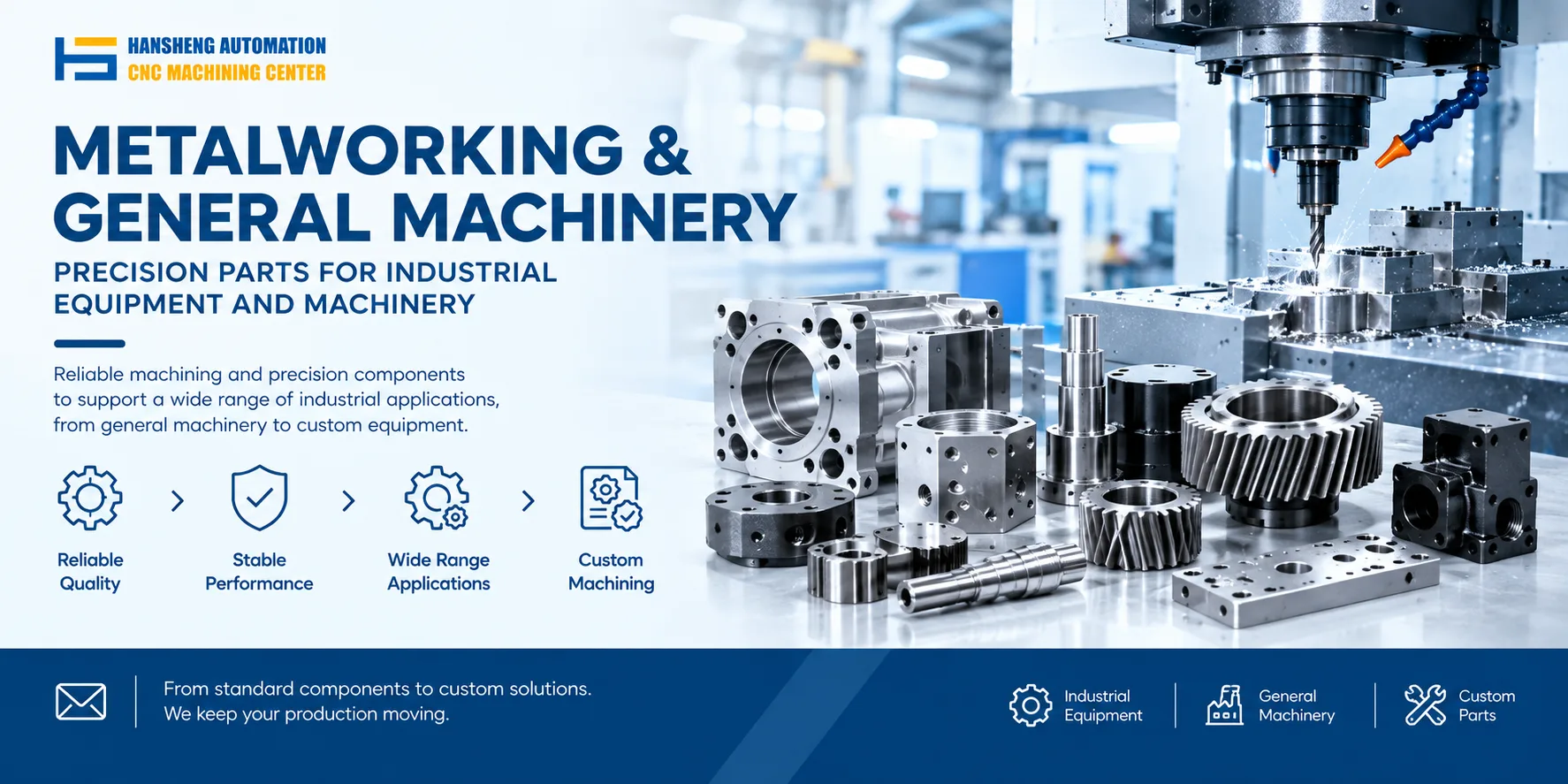
We can machine custom nozzles, fixtures, guide wheels, and other precision parts for cutting equipment from customer drawings, for single-piece or low-volume production.
Our custom precision component machining capability is not limited to cutting equipment. Beyond cutting equipment parts, we also machine medical devices, food machinery, yacht components, RC car structural parts, and non-standard parts for tobacco packaging machinery and printing machinery. Hansheng Automation works from customer drawings and production quantities to deliver single-piece or low-volume precision machining.