Laser cutting uses a high-power laser beam. Wire EDM uses electrical discharge erosion. The two differ clearly in principle and application.
Laser cutting
How it works: A high-power laser beam hits the workpiece surface. The material melts, vaporizes, or reaches its ignition point quickly. A high-speed cutting device works with the beam to complete the cut.
Applications: Metals, plastics, glass, and other materials. It suits large-scale production or high-precision requirements.
Features: High cutting accuracy, smooth cut edge, small heat-affected zone, and computer numerical control automation.
Wire EDM
How it works: A thin metal wire acts as an electrode. Electrical discharge erosion cuts the workpiece.
Applications: Mainly conductive materials, especially metals with high hardness and strength. Common in mold making and machining.
Features: High machining accuracy. It can cut complex 2D or 3D curved surfaces and narrow slots. Compared with laser cutting, it is slower and takes up more floor space.
Main differences
Working principle: Laser cutting relies on the thermal effect of the laser. Wire EDM relies on electrical discharge erosion.
Applications: Laser cutting is more flexible and handles more materials and complex needs. Wire EDM has irreplaceable advantages in specific industrial fields.
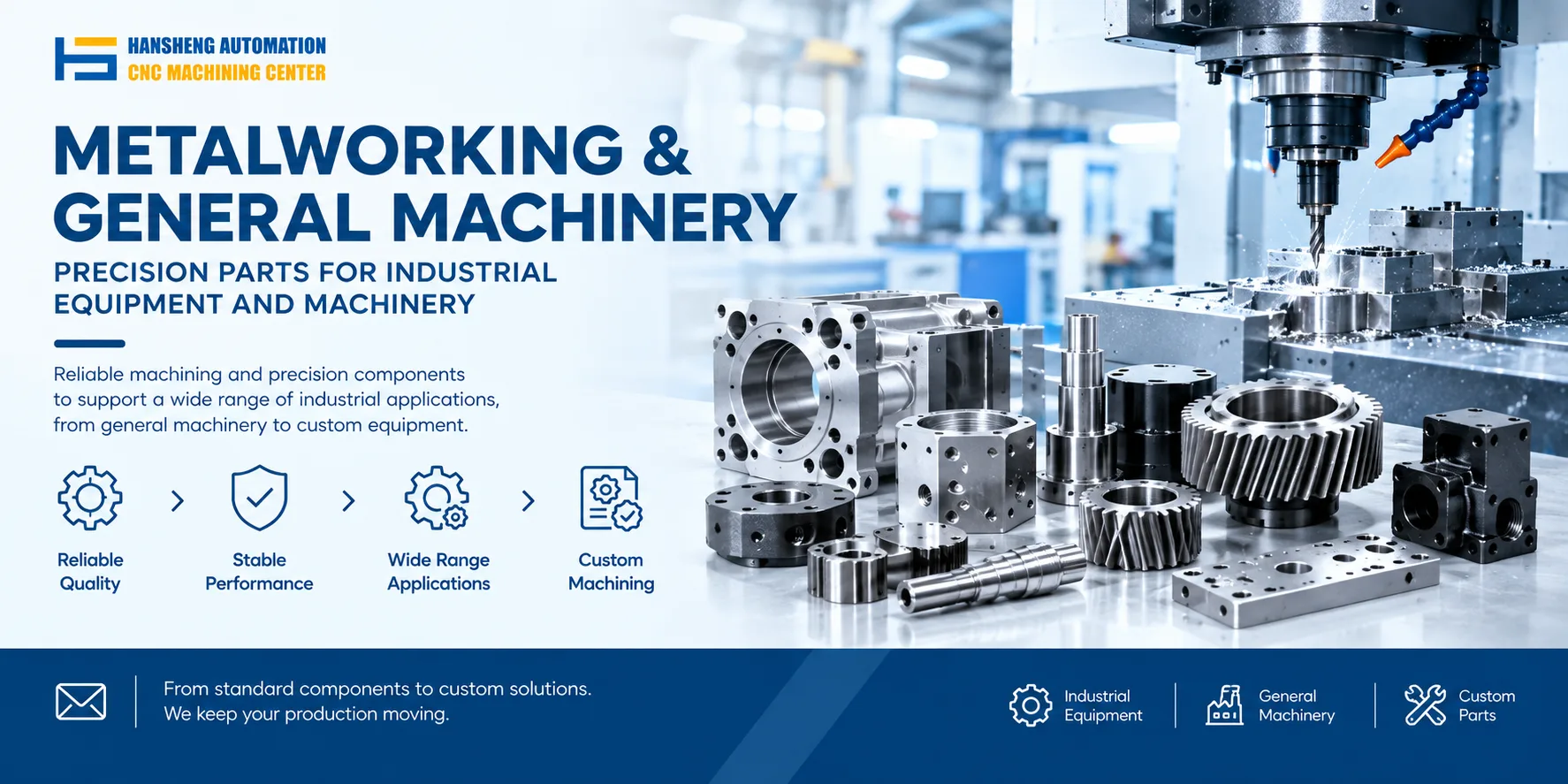
We can machine custom laser cutting machine nozzles, wire EDM guide wheels, fixtures, and other precision parts from customer drawings, for single-piece or low-volume production.
Our custom precision component machining capability is not limited to laser cutting and wire EDM equipment. Beyond cutting machine nozzles, guide wheels, and fixtures, we also machine yacht precision components, RC car structural parts, medical device parts, and non-standard parts for tobacco packaging machinery, filling machinery, and printing machinery. Hansheng Automation works from customer drawings and production quantities to deliver single-piece or low-volume precision machining.