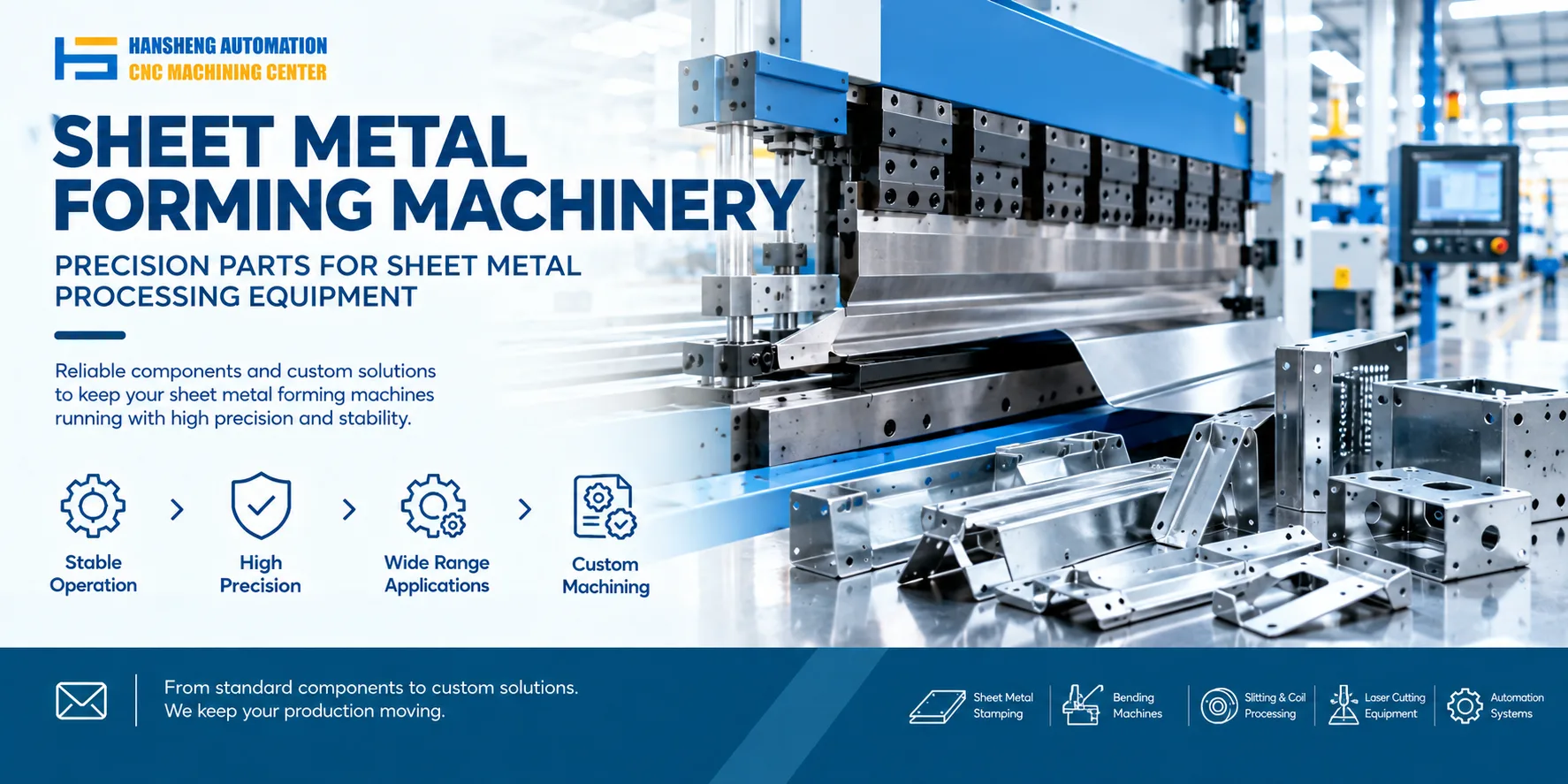
A CNC turret punch press is a sheet metal processing machine that uses numerical control to coordinate tool selection, sheet positioning, and punching operations. It is widely used in the electrical equipment, control cabinet, electronics, kitchen equipment, and railway equipment industries.
By combining automatic programming with a rotating turret containing multiple punch and die stations, the machine can produce different holes, cutouts, and formed features in a programmed sequence. This makes it suitable for sheet metal components that require repeatable positioning and multiple operations.
CNC Turret Punch Press Processing Workflow
Workpiece preparation
Review the part drawings, material specifications, dimensions, and processing requirements. Check the sheet material for surface damage or other defects before loading it into the machine.
CNC programming
Generate the CNC program according to the part drawing. Define the punching path, tool selection, operation sequence, and relevant process parameters.
CAD/CAM software can convert part geometry into machine-ready NC code while accounting for available tooling and machine configuration.
Machine setup
Load and position the sheet metal, ensuring that it is correctly clamped and referenced. Install the required punches and dies in the turret, and verify that the selected tools match the programmed operations.
Punching and forming
Load the verified program into the CNC system and run the machining sequence. Depending on the machine and tooling, operations may include punching, nibbling, notching, marking, embossing, and other forming processes.
Inspection
After processing, inspect the workpiece dimensions, hole positions, formed features, and edge condition against the drawing. Confirm that the results meet the specified requirements before continuing with batch production.
Common Processing Motion Profiles
CNC turret punch presses can use different punch motion profiles according to the material, tooling, and required operation. The following profiles describe common approaches, although their names and availability vary by machine.
High-speed punching profile
This profile is suitable for lightweight sheet metal and operations requiring high production speed.
The punch moves rapidly from the approach position toward the workpiece, accelerates through the punching stroke, passes through the material, and returns quickly. Reducing unnecessary movement time helps increase the number of punching operations completed per unit of time.
Low-noise punching profile
A slower punching stroke can help reduce impact noise when processing thicker sheet metal or performing operations that require a more controlled penetration.
The punch moves rapidly toward the workpiece, decelerates near the sheet surface, and penetrates the material at a lower speed. After reaching the programmed bottom position, it returns rapidly.
The effectiveness of this profile depends on the machine's drive system, tooling, material thickness, and control settings.
Forming profile
This profile is used for formed features such as louvers, bridge-shaped forms, and raised embosses.
The punch approaches the sheet quickly, then slows down near the forming surface. At the programmed bottom position, the system can hold the punch for a specified period before returning, where the machine supports programmable dwell control.
Controlled punch movement helps the material form around the die and can reduce springback or inconsistent feature geometry. The result also depends on the material's formability and the design of the punch and die.
Marking and indentation profile
This profile is used to mark company logos, text, identification codes, or other shallow impressions on sheet metal.
After approaching the workpiece, the punch slows down and presses the marking tool into the material to a controlled depth. The punch then retracts, leaving the required mark or indentation.
The marking depth and appearance depend on the tooling geometry, sheet thickness, material properties, and programmed stroke settings.
Key Technologies for CNC Turret Punch Presses
CNC programming
Programming determines the tool selection, punching sequence, sheet positioning, and movement path. Well-planned programs reduce unnecessary tool changes and machine movement while helping maintain consistent part quality.
Fixture and workpiece positioning
The clamping and positioning arrangement must hold the sheet securely throughout the punching sequence. Correct positioning helps prevent sheet movement and dimensional errors, particularly when processing parts with dense hole patterns or multiple forming features.
Tool selection
Punches and dies must match the material, sheet thickness, hole geometry, and forming requirements. Using unsuitable tooling can accelerate wear, damage the tool, or deform the workpiece.
Special forming operations may require dedicated tools, so tooling availability should be checked during production planning.
Maintenance
Regular inspection of punches, dies, turret stations, clamping components, lubrication systems, and positioning mechanisms helps maintain machine accuracy and reduce unexpected downtime.
Worn or damaged tooling should be serviced or replaced according to the manufacturer's recommendations.
Applications of Intelligent CNC Turret Punch Presses
Intelligent CNC turret punch presses combine programmable punching with automated positioning, servo-driven operation, and CNC-based process control. The available functions depend on the machine model and configuration.
Servo-driven punching
Servo-driven systems control the punch movement according to the programmed operation. Depending on the design, they can improve energy use, movement control, and production efficiency.
Touchscreen control
A touchscreen interface allows operators to enter parameters, select programs, and monitor machine status. Quick setup functions can simplify routine operation, although operators still require training in programming, tooling, and safety procedures.
High-speed automatic turret indexing
The turret automatically rotates to bring the required punch and die station into position. Accurate indexing reduces tool-change time and supports rapid processing when a program requires multiple tools.
The original specification states that an improved automatic indexing station can reach 166 rpm. This figure applies to the configuration being described and should be verified against the manufacturer's technical documentation.
Programmable punching motion
The CNC system can control the punching speed, upper and lower stroke limits, and punch movement profile where these functions are supported. This allows the machine to use different motion settings for high-speed punching, quieter operation, forming, and marking.
Correct parameter selection helps match the punching cycle to the material and tooling requirements.
Custom precision machining for industrial applications
Hansheng Automation provides custom precision machining based on customer drawings for a range of industrial applications. Our work includes precision components for yacht equipment and RC racing cars, as well as nonstandard parts for tobacco packaging machinery and filling machinery. Each component is manufactured according to the supplied drawings and the specific dimensional and structural requirements.