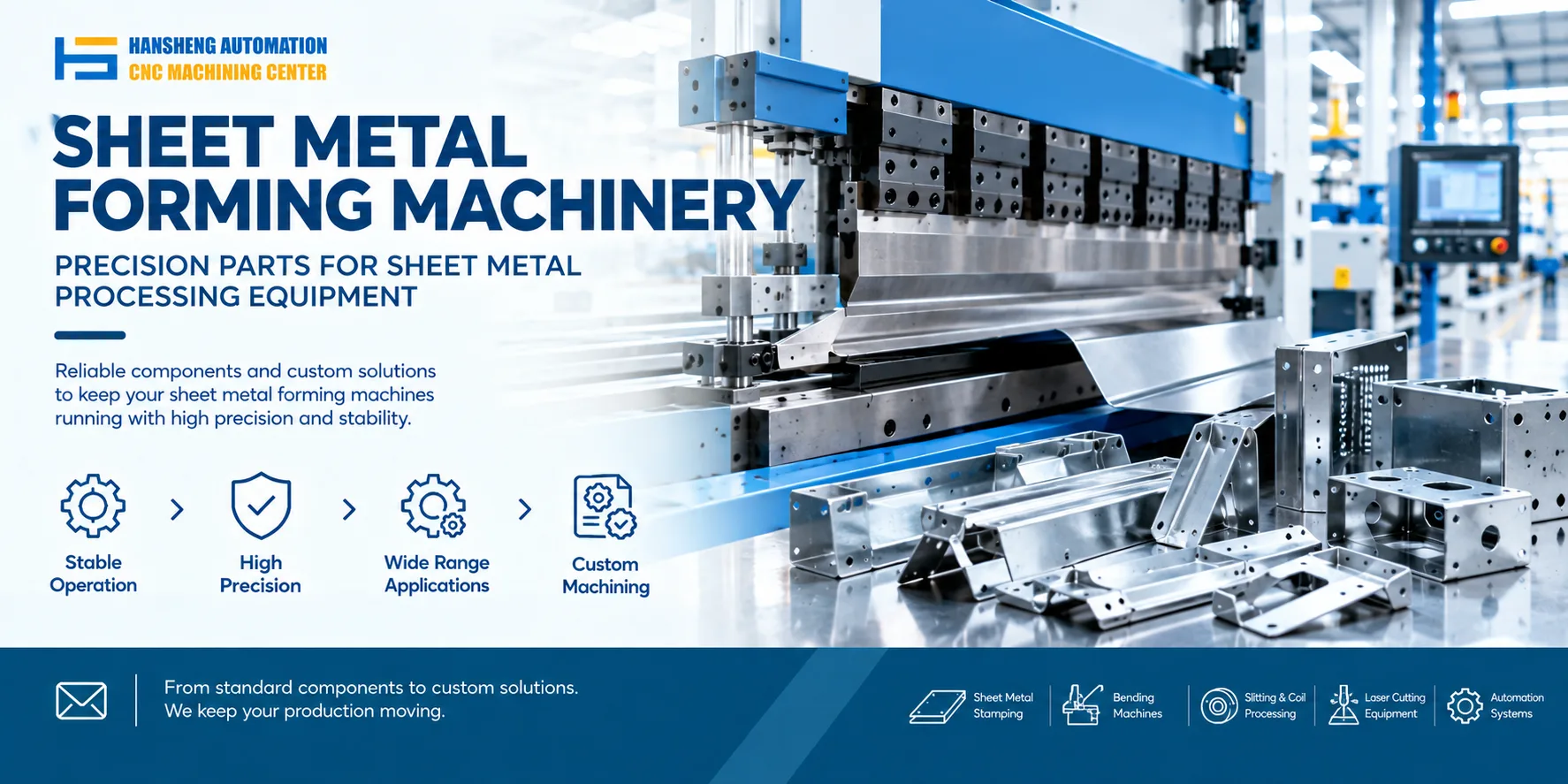
CNC shearing machines differ from traditional shearing machines mainly in control methods, positioning, automation, and operating procedures. However, the distinction depends on the machine design. CNC refers to computer numerical control, while the drive system and blade movement depend on the specific machine configuration.
Drive systems and cutting mechanisms
Traditional mechanical shearing machines use a mechanical drive system to move the cutting blade. Many modern CNC shearing machines use hydraulic drives, with the CNC controller managing cutting length, backgauge position, and other available functions.
The cutting mechanism is a separate consideration. Hydraulic shearing machines may use either a swing beam or a guillotine structure. A swing beam shear moves the upper blade along an arc, while a guillotine shear moves the blade along a guided, predominantly linear path.
These structural differences affect machine design and cutting performance. They should not be confused with the distinction between CNC and manual control.
Positioning accuracy and control
A CNC shearing machine uses programmed settings to control the backgauge position and, depending on the system, other operating parameters. This reduces repeated manual adjustment and helps maintain consistent cutting dimensions across production batches.
Traditional machines with manual positioning rely more heavily on operator adjustments and measurement. Their positioning consistency depends on the machine's adjustment mechanisms, condition, and operating procedures.
Actual cutting accuracy depends on the machine structure, backgauge performance, blade clearance, tooling condition, and material properties. CNC control alone does not guarantee a particular tolerance.
Positioning and adjustment functions
CNC systems can provide programmable positioning and repeatable adjustment of supported machine functions. Depending on the configuration, operators can set cutting dimensions through the controller rather than relying entirely on manual adjustment.
The available positioning range, adjustment method, and operating noise depend on the machine's mechanical design and drive system. These characteristics should be evaluated from the specifications of the selected model rather than assumed to be standard features of every CNC shearing machine.
Machine structure and stability
Machine stability depends on frame rigidity, structural design, manufacturing quality, and the condition of the mechanical components.
CNC shearing machines are not necessarily constructed from stainless steel. The frame material and structural arrangement vary by model and application. A rigid frame helps resist deformation under cutting loads and supports consistent cutting performance, including when the machine operates under vibration.
Operation and operator requirements
CNC shearing machines allow operators to enter cutting dimensions and use programmed settings, reducing the need for repeated manual positioning. Operators still need training in program setup, material selection, blade clearance, and machine operation.
Traditional machines may require more manual adjustment, depending on their configuration. Their operating procedures can be straightforward, but accurate setup still requires an understanding of the material and cutting process.
Safety protection
Machine safety depends on the installed protective devices and the machine's safety control system, not simply on whether the equipment is CNC controlled.
Depending on the machine design, safety measures may include protective guards, interlocks, and optical safety devices. Operators must follow the prescribed procedures and ensure that protective equipment remains functional during production.
Before selecting a machine, check the actual safety configuration and the manufacturer's operating instructions.
Custom Precision Machining for Industrial Equipment
Hansheng Automation provides custom precision machining based on customer drawings for a range of industrial applications. Our work includes precision components for yacht equipment and RC racing cars, as well as nonstandard parts for tobacco packaging machinery and filling machinery. Each component is manufactured according to the supplied drawings and the specific dimensional and structural requirements.