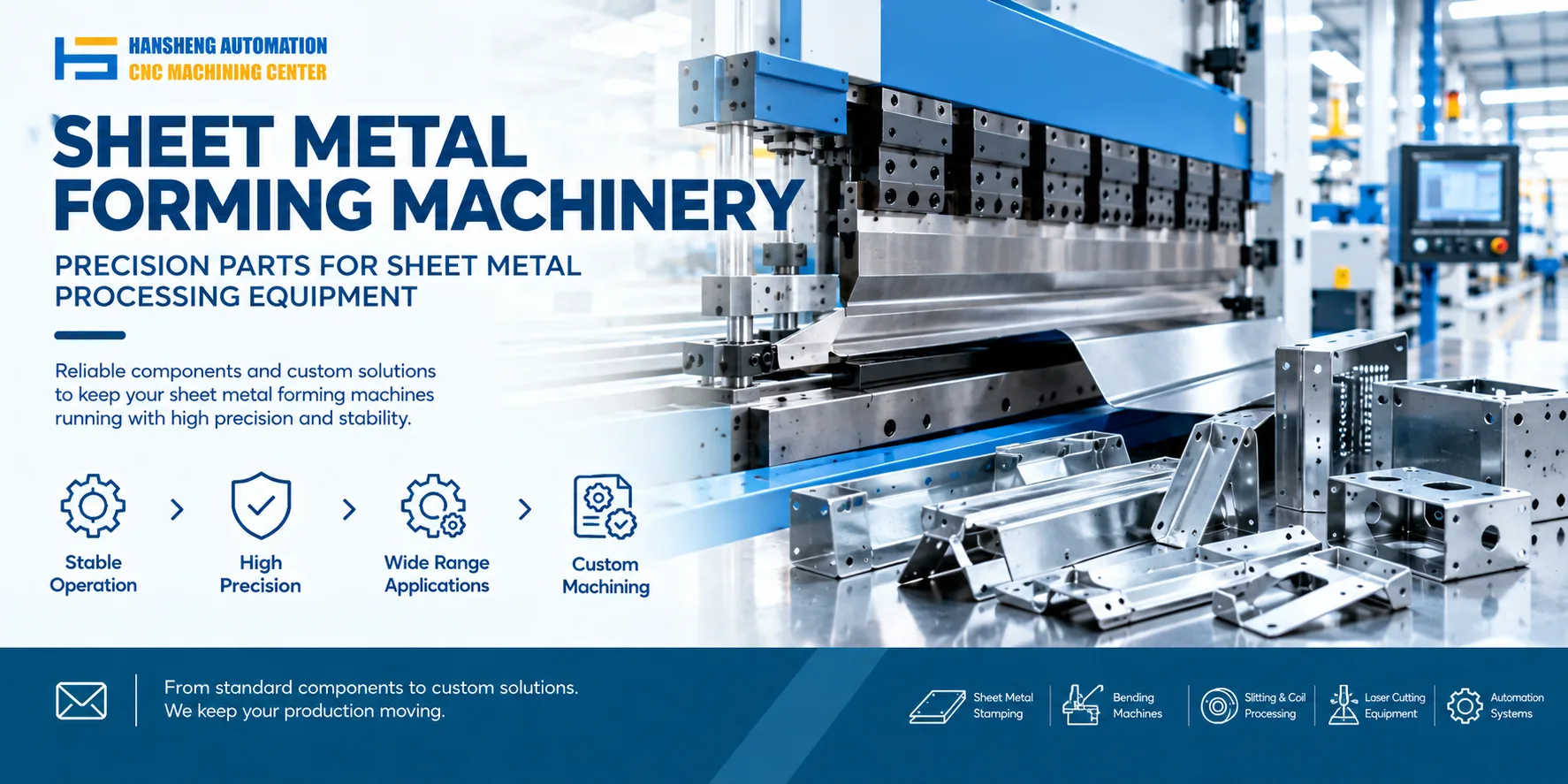
Laser cutting machines and CNC shearing machines are widely used in sheet metal fabrication, but they serve different production needs. Laser cutting is suitable for complex contours and detailed profiles, while CNC shearing is designed primarily for straight cuts and efficient sheet metal blanking. The choice depends on part geometry, material, thickness, dimensional requirements, and production cost.
Working Principles
Laser cutting machines
A laser cutting machine directs a high power density laser beam onto the workpiece. The concentrated energy melts, vaporizes, or otherwise removes material along the cutting path. An assist gas, delivered through the cutting nozzle, removes molten material from the kerf to complete the cut.
This process allows the machine to produce straight edges, curves, holes, and complex profiles without requiring a dedicated cutting die for each part shape.
CNC shearing machines
A CNC shearing machine uses a mechanical or hydraulic drive system to move the upper blade against the lower blade, separating the sheet metal through a shearing action.
The machine is designed primarily for straight-line cutting. Depending on the model, it can cut sheets up to 4 meters long in a single stroke. The rated cutting length, material thickness, and available cutting force determine the actual processing capacity.
Processing Capabilities
Laser cutting
Cutting flexibility
Laser cutting can produce complex shapes, curves, arcs, and detailed contours. It is suitable for components that require intricate profiles or close dimensional tolerances.
Material compatibility
Laser cutting systems can process materials such as stainless steel, carbon steel, alloy steel, aluminum, and copper. The achievable thickness and cutting quality depend on the laser source, power, material properties, assist gas, and process settings. Reflective materials such as copper and aluminum may require suitable equipment and carefully adjusted cutting parameters.
Accuracy and speed
Laser cutting can provide accurate cutting and high processing speeds, particularly for complex profiles that would require multiple operations with conventional cutting methods. Actual performance depends on material thickness, part geometry, machine configuration, and the number of parts in the production run.
CNC shearing
Straight-line cutting
CNC shearing machines are well suited to cutting sheet metal into blanks of specified lengths and widths. They offer an efficient approach to repetitive straight cuts, especially when processing large numbers of similar blanks.
Shape limitations
A conventional shearing machine cannot directly produce arbitrary curved or irregular contours in a single cut. Parts with complex profiles require laser cutting or another suitable profiling process.
Thickness range
Each shearing machine has a rated cutting thickness range. Material that exceeds the machine's capacity may require excessive cutting force and can damage the blades or machine. Very thin sheets also require appropriate blade clearance and setup to maintain cut quality.
Typical Applications
Laser cutting machines
Laser cutting is used in aerospace, automotive manufacturing, electronics, electrical equipment, medical devices, and advertising and decorative fabrication. It is particularly useful for parts with complex contours, multiple openings, or detailed profiles.
CNC shearing machines
CNC shearing machines are commonly used to cut sheet metal into blanks before subsequent forming or fabrication operations. Applications include construction, shipbuilding, and machinery manufacturing, especially where production involves large quantities of straight-cut sheet metal.
Advantages and Limitations
Laser cutting machines
Advantages
Laser cutting offers flexible part geometry, good dimensional accuracy, and the ability to produce complex profiles without dedicated cutting dies. It can process a range of metallic materials when the machine is configured appropriately.
Limitations
The equipment generally requires a higher initial investment than a conventional shearing machine. Operators need appropriate training in machine setup, cutting parameters, and laser safety. Some reflective materials also require additional attention to equipment selection and process control.
CNC shearing machines
Advantages
CNC shearing machines are well suited to repetitive straight cuts. They can offer high productivity for sheet metal blanking, relatively straightforward operation, and lower equipment costs for applications that do not require complex contours.
Limitations
Their cutting geometry is limited mainly to straight lines, and their rated thickness and cutting length restrict the workpieces they can process. Additional cutting equipment is needed for components with complex profiles.
How to Choose Between Laser Cutting and CNC Shearing
The choice should be based on the parts being manufactured, rather than on a general assumption that one machine is better than the other.
Laser cutting is a practical choice for complex profiles, holes, curved edges, and parts that require flexible design changes. CNC shearing is often more suitable when production involves large volumes of straight-cut blanks and the material falls within the machine's rated capacity.
Some fabrication operations use both machines. A CNC shearing machine can prepare rectangular blanks efficiently, while a laser cutting machine produces parts with more complex contours. Using each process for the work it handles best can help control production cost and maintain consistent part quality.
Custom Precision Machining for Industrial Applications
Hansheng Automation provides custom precision machining based on customer drawings for a range of industrial applications. Our work includes precision components for yacht equipment and RC racing cars, along with nonstandard parts for tobacco packaging machinery, filling machinery, and other industrial equipment. Each component is manufactured according to the supplied drawings and the specific requirements of the application.