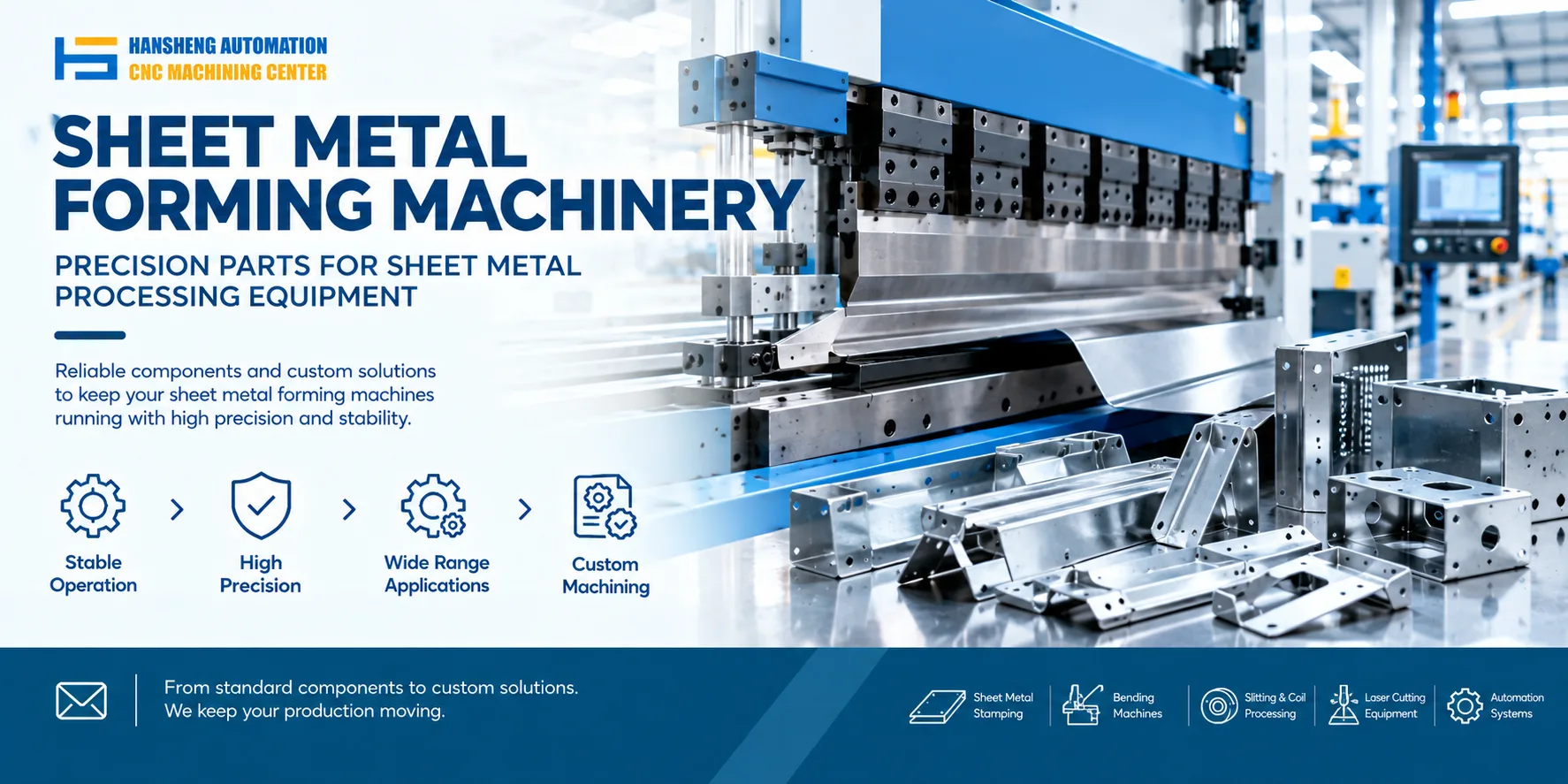
A CNC shearing machine is primarily used to cut metal sheets into blanks with specified dimensions. It can process different metal grades and thicknesses, provided that the material and cutting requirements fall within the machine's rated capacity. Typical applications include sheet metal cabinets, appliance panels, automotive sheet metal parts, and other components that require straight-line cutting.
Materials and Thickness Ranges
Materials
CNC shearing machines commonly process low carbon steel, stainless steel, aluminum alloys, and copper alloys.
High hardness alloy plates and ultra-thin sheets below 0.5 mm may require a machine specifically configured for the material and thickness. Brittle materials, including thin cast iron sheets, require particular caution because they may crack or fracture during cutting.
The material grade, strength, hardness, and thickness must be checked against the machine's rated cutting capacity. A capacity rating for low carbon steel should not be assumed to apply to other materials at the same thickness.
Sheet Thickness
Commercial CNC shearing machines cover a wide range of cutting capacities. Across different models, the available thickness range may be approximately 0.5 to 30 mm. Special heavy-duty machines can be designed for thicknesses exceeding 60 mm.
These figures represent broad equipment ranges rather than the capacity of a single machine. The actual maximum thickness depends on the machine's rated cutting force, cutting length, material strength, blade specifications, and configuration.
Typical Workpieces Produced by CNC Shearing
Flat sheet metal blanks
A shearing machine can cut full sheets or coil-fed material into flat blanks with specified lengths and widths. These blanks are commonly used in the initial stages of manufacturing electrical cabinets, appliance panels, and automotive sheet metal components.
The cut blanks may then proceed to bending, punching, welding, or other fabrication processes.
Stepped parts with straight edges
With CNC positioning and suitable feeding equipment, the machine can perform successive straight cuts to produce stepped profiles and parts with different widths.
Typical applications include sections for ventilation ducts and custom-cut stock for shelving uprights. The achievable geometry depends on the cutting sequence, workpiece dimensions, and machine setup.
Hardware components with straight edges
When combined with an automatic feeding system, a CNC shearing machine can process batches of sheet metal components that require straight edges and consistent dimensions.
Examples include mounting brackets for equipment enclosures and straight-edged furniture hardware. Parts requiring holes, curved edges, or complex contours need additional machining or cutting processes.
Processing Limitations and Precautions
Nonlinear contours
A conventional straight-blade CNC shearing machine cannot directly produce arbitrary curved or irregular contours in a single cut. Laser cutting, waterjet cutting, or other suitable profiling processes are required for these shapes.
Stepped profiles can be produced through multiple straight cuts when the part geometry and machine configuration permit.
Nonmetallic materials
Conventional metal shearing machines are designed and rated primarily for metal sheets. They are not automatically suitable for cutting plastic, wood, stone, or other nonmetallic materials.
Specialized cutting equipment should be selected for these materials. Do not process them on a metal shearing machine unless the manufacturer confirms that the machine, blades, and safety arrangements are suitable.
Ultra-thin sheets and surface coatings
When processing ultra-thin sheets below 0.8 mm, blade clearance and cutting speed must be set according to the material and machine specifications. Incorrect settings can cause sheet deformation, poor edge quality, or material pickup on the blades.
For sheets with protective coatings, check the coating adhesion and surface condition before cutting. Incorrect blade clearance, excessive pressure, or unsuitable handling can damage the coating or cause it to peel near the cut edge.
Surface preparation
Remove oil, loose debris, and other contamination from the sheet surface before cutting. Contamination can affect workpiece handling, positioning, and surface quality.
For thin or surface-sensitive sheets, ensure that the workpiece is adequately supported and positioned before the cutting cycle begins.
Custom Precision Machining for Industrial Applications
Beyond sheet metal processing, Hansheng Automation provides custom precision machining based on customer drawings. Our work includes precision components for yacht equipment and RC racing cars, as well as nonstandard parts for tobacco packaging machinery and filling machinery. Each component is manufactured according to the supplied drawings and the specific requirements of the application.