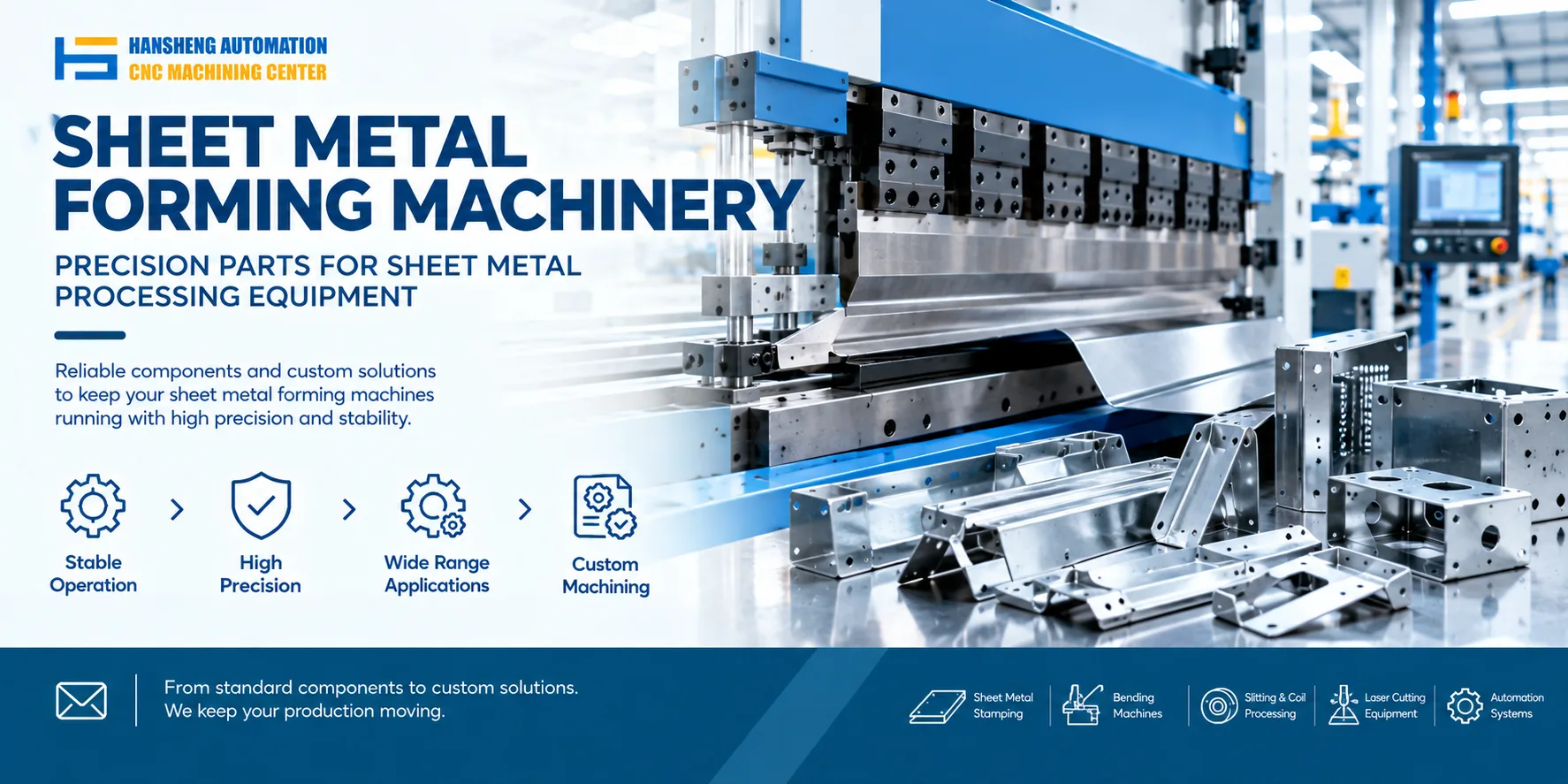
CNC press brake capacity is selected according to sheet thickness, bending length, material strength, lower die V-opening width, and bending method. A higher tonnage does not automatically mean a better choice. An undersized machine may struggle to form the material or operate under excessive load, while an oversized machine can increase energy consumption and equipment costs without making full use of its capacity.
Common CNC press brake tonnage ranges
40T to 80T: Small sheet metal components
Press brakes in the 40T to 80T range are commonly used for relatively thin sheets and shorter workpieces. Typical materials include stainless steel sheet, cold-rolled steel, and aluminum sheet.
Applications include electrical boxes, control cabinets, small enclosures, decorative parts, and hardware components. Machines with bending lengths of around 1600 mm or 2500 mm are often available in capacities such as 40T, 63T, and 80T.
100T to 160T: General-purpose sheet metal fabrication
The 100T to 160T range is widely used in sheet metal fabrication. Common capacities include 100T, 125T, 135T, and 160T.
A typical example is a 135T/3200 CNC press brake, which provides approximately 135 tons of pressing force and a bending length of 3200 mm. This configuration is suitable for many sheet metal parts with bending lengths of up to approximately 3 meters. Similar specifications can be found in equipment from manufacturers such as ADH Donghai Yuxiang, often with CNC systems for controlling bend angles, backgauge positions, and bending programs.
200T to 320T: Thicker sheets and longer workpieces
When processing thicker materials or workpieces with bending lengths of 4000 mm, 5000 mm, or more, machines rated at 200T, 250T, or 320T may be required.
These press brakes are commonly used for construction machinery components, steel structure parts, electrical cabinets, door manufacturing, automotive components, and environmental protection equipment.
400T and above: Heavy-duty bending
Press brakes rated at 400T, 500T, 600T, or higher are generally used for thick plates, large structural components, shipbuilding, bridges, construction machinery, and other large metal fabrications.
These machines typically require a heavier frame and greater attention to hydraulic system performance, synchronization control, tooling strength, and foundation load capacity.
How to determine the required press brake tonnage
The required tonnage depends on several factors. Machine selection should account for the actual material and bending conditions rather than capacity alone.
Sheet thickness
Thicker material generally requires greater bending force. For example, when bending material over the same length of 3 meters, the force required for a 6 mm sheet is substantially higher than that required for a 1 mm sheet.
Material strength
Materials with higher strength generally require greater bending force. Stainless steel typically requires more force than ordinary carbon steel, while aluminum generally requires less, depending on the material grade and bending conditions.
Bending length
A longer workpiece requires more total bending force when the material and other forming conditions remain the same. The force required to bend a 3 meter sheet is generally greater than that required for a 1 meter sheet of the same thickness.
Lower die V-opening width
The width of the lower die's V-opening directly affects the required bending force and the resulting bend radius. A smaller V-opening increases the force requirement and produces a smaller bend radius. A larger opening reduces the required force but generally produces a larger bend radius.
Bending method
Air bending, bottoming, and coining require different amounts of force. Air bending is widely used on CNC press brakes and generally requires less force than bottoming or coining. The selected process must be considered when calculating the required machine capacity.
Common CNC press brake specifications
The following are examples of commonly used press brake capacity and bending length combinations:
| Press brake tonnage | Bending length |
|---|---|
| 40T | 1600 mm |
| 63T | 2500 mm |
| 80T | 2500 mm |
| 100T | 3200 mm |
| 125T | 3200 mm |
| 135T | 3200 mm |
| 160T | 3200 mm |
| 200T | 4000 mm |
| 250T | 4000 mm |
| 320T | 6000 mm |
| 400T | 6000 mm and above |
In these model designations, the first number generally indicates the press brake's nominal tonnage, while the second indicates the bending length in millimeters. Actual configurations vary by machine model and manufacturer.
Choosing a press brake for your production requirements
For general sheet metal fabrication, machines in the 100T to 160T range with a bending length of around 3200 mm are common choices. This range covers many routine fabrication tasks while balancing processing capacity and equipment cost.
Smaller machines may be suitable for thin sheets and small components. Production involving thick plates or long workpieces may require machines rated at 200T or above.
Before selecting a machine, calculate the required bending force using the actual material, sheet thickness, bending length, lower die V-opening, and bending method. The machine specification sheet provides a useful starting point, but it should not replace calculations based on the workpiece drawing and forming conditions.
Beyond the press brake application itself, Hansheng Automation provides custom precision machining based on customer drawings. Our machining services also support components for yacht equipment and RC racing cars, along with nonstandard parts for tobacco packaging and filling machinery. Each component is manufactured according to the supplied drawing and its specific requirements.