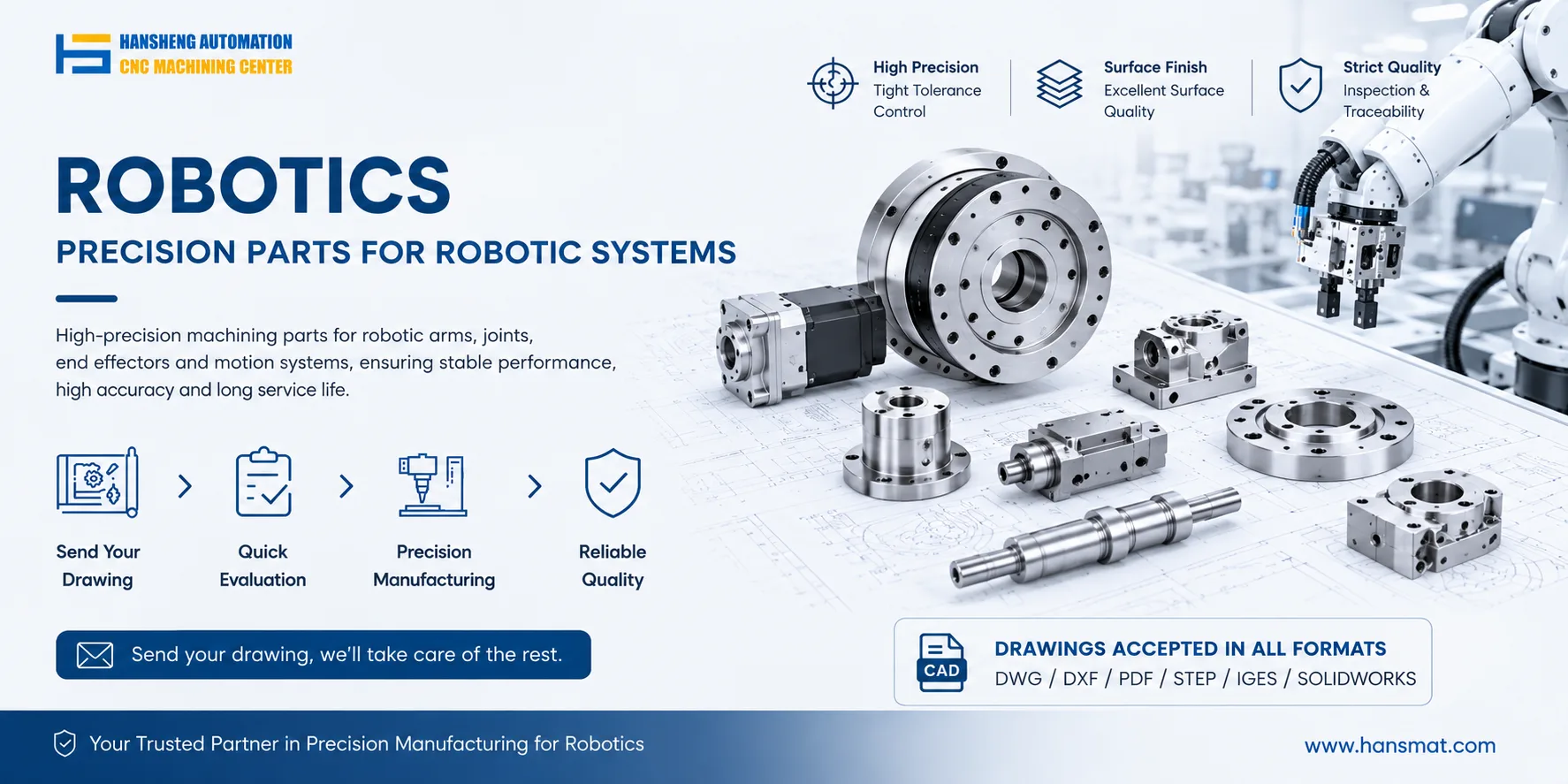
Six-axis robot end flanges are mainly classified by interface dimensions, load capacity, and manufacturer system. The mainstream models cover general industrial use and specialized custom requirements.
1. General Standardized Models (ISO Standard Interface)
The most commonly used standard for industrial six-axis robots is ISO 9409-1. Main models include:
ISO 60: flange diameter 60 mm, suitable for payloads of 5–10 kg, often used on small collaborative robots such as UR5/UR10.
ISO 100: diameter 100 mm, suitable for 10–30 kg, the most common model for general six-axis robots such as ABB IRB1200 and FANUC LR Mate 200iD.
ISO 160: diameter 160 mm, suitable for 30–80 kg, used on medium-payload industrial robots such as KUKA KR60-3.
ISO 200: diameter 200 mm, suitable for 80–200 kg, mostly used on heavy-duty handling and welding robots such as Yaskawa MH250.
2. Brand-Specific Models
Major robot manufacturers provide their own flange models, and some support non-standard customization.
KUKA: flanges are divided into KR C series general-purpose models and KR quantec series heavy-duty models. Some support quick-change interface adaptation.
FANUC: LR series robots use dedicated thin flanges to reduce joint interference.
Universal Robots: exclusive compact flanges compatible with UR3, UR5, and UR10.
STEP: SR series robots use nationally compatible flanges and support domestic quick-change tools.
For non-standard flanges or special interface requirements beyond these standard offerings, Hansheng Automation can provide custom machining services based on customer drawings, covering flange plates, adapter plates, and related connecting parts.
3. Specialized Models for Specific Applications
Custom flanges developed for special working conditions include:
Dustproof and waterproof type: protection rating IP65 or higher, often used in painting and underwater operation robots, such as AUBO i5 collaborative robot waterproof flange.
High-speed lightweight type: made from 7075 aluminum alloy, about 30% lighter than standard versions, suitable for high-speed sorting robots.
Quick-change flange: supports automatic tool changing, such as ATI QC series quick-change flanges, suitable for multi-tool switching in six-axis robot applications.
4. Precautions
When selecting a flange, it is necessary to match the repeatability of the robot joint axes, usually better than ±0.02 mm. For heavy-duty applications, the static and dynamic load ratings of the flange should also be verified to avoid the risk of loose connections.