When using a six-axis robot, attention must be paid to key stages including pre-operation inspection, startup verification, and disassembly procedures. The following precautions should be strictly followed.
1. Pre-Operation Inspection
Before operation, confirm that no water or oil has entered the electrical control box. If the electrical components are damp, do not power on the equipment to avoid short circuits or component damage. Regularly check whether the supply voltage meets the equipment operating requirements, such as within ±5% of the rated voltage, and confirm that all wiring connections are free from looseness, damage, or aging.
2. Startup Verification
Before startup, verify that the rotation direction of all motors is correct. Wrong motor direction may cause deviation in the robot arm movement path and even lead to collisions. To check, manually short the motor control terminals and observe whether the motor rotation direction matches the marking. After confirming the motor direction, power on the system in the following order: main power, control power, then drive power, to avoid current surge damage.
3. Disassembly Procedures
When disassembling a six-axis robot, follow the correct power-off and air-release sequence. First turn off the injection molding machine power to prevent accidental triggering of the robot arm. Then turn off the robot controller power, and finally shut off the pneumatic source and release the pressure inside the cylinders. For mechanical disassembly, loosen the fixing plate screws of the extraction cylinder to prevent the cylinder from suddenly popping out. Move the arm to a safe position and adjust the buffer seat closer to the arm to reduce the space required for disassembly.
4. Routine Maintenance
Regularly check the feedback accuracy of position detection devices such as encoders and grating scales. The error between the actual position and the set position should normally be within ±0.1 mm. If the error exceeds the limit, recalibrate or replace the sensor. Lubricate transmission components such as reducers, gears, and guide rails according to the equipment manual to reduce wear and extend service life. When the control system issues an alarm, stop the machine immediately and investigate based on the alarm code. Common faults include overload, overtravel, and collision.
5. Safe Operation Practices
Operators should wear safety helmets, protective glasses, and safety shoes to avoid injury from flying debris or accidental contact with the moving arm. Install safety light curtains or fences around the robot working area to prevent personnel from entering the danger zone. Never overload the robot. The actual gripping weight must remain within the rated load of the arm. For example, a robot rated for 5 kg must not handle workpieces weighing more than 5 kg.
6. Application Adaptation
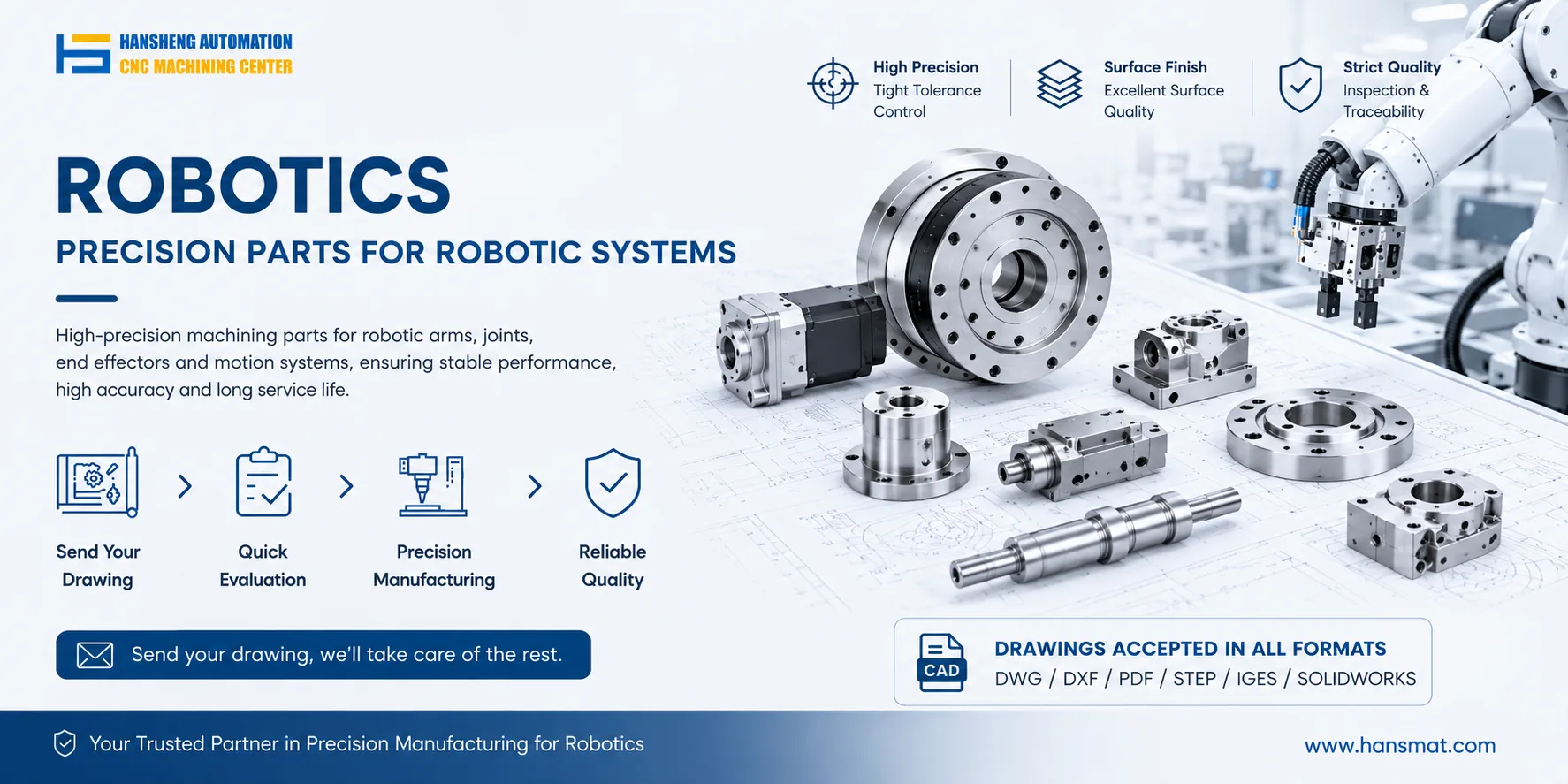
In automated loading and unloading applications, the gripper structure should be adjusted according to workpiece size and shape to ensure stable gripping. The motion path should also be optimized to reduce idle travel time and improve production efficiency. For custom gripper structures and related non-standard components, Hansheng Automation provides machining services based on customer drawings, supporting both prototype development and small-batch production. In high-temperature, dusty, or humid environments, select a robot with a higher protection rating such as IP65, and add dust covers or heaters as needed.
By strictly following these precautions, the operational stability and safety of a six-axis robot can be significantly improved, while also extending equipment life and reducing maintenance costs.