In fluidized bed granulation processes, oversized granules are typically caused by an imbalance among thermodynamic parameters, raw material properties, and atomization/fluidization mechanics. Analyzing these factors helps identify process fluctuations and optimize critical hardware components:
1. Inlet Air Temperature & Evaporative Dynamics Imbalance
The inlet air temperature directly determines the evaporation rate of the binder droplets.
Low-Temperature Agglomeration: Insufficient inlet air temperature or low airflow prevents rapid surface moisture vaporization upon droplet-powder contact. The resulting high liquid-bridge strength causes excessive particle coalescence during fluidization, yielding coarse granules.
Thermal Balance: While excessively high temperatures cause premature droplet drying and fine hollow dust, lower inlet temperatures remain a primary thermodynamic cause of oversized granule formation.
2. Atomization Quality & Spray Gun Component Precision
The initial droplet size defines the nucleation baseline. Inadequate atomizing air pressure, nozzle orifice wear, or rough internal mixing chamber profiles will increase the median droplet diameter (D50D50), resulting in localized overwetting and abnormal particle growth.
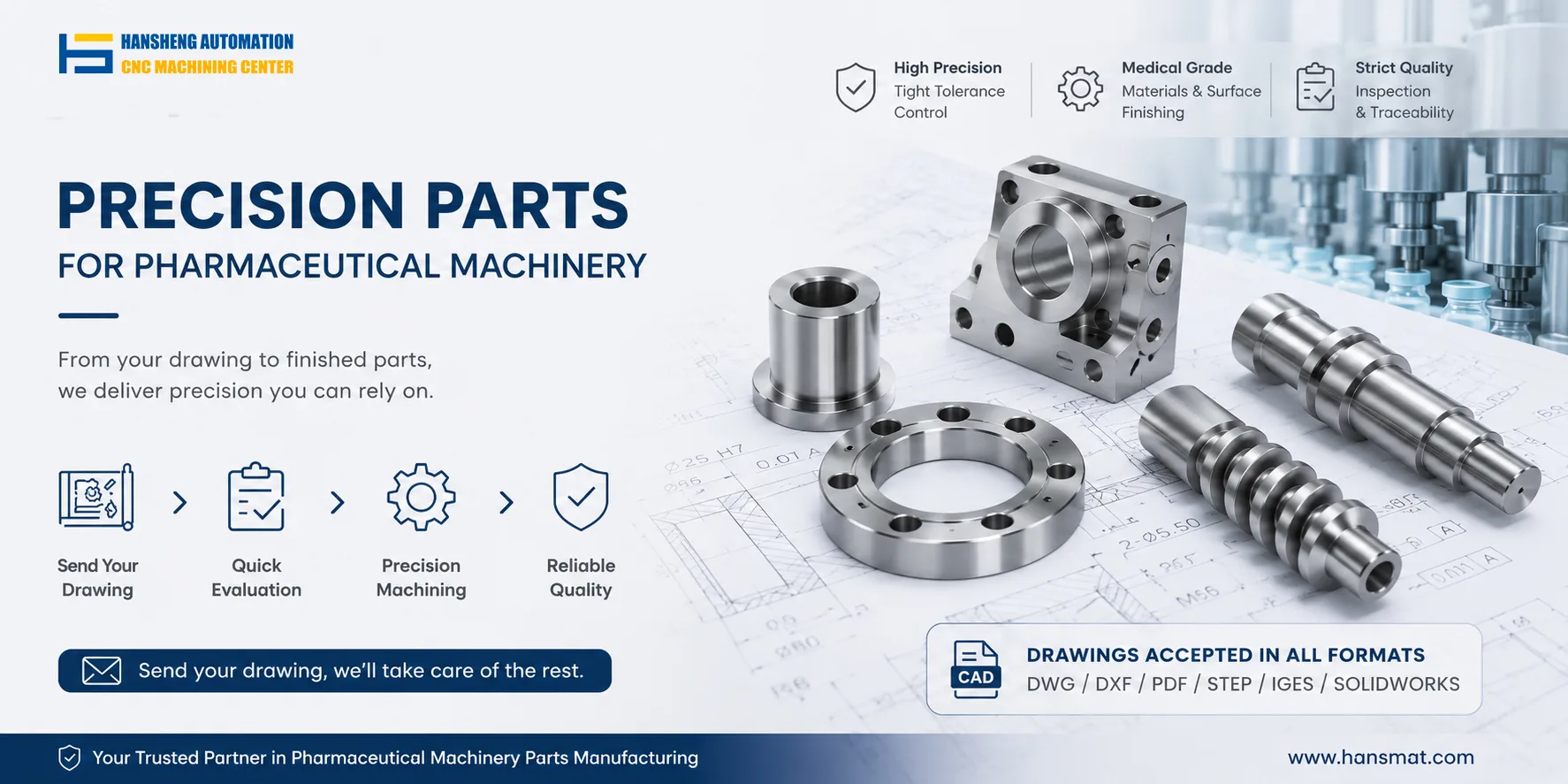
To meet the stringent wear resistance and flow channel precision required in granulation spray systems, Hansheng Automation provides high-precision custom manufacturing of non-standard components based on customer drawings. We custom-machine critical parts-such as two-fluid nozzles, spray gun air-liquid sleeves, and flow-distribution valve cores-using wear- and corrosion-resistant materials like SUS316L, Hastelloy, or tungsten carbide. We strictly maintain tight orifice concentricity and ultra-fine surface roughness (Ra≤0.2μm) to guarantee stable, uniform atomization.
3. Material Properties & Binder Viscosity
The physicochemical characteristics of the formulation significantly influence granule growth:
- Binder Viscosity & Concentration: High viscosity impedes liquid atomization and forms thicker liquid bridges between powder particles, accelerating secondary agglomeration into larger clusters.
- Hygroscopicity & Initial Moisture: High initial moisture or strongly hygroscopic powders increase bed fluidization resistance; inadequate fluidization can easily trigger localized bed collapse and clumping.
4. Operating Parameters & Bed Residence Time Control
Operational settings directly govern granule growth kinetics:
- Spray Rate vs. Drying Capacity: Excessive spray rates without sufficient drying time cause moisture buildup inside the bed, substantially raising particle collision and coalescence rates.
- Bed Circulation & Residence Time: Prolonged powder residence in the active spray zone leads to excessive multi-layer coating and bridging, continuously increasing granule size.
To optimize fluidization uniformity and circulation efficiency, we offer single-piece and low-volume custom machining of non-standard components-such as high-flatness, micro-perforated air distribution plates, wear-resistant draft tubes, and sealing flap valves-strictly according to customer-supplied engineering drawings. This helps ensure uniform internal airflow distribution and provides a reliable hardware foundation for consistent granule size control.