The solid dosage workshop has added an automatic packaging line covering the full flow from primary packaging to final carton packing.
Equipment composition
Primary packaging uses blister packaging, sealing the drug between aluminum foil and plastic blisters.
Mid-section packaging includes pillow wrapping, automatic cartoning, inline weighing, and three-dimensional wrapping. Pillow wrapping applies a second seal to the blister sheet. Automatic cartoning loads the product into cartons. Inline weighing checks weight in real time. Three-dimensional wrapping provides moisture and damage protection for the carton.
Back-end packaging includes electronic regulatory codes, a combined case opening, packing, and sealing machine, and final strapping. The electronic regulatory code gives each product a unique traceability identifier. The combined machine opens, packs, and seals cases automatically. Strapping ties the final bundle.
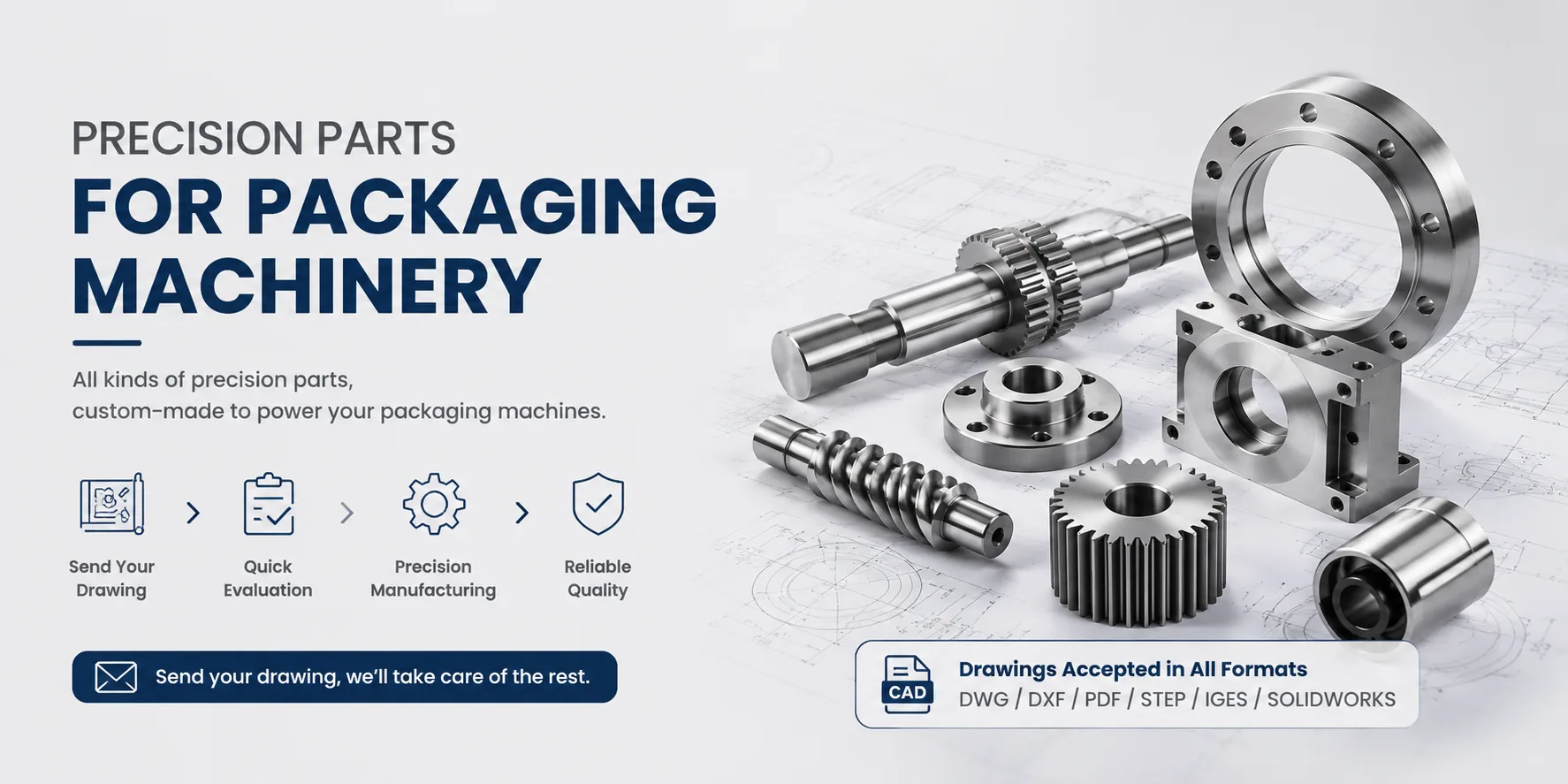
For blister packaging dies, pillow wrapping formers, and cartoning pusher mechanisms, we can machine to customer drawings, for single pieces or small batches.
Problems with manual packaging
Manual packaging runs at a maximum of 12 cartons per minute. Upstream processes such as blister packaging run much faster, so products waiting to be packed accumulate and shipping schedules slip.
Defective units such as missing or damaged items depend on manual sorting, which is prone to missed detection and raises the risk of market complaints.
Progress depends on worker adjustment, and operator differences are large, so meeting production targets requires longer hours or more staff.
Background and implementation
The workshop layout needed replanning to match the production flow, avoid material mix-ups, and keep operation convenient for staff.
The full line involves multiple types of equipment, so the equipment department, workshop, cost control department, and finance department jointly handled selection and bidding, which added communication cost.
Equipment dies required custom work, outer packaging needed redesign to match machine parameters, and multiple suppliers had to be coordinated, requiring significant labor, material, and financial input.
In the early stage, site visits, benchmarking, and the user requirement specification (URS) defined equipment parameters. Bidding and contract signing followed. The equipment passed factory acceptance testing (FAT) in mid-July and was then shipped to the Hechuan plant for installation and commissioning.
Efficiency comparison
The line runs fully automatically. Automatic line packaging speed reaches 200 cartons per minute, equivalent to 16 operators working at once.
The conventional mode needs 30 people over two days to complete one production batch. The automatic line needs only 6 people per day, a 10-fold efficiency gain.
Beyond the parts for this equipment, our precision component machining capability also covers non-standard parts for food packaging machinery, daily chemical filling equipment, and tobacco packaging machinery, as well as precision structural parts for yachts and RC race cars. Hansheng Automation machines single pieces or small batches to customer drawings, with material, tolerance, and surface finish specified by the drawing.