Managing and maintaining solid dosage equipment in a pharmaceutical company focuses on equipment classification, problem prevention, and systematic maintenance. Digital tools, standardized procedures, and personnel training keep equipment stable, which protects production quality and efficiency.
1. Main Types of Solid Dosage Equipment
Granulation equipment: granulators, disc pelletizers, etc., turn raw materials into granules. This is the base step in solid dosage production.
Mixing equipment: mixers, blenders, etc., use mechanical stirring or rotation to blend raw materials evenly and ensure consistent composition.
Tableting equipment: tablet presses, rotary tablet presses, etc., compress mixed powder or granules into tablets. Pressure and forming accuracy must be controlled.
Coating equipment: coaters, spray coaters, etc., spray coating solution to form a protective layer, improve tablet appearance, and control drug release.
Packaging equipment: packaging machines, cartoners, etc., complete final tablet packaging. Sealing and moisture resistance must meet requirements.
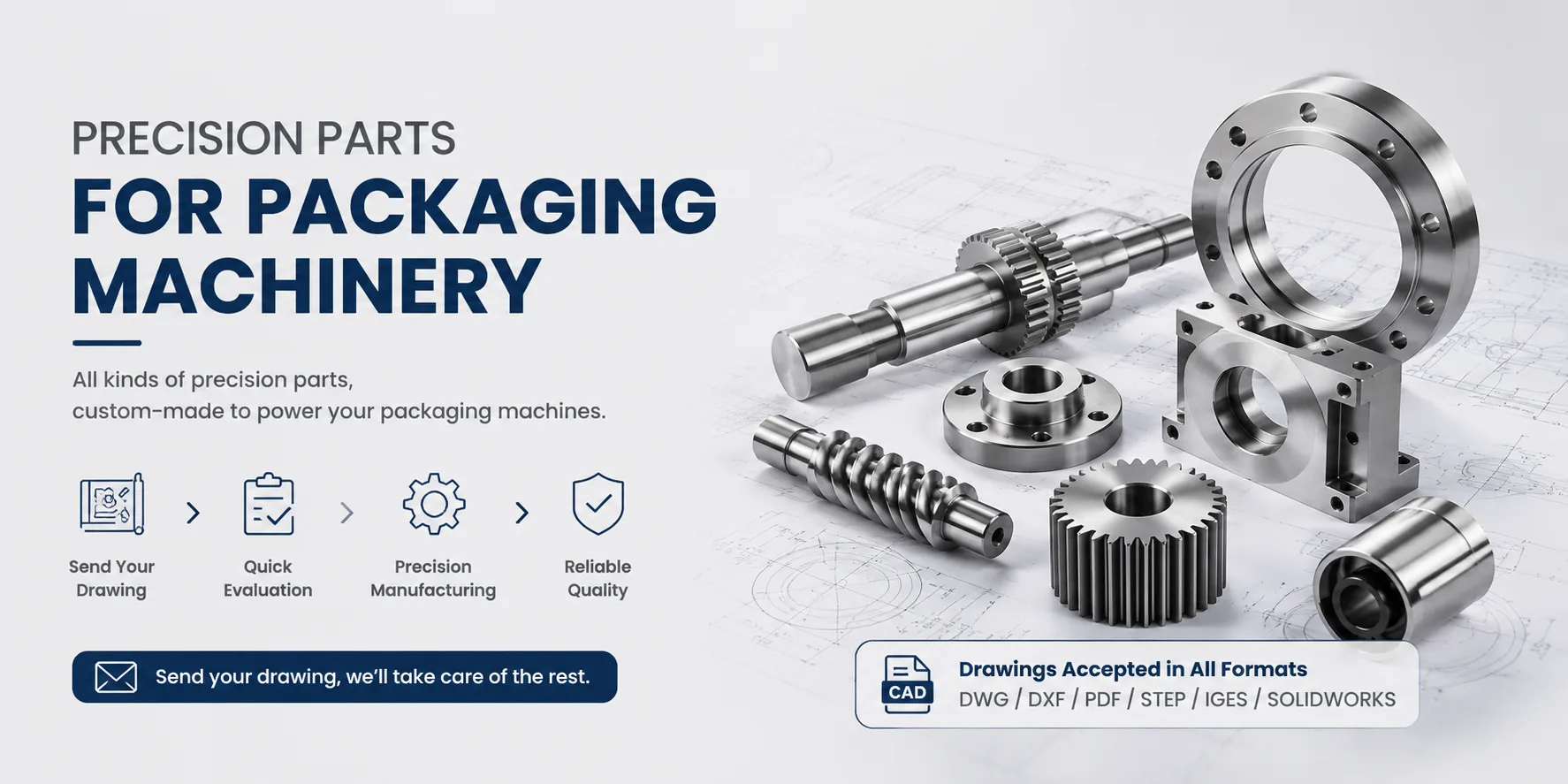
For wear parts on these machines, such as tablet press punches and dies, coating spray guns, and packaging machine cutters, we can machine to customer drawings, for single pieces or small batches.
2. Common Problems in Equipment Management
Incomplete asset management
Missing equipment files leave usage status unclear. Disorganized spare parts management slows repairs. Inaccurate depreciation data increases cost risk.
Case: A company did not record the service life of key components on a tablet press. A sudden failure during production caused downtime losses over one million RMB.
Non-standard validation management
Failure to perform design qualification (DQ), installation qualification (IQ), operational qualification (OQ), and performance qualification (PQ) can lead to unstable equipment performance or compliance risk.
GMP explicitly requires equipment to pass a complete validation process before production use.
Improper use and maintenance
Operators without standard training are prone to mistakes. Delayed cleaning and maintenance cause cross-contamination or equipment wear.
Data: One company's statistics showed that 60% of equipment failures came from operational or maintenance negligence.
Delayed fault management
Without a fault recording system, repairs repeat. Missing maintenance plans extend downtime and increase repair costs.
Consequence: A coating machine fault was not handled in time, scrapping an entire batch and causing losses of hundreds of thousands of RMB.
3. Key Points for Equipment Maintenance
Introduce an equipment management system
Use a digital platform such as PreMaint for equipment files, spare parts management, and validation process tracking, so information is traceable. This reduces manual recording errors, improves management efficiency, and supports compliance audits.
Implement preventive maintenance and scheduled upkeep
Preventive measures: replace wear parts on schedule, such as tablet press punches and dies and seals, to avoid sudden failures. Set up an inspection system using vibration, temperature, and other sensors to monitor equipment condition and find hidden problems early.
Scheduled upkeep: develop a maintenance plan per manufacturer requirements, including cleaning (remove residual powder), lubrication (reduce friction), and fastener checks (prevent loosening).
Case: One company extended the service life of a mixer bearing by 30% through monthly lubrication.
Manage equipment faults properly
Recording and analysis: use a fault information recording system such as CMMS to track fault types and frequency, and analyze root causes such as design defects or improper operation.
Repair planning: set repair strategies by fault priority, handling critical faults that affect production first.
Improvement measures: optimize equipment design or operating procedures for high-frequency faults, such as adjusting the coating machine spray gun angle to reduce clogging.
Train operators
Training content: equipment operating procedures (e.g., tablet press pressure settings, coating machine spray rate control), maintenance knowledge (e.g., cleaning methods, lubrication points), and safety requirements (e.g., guard use, emergency stop procedures).
Training method: classroom instruction combined with hands-on practice, with periodic assessments to confirm skill levels.
Result: After training, one company reduced equipment failure rate by 40% and raised operational compliance to 95%.
4. Long-Term Value of Management and Maintenance
Improve production efficiency: reduce equipment downtime and keep production continuous.
Ensure product quality: stable equipment performance lowers defect rates, such as tablet weight variation and uneven coating thickness.
Extend equipment life: preventive maintenance slows wear and saves replacement cost.
Strengthen compliance: complete records support GMP audits and avoid regulatory penalties from equipment issues.
Summary: Pharmaceutical companies need to manage solid dosage equipment with a systematic approach, building a maintenance system through digital tools, standardized procedures, and personnel capability. This ultimately optimizes production quality, efficiency, and cost.
Beyond the equipment parts mentioned above, our precision component machining capability also covers non-standard parts for food packaging machinery, pharmaceutical packaging machinery, and daily chemical filling equipment, as well as precision structural parts for yachts and RC race cars. Hansheng Automation machines single pieces or small batches to customer drawings, with material, tolerance, and surface finish specified by the drawing.