The high lamination efficiency of the multi-station rotary automatic film laminating machine for Mylar sheets is mainly achieved through parallel multi-station operation, fully automated process integration, cost-effectiveness, and stable, reliable performance.
1. Multi-Station Rotary Design Enables Parallel Operation and Breaks the Efficiency Bottleneck of Single-Station Machines
The machine adopts a rotary table structure with multiple independent stations, such as loading, cleaning, alignment, film lamination, pressure holding, and unloading. Each station handles a different process simultaneously. For example, while station 1 completes loading, station 2 enters cleaning, and station 3 performs film lamination at the same time, forming a continuous parallel workflow and avoiding the waiting time caused by serial operation in single-station models.
The multi-station design also flexibly assigns tasks for complex processes such as precision positioning and multi-surface lamination. Independent stations separate high-precision alignment from lamination, ensuring sufficient processing time at each step without affecting overall efficiency.
2. Fully Automated Integration Eliminates Manual Intervention Losses
The equipment integrates six core functions: automatic loading, cleaning, alignment, lamination, pressure holding, and unloading. For Mylar sheets, the loading mechanism uses a robotic arm or vibratory feeder to precisely pick materials. The cleaning station uses an ionizing fan or dust-free cloth to remove static and dust. The alignment stage uses a CCD vision system for millimeter-level positioning. The lamination head uses vacuum adsorption to ensure flat film placement. The pressure holding station controls constant pressure and time for reliable bonding. The finished product is automatically unloaded to a collection tray or conveyor.
The machine can connect seamlessly with upstream and downstream processes such as inspection and packaging through a PLC control system, enabling data exchange and rhythm matching. For example, after Mylar sheet processing, the machine automatically receives the signal to start loading, and after lamination it triggers downstream packaging, requiring no manual intervention.
3. High Cost-Effectiveness and Long-Term Cost Advantage
The service life of the machine is 5–10 years. Based on mainstream semi-automatic model prices of 10,000–50,000 yuan and a 5-year service life, the annual cost is approximately 600–1000 yuan, equivalent to one worker's monthly salary, while the daily output of one machine can replace 3–5 workers.
Compared with manual lamination, automated equipment improves efficiency by 3–5 times and raises the lamination pass rate from 85% to over 99%, reducing rework and material waste. For Mylar sheets, manual lamination is prone to bubbles or misalignment caused by hand movement, while the equipment achieves bubble-free and precise placement through vacuum adsorption and vision positioning.
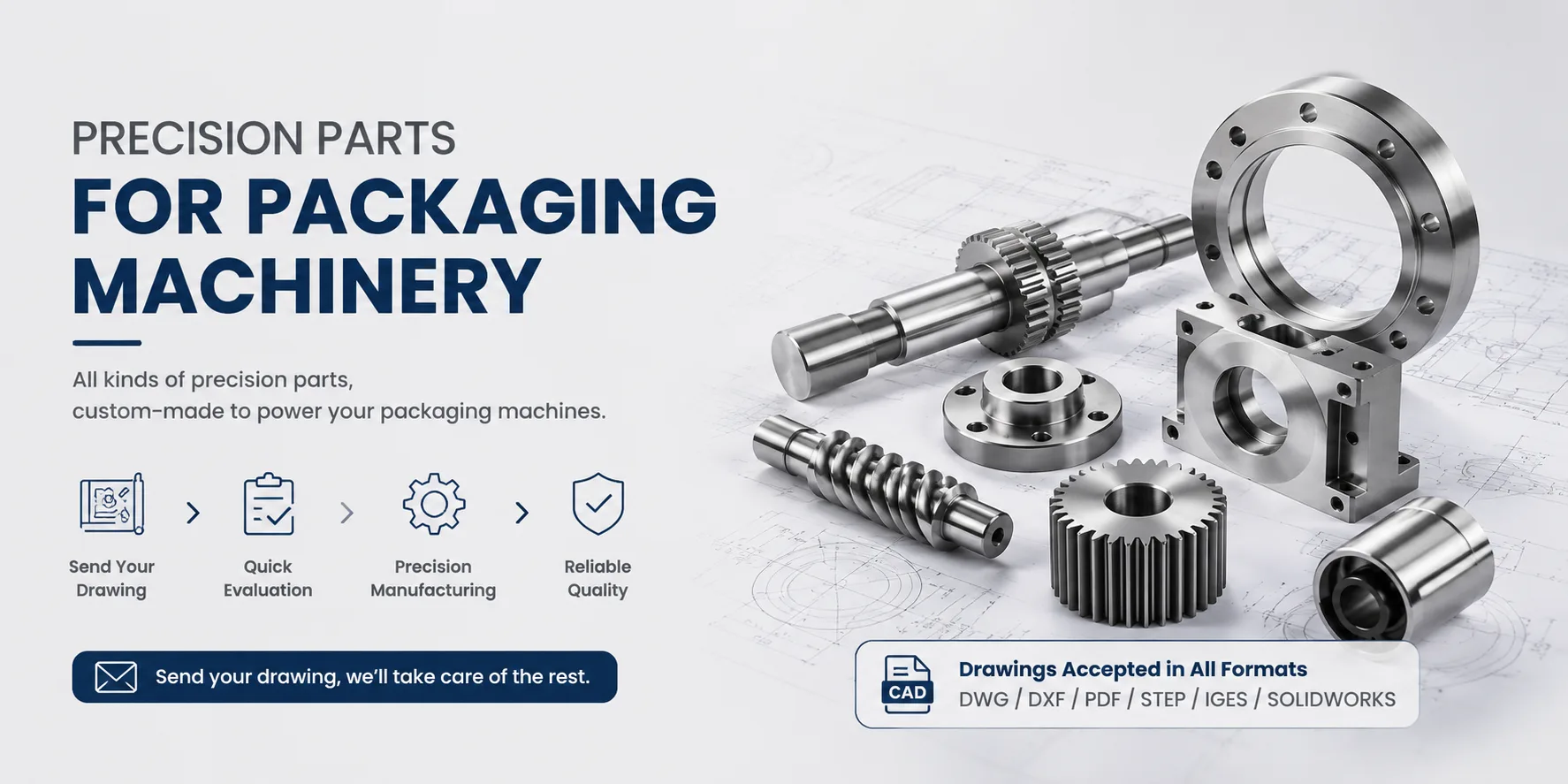
For precision-machined rotary tables, vacuum lamination heads, alignment fixtures, or other custom components used in multi-station rotary film laminating machines, Hansheng Automation provides machining services based on customer drawings.
4. Stable and Reliable Performance with Simplified Management
The modular structure allows each station to operate independently and be quickly replaced. For example, if the lamination head wears, only the module needs to be replaced rather than repairing the whole machine, reducing maintenance time from 2 hours to 30 minutes. Through the touchscreen HMI, operators can start the equipment with one key and monitor operating status such as speed, pressure, and yield rate. One or two machines can meet the production needs of small and medium enterprises, reducing management costs without requiring complex skills.
5. Industry Applications and Case Verification
The equipment is used in electronics such as Mylar sheet lamination for mobile phone screens, plastics such as protective film application on housings, toys such as automated sticker processing, and other industries. For example, after introducing the equipment, an electronics manufacturer increased Mylar sheet lamination capacity from 5,000 pieces per day to 20,000 pieces per day, and the yield rate rose from 90% to 99.5%. With core technologies such as high-precision servo motors and vision positioning systems, the equipment maintains positioning accuracy of ±0.05 mm even at high speed.
In summary, the multi-station rotary automatic film laminating machine for Mylar sheets achieves a significant improvement in lamination efficiency through structural innovation, process optimization, cost control, and performance enhancement, making it an ideal choice for modern manufacturing to increase capacity and reduce costs.