Rotational asynchrony faults in packaging machines can be divided into four categories: mechanical, electrical, process-related, and consumable-related problems.
1. Mechanical Fault Points
Transmission mechanism wear: after long-term use, synchronous belts, gears, and sprockets may experience slipping, tooth surface wear, or excessive clearance, reducing rotational transmission accuracy. Bearings and rollers in cam indexers may also wear, causing positioning deviation.
Installation and positioning deviation: inconsistent installation references among rotating stations, such as excessive turntable levelness error or poor coaxiality of the rotating shaft, can cause asynchronous vibration during operation.
Unbalanced load: overweight materials at a single station or loose and shifted fixtures can cause abnormal rotational resistance and speed differences between stations.
Mechanical jamming: dust, oil stains, or foreign objects entering rotating guide rails and bearing seats increase local running resistance.
2. Electrical Fault Points
Drive system abnormality: encoder failure or feedback signal loss in variable frequency or servo motors leads to inaccurate speed control. Incorrect inverter parameter settings, such as mismatched acceleration/deceleration time or excessively low torque limits, can also cause problems.
Synchronization signal abnormality: damaged position detection components such as encoders and proximity switches, loose wiring, or signal interference prevent the control system from accurately obtaining the rotational position of each station.
Electrical wiring faults: poor contact, virtual connection, or disconnection in power lines and signal lines of drive motors can cause insufficient local power supply.
Control system program errors: PLC program logic disorder or parameter loss can lead to failure in rotational timing matching.
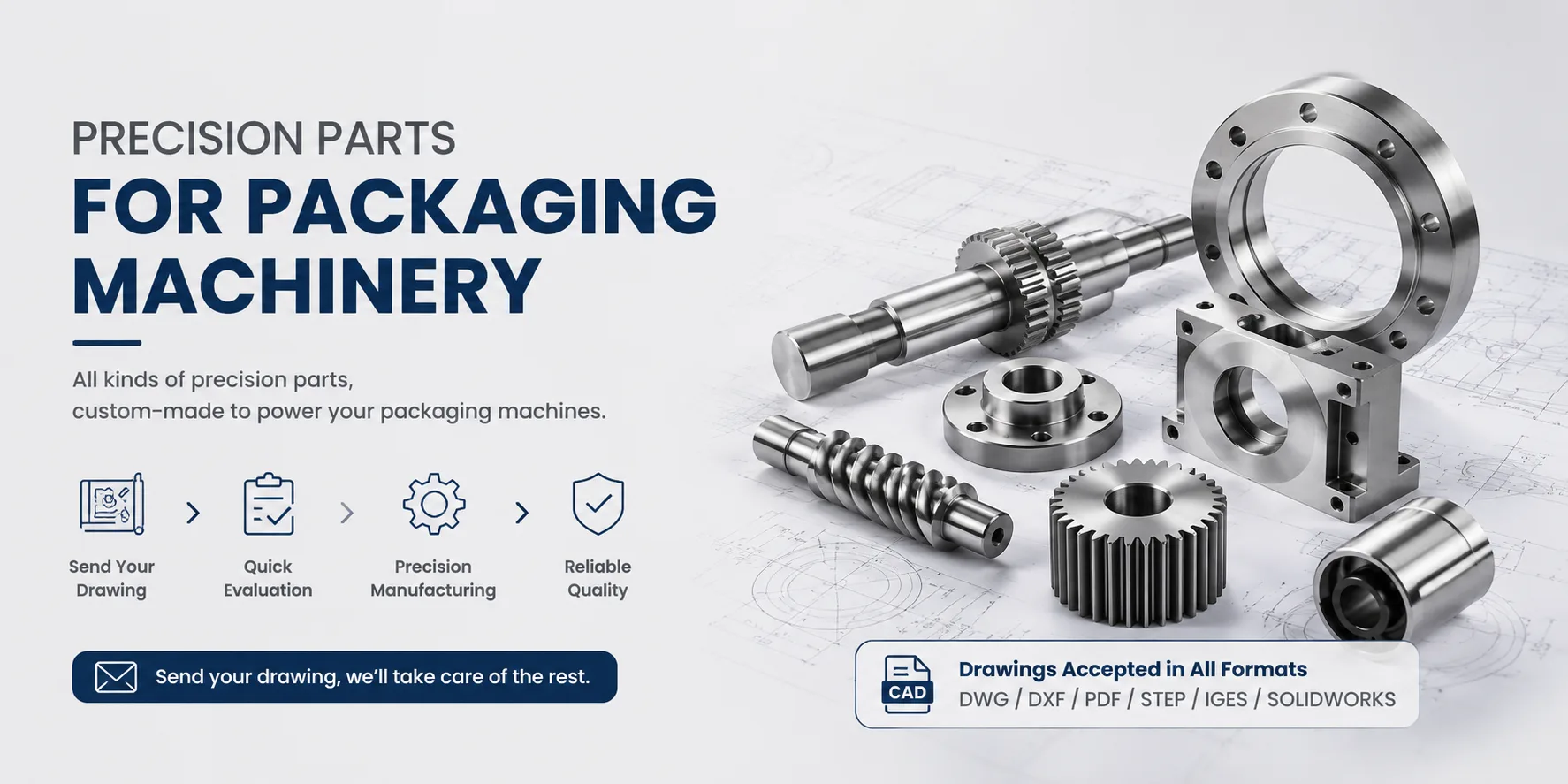
For custom-machined transmission parts, cam indexer components, precision shafts, or replacement mechanical parts used to correct rotational asynchrony in packaging machines, Hansheng Automation provides machining services based on customer drawings.
3. Process-Related Fault Points
Material and fixture adaptation problems: large weight deviation in a single packaging batch or insecure clamping by fixtures can cause material shifting and rotational load fluctuation.
Mismatched speed settings: inconsistent preset speeds among the drive units of multiple rotating stations directly cause asynchrony.
Incorrect start-stop timing: mismatched timing between linked processes such as feeding and sealing and the start-stop of rotating stations can cause material jamming and lag.
4. Consumable and Environmental Fault Points
Loose synchronous belts or chains: stretching and insufficient tension after long-term use cause slipping and lost steps during operation.
Environmental interference: electromagnetic interference from strong electromagnetic equipment or high-power motors in the workshop can disrupt electrical signal transmission.
Poor lubrication: bearings and guide rails of rotating mechanisms not lubricated according to schedule experience accelerated wear and reduced running accuracy.