In mold shops, especially in small-to-medium batch and multi-specification mold or part packaging scenarios, portable automatic packaging machines are generally the preferred choice. Hydraulic transmission solutions offer clear advantages only for long-duration continuous heavy-load packaging of large or oversized molds.
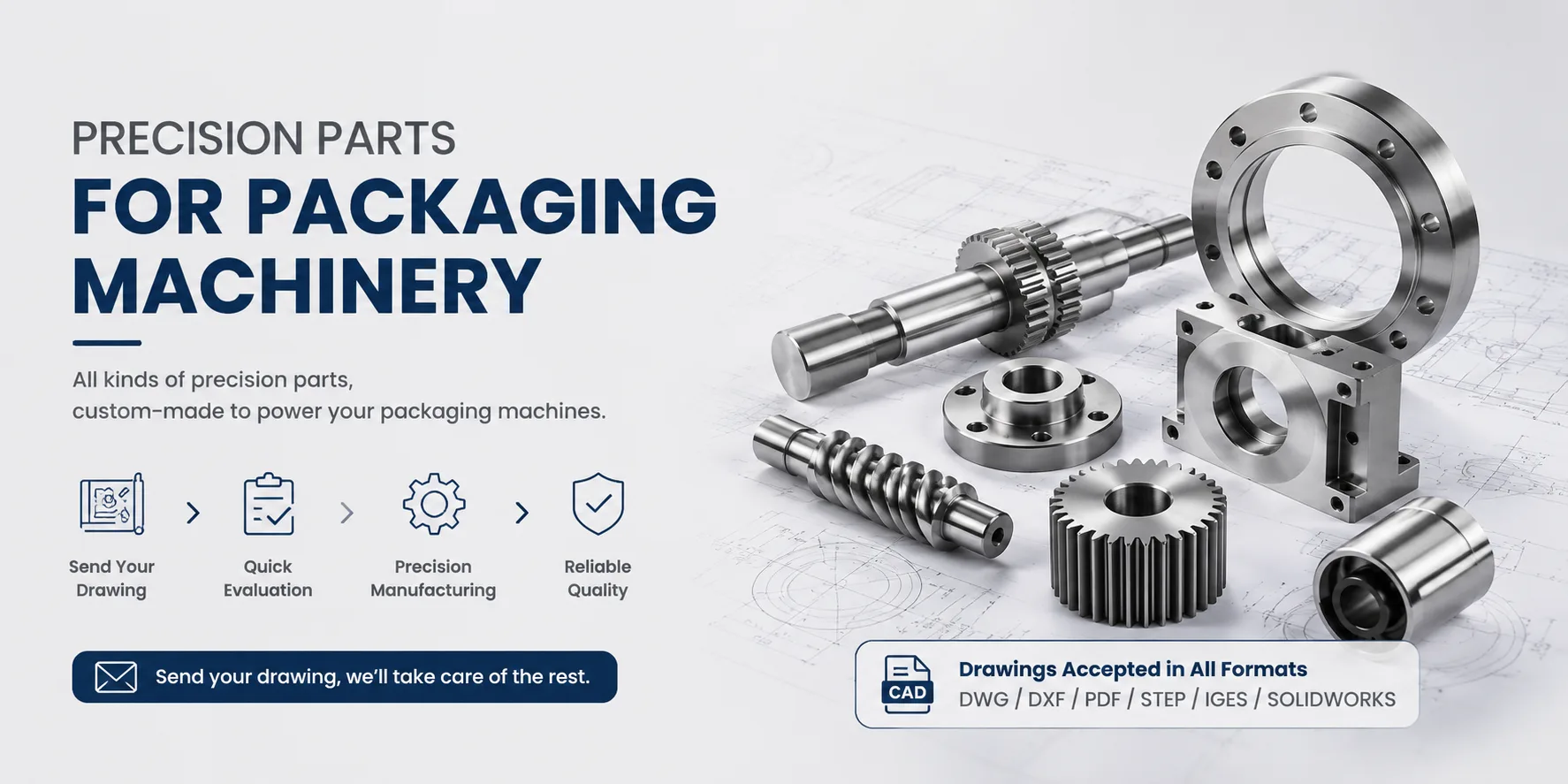
For non-standard mounting brackets, precision-machined structural parts, or custom adapters used in either type of packaging equipment, Hansheng Automation provides machining services based on customer drawings.
1. Structure and Operational Adaptability
A portable automatic packaging machine typically weighs 10–15 kg and can be moved by hand, making it suitable for multi-station work and narrow operating spaces commonly found in mold shops. It supports one-key operation, and changing packaging specifications usually takes no more than 10 minutes without professional debugging. Models with built-in lithium batteries are not limited by external power connections, allowing them to cover any station in the workshop.
A hydraulic transmission solution generally weighs 50 kg or more and requires a fixed station layout. Moving it across stations requires additional lifting assistance. Operators need basic training to adjust hydraulic pressure and throttle valve parameters. The system depends on a hydraulic power unit or external power source, so its working range is restricted by pipeline layout.
2. Thrust and Operating Efficiency
Portable automatic packaging machines provide a rated thrust of 500–2000 N, which is sufficient for bundling and wrapping conventional mold parts. A single package operation can be completed within 30 seconds.
Hydraulic transmission solutions deliver a rated thrust of 5000–20000 N. For heavy and oversized molds, packaging efficiency is 1.2–1.5 times higher than portable equipment. However, during light-load operation, excess thrust capacity causes approximately 30–40% energy waste.
3. Maintenance and Cost
Portable automatic packaging machines use servo motors and strapping heads as core components. Annual maintenance costs range from 800 to 1200 yuan. There is no risk of hydraulic oil leakage contaminating the work area, and the equipment purchase price is approximately 3000–5000 yuan.
Hydraulic transmission solutions rely on hydraulic pumps, cylinders, and control valves. Annual maintenance costs range from 2500 to 4000 yuan, including hydraulic oil replacement and seal wear. There is also a risk of hydraulic oil leakage contaminating molds or the workshop. The equipment purchase price is approximately 15000–30000 yuan.
4. Safety and Scenario Limitations
Portable automatic packaging machines have no high-pressure hydraulic source, so operational risk is low. They are suitable for workshops with frequent personnel movement and multi-batch operations. However, their thrust upper limit is insufficient for heavy-load packaging of oversized molds.
Hydraulic transmission solutions carry risks such as high-pressure pipeline rupture and oil leakage. They require professionally trained operators and are mainly suitable for heavy-load packaging of oversized molds at fixed stations.