The main components of a vacuum packaging machine include the vacuum pump, motor, vacuum chamber, sealing bar, acrylic upper cover, air bag, and solenoid valve. The upper chamber, lower chamber, and seal ring form the chamber structure, which is the core of the machine.
Vacuum chamber and seal ring
The upper and lower chambers are generally made of aluminum alloy or stainless steel. Aluminum alloy resists acids, bases, and corrosion, but costs more. Thin stainless steel sheet deforms easily under vacuum pressure, causing weld cracking and chamber leakage. Choose the material based on the product being packaged.
Seal rings are usually silicone rubber or black rubber, with long service life and good sealing. Lower-grade products may use foam rubber, which seals poorly, falls off easily, and has a short life.
Opening, displacement, and balance mechanism
The opening, displacement, and balance mechanism for the upper and lower chambers comes in single-chamber and double-chamber types. Single-chamber is a flip type, double-chamber is a reciprocating type.
Single-chamber uses double torsion springs to balance operating force, with an opening angle of 45 to 75 degrees. Double-chamber uses four connecting rods to support left-right displacement, balancing the weight so movement is easy. During vacuum start, only slight pressure is needed, and the chamber opens automatically after venting.
The four connecting rods must stay parallel so the upper chamber stays parallel to the lower chamber at any left-right position. Otherwise operating pressure increases noticeably, and in severe cases a vacuum cannot be established.
Heat sealing and printing devices
Both are installed inside the vacuum chamber.
The heat sealing device consists of the heat sealing air chamber frame, heat press frame seat, heat sealing air chamber, epoxy board heat press frame body, nickel-chromium alloy band, and heat sealing cloth.
The printing device consists of the printing rubber strip frame and printing rubber strip. The printing strip is made of heat-resistant silicone rubber with diagonal or straight ribs, and holes on the other side to hold the production date, printing a transparent embossed date during sealing. For colored printing, a ribbon printer can be used.
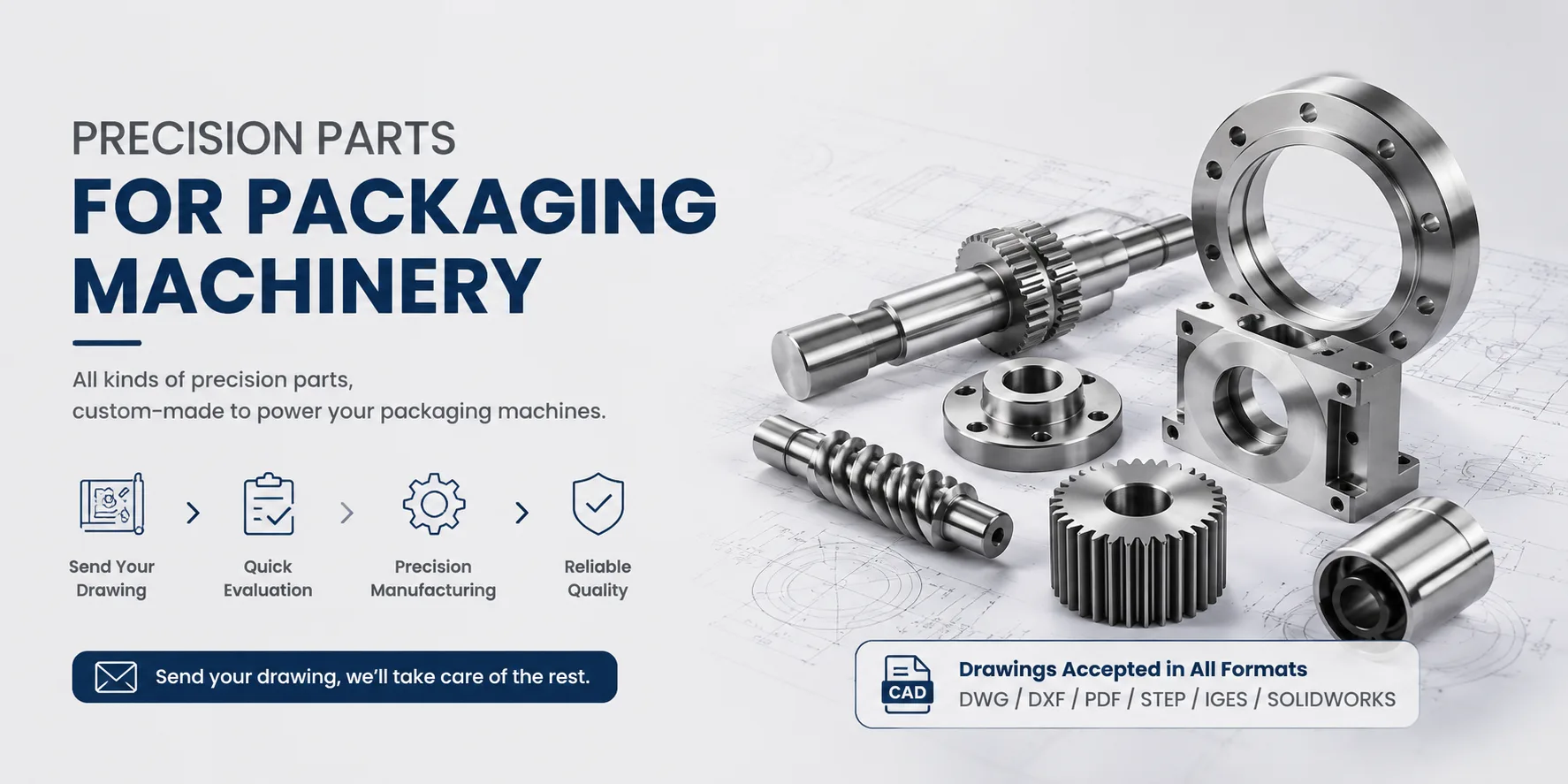
For heat sealing air chamber frames, heat press frame seats, and sealing bar bases, we can machine to customer drawings, for single pieces or small batches.
Vacuum pump mounting options
Built-in: uses a single-stage rotary vane vacuum pump, with low speed, high torque, and relatively longer service life.
External: uses a double-stage rotary vane vacuum pump, with fast pumping speed and high vacuum. It suits larger production batches, higher vacuum requirements, or outdoor installation to reduce exhaust pollution.
Control components
Time relays, transformers, and AC contactors control the operating sequence. The time relay controls vacuum pump start and stop. The transformer converts AC to DC. The AC contactor controls motor start and stop.
Additional notes
Vacuum packaging places food in a bag, draws out the air, and seals once the preset vacuum level is reached. Vacuum gas-flush packaging then fills nitrogen or another mixed gas before sealing.
Tea vacuum packaging machines are suitable for vacuum, gas-flush, and skin packaging of food, meat products, seafood, fruits and vegetables, pickles, chilled meat, pharmaceutical products, hardware components, and medical devices.
Beyond tea vacuum packaging machine parts, our precision component machining capability also covers non-standard parts for food processing equipment, pharmaceutical packaging machinery, and daily chemical filling equipment, as well as precision structural parts for yachts and RC race cars. Hansheng Automation machines single pieces or small batches to customer drawings, with material, tolerance, and surface finish specified by the drawing.