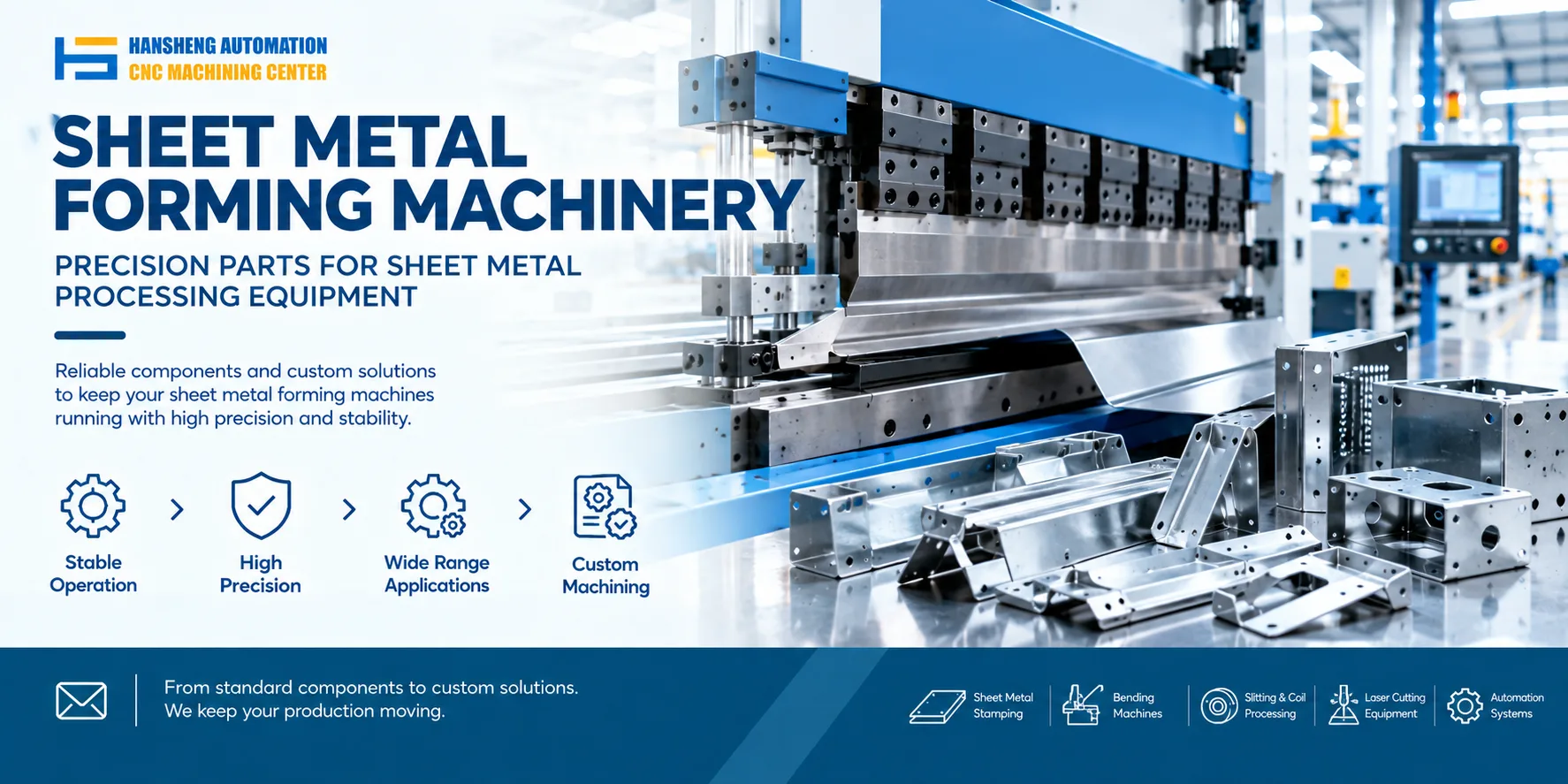
CNC shearing machines have specific requirements for sheet thickness, material properties, and workpiece dimensions. Blade clearance must also be set according to the material and cutting conditions. Incorrect clearance can result in burrs, deformation, poor cutting quality, and premature blade wear.
Sheet Metal Requirements for CNC Shearing
Sheet thickness
Each CNC shearing machine has a rated minimum and maximum cutting thickness. Material outside this range may not be cut properly and can place excessive loads on the machine.
Before processing, confirm that the sheet thickness falls within the machine's rated capacity. The actual cutting limit depends on the machine's cutting force, blade specifications, and workpiece material.
Material properties
Different materials have different hardness, strength, and ductility, which affect the cutting force and edge quality.
When changing from one material to another, check whether the blade clearance and other cutting parameters need adjustment. Stainless steel, carbon steel, and aluminum alloys may require different settings even when their thicknesses are similar.
Workpiece dimensions
The sheet dimensions must fall within the machine's permitted cutting length and width. The workpiece should also be supported and positioned correctly to prevent movement or deformation during cutting.
Some machine-specific instructions may specify minimum workpiece dimensions relative to sheet thickness. The original guidance mentions a length-to-thickness ratio of 15 to 20, but this should be verified against the machine manufacturer's documentation rather than treated as a universal requirement.
How to Adjust Blade Clearance
Blade clearance is the gap between the cutting edges of the upper and lower blades. It affects the quality of the cut and the load applied to the blades. The correct setting depends on the sheet thickness, material properties, blade condition, and machine design.
Release the locking fasteners
Before adjusting the clearance, shut down the machine, isolate its power supply, and secure the cutting mechanism according to the manufacturer's maintenance procedure.
Locate the blade clearance adjustment mechanism. Depending on the machine design, this may use adjustment bolts, screws, locking nuts, or a handwheel.
Loosen the specified locking fasteners enough to allow adjustment. Do not remove them unless the maintenance procedure requires it.
Adjust the blade clearance
Use the adjustment mechanism to increase or decrease the gap between the upper and lower blades.
The direction of adjustment depends on the machine structure. Do not assume that changing the spacing between bolts will directly determine the blade clearance. Follow the adjustment markings and instructions for the specific model.
Set the clearance according to the manufacturer's recommended values for the material and sheet thickness.
Measure the clearance
Use a suitable feeler gauge to measure the gap between the cutting edges. Check the clearance at the left, center, and right positions along the blade to identify uneven spacing.
If the clearance varies along the blade, adjust the appropriate points according to the manufacturer's procedure. Uniform clearance helps maintain consistent cutting quality and reduces uneven blade loading.
Tighten the fasteners
Once the required clearance has been achieved, tighten the locking fasteners according to the specified procedure. Recheck the clearance after tightening to confirm that the adjustment has not shifted.
Do not operate the machine with loose fasteners or removed guards.
Test the cutting result
After completing the adjustment, perform a test cut using suitable material within the machine's rated capacity.
Inspect the cut edge for excessive burrs, tearing, or deformation. If the result is unsatisfactory, recheck the blade clearance, blade condition, and material settings before making further adjustments.
Custom Precision Machining for Industrial Applications
Hansheng Automation provides custom precision machining based on customer drawings for a range of industrial applications. Our work includes precision components for yacht equipment and RC racing cars, as well as nonstandard parts for tobacco packaging machinery and filling machinery. Each component is manufactured according to the supplied drawings and the specific requirements of the application.