Industrial shaking equipment can be divided into three main categories based on shaking motion: reciprocating shaking machines, rotary shaking machines, and vibratory shaking machines. These types differ clearly in motion principle and application scenarios.
1. Reciprocating Shaking Machines
Motion principle: Reciprocating shaking machines use crank-connecting rod mechanisms, cam followers, or servo drives to produce linear back-and-forth oscillation along a single plane. The shaking stroke and frequency can be precisely adjusted through mechanical structures or electronic control systems.
Typical equipment and applications:
Chemical drum shaking and mixing machines: Commonly used in the chemical and coating industries to shake and remix raw material drums or finished product drums that have settled and stratified during storage, preventing material separation.
Reciprocating shaking screening machines: Used for rough grading or initial cleaning of grains, powders, and hardware parts. The reciprocating motion moves material across the screen surface to achieve particle size separation or impurity removal.
2. Rotary Shaking Machines
Motion principle: Rotary shaking machines rotate around a fixed axis in a circular or arc path. The shaking trajectory is curved, and some equipment can adjust the rotation radius and shaking speed by changing counterweights or drive parameters.
Typical equipment and applications:
Rotary tumbling pickling machines: Often used in the food industry for processing pickles and cured meats. The rotary shaking motion allows materials to fully contact the pickling liquid and shortens the pickling cycle.
Industrial drum shaking machines: Used for mixing materials in chemical reactor systems or for light transfer and classification of mining materials. The rotary shaking motion tumbles and mixes the materials.
3. Vibratory Shaking Machines
Motion principle: Vibratory shaking machines generate high-frequency reciprocating vibration through eccentric blocks, electromagnetic exciters, or pneumatic excitation sources. The shaking motion is small-amplitude and high-frequency, typically with an amplitude of 0.5 mm to 10 mm and a frequency range of 10 Hz to 200 Hz.
Typical equipment and applications:
Vibratory shaking screens: Used for fine classification and impurity removal of powders and granular materials in the pharmaceutical, lithium battery, and building materials industries. The vibratory shaking motion makes materials jump and move across the screen surface, improving screening efficiency.
Vibratory mixers: Often used for small-batch, high-precision powder mixing, such as uniform mixing of lithium battery cathode and anode materials and food additives.
Small workpiece shaking and cleaning machines: Used together with cleaning agents to remove oil and debris from the surfaces of electronic components and small hardware parts. The vibratory shaking motion allows the cleaning agent to fully contact the gaps of the workpieces.
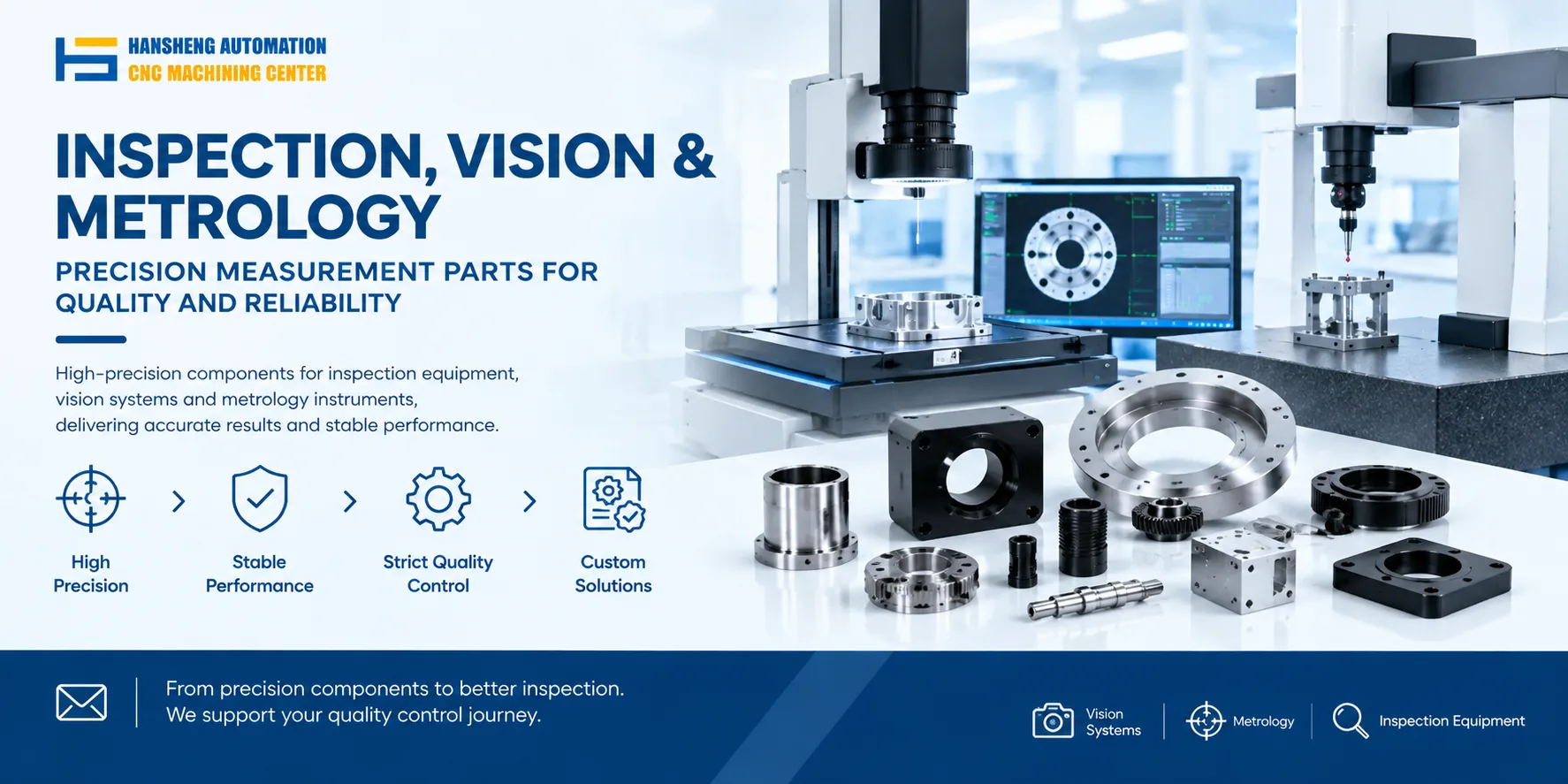
For critical shaking mechanisms, screen frames, drive shafts, and wear-resistant structural parts used in the above equipment, Hansheng Automation provides custom machining according to customer drawings.
Safe Operating Boundaries
Protective devices must never be opened while any industrial shaking equipment is running. Rotary equipment must be equipped with emergency stop trigger devices. Vibratory equipment requires proper foundation vibration isolation to avoid resonance that could cause structural safety problems in the plant. Equipment maintenance and parameter adjustment must be carried out by certified professionals.