Exhaust gas from asphalt heating and processing may contain particulate matter, asphalt fumes, condensable organic aerosols, volatile organic compounds (VOCs), and combustion-related pollutants such as nitrogen oxides (NOx), sulfur dioxide (SO2), and carbon monoxide (CO).
The composition of the exhaust depends on the heating temperature, asphalt type, fuel used, production process, and equipment configuration. Different emission sources therefore require different treatment methods.
A typical treatment system may include dust collection, asphalt fume capture, filtration, activated carbon adsorption, or thermal oxidation. The equipment arrangement should be determined by the actual exhaust characteristics rather than applying the same treatment sequence to every asphalt heating process.
Pretreatment Equipment
Cyclone Dust Collectors and Fume Separation Systems
Cyclone dust collectors use centrifugal force to separate larger solid particles from an exhaust stream. As the gas enters the collector, a rotating flow develops. Larger particles move toward the collector wall under centrifugal force and fall into the dust collection hopper.
This type of equipment is commonly used as a primary dust collector in hot-mix asphalt plants, particularly for removing mineral dust carried out of aggregate drying equipment.
However, asphalt heating exhaust may also contain condensable organic compounds and fine oil-like aerosols. These substances cannot necessarily be removed effectively by a conventional cyclone collector.
For asphalt tank vents and hot-mix handling operations, dedicated fume collection and separation equipment may be required. Coalescing filters, blue smoke control filters, and vent condensers can be used to capture or condense organic vapors and aerosols.
The selection of equipment depends on whether the exhaust mainly contains solid dust, liquid droplets, or condensable asphalt vapors.
Rapid Cooling Systems
Cooling equipment can be installed when the incoming exhaust temperature exceeds the allowable operating range of downstream treatment units.
A rapid quench system reduces the exhaust temperature through direct or indirect heat exchange. This can protect downstream filters and adsorption equipment from excessive heat.
Rapid cooling also has a specific application in controlling dioxin and furan formation in certain thermal oxidation processes involving chlorine-containing compounds. By cooling the exhaust quickly, the system can limit the conditions that promote de novo formation of these compounds.
However, this is not a standard requirement for all asphalt heating exhaust. A quench tower should only be included when the exhaust composition and process conditions justify it.
The cooling temperature should be determined according to the downstream equipment requirements and the condensation characteristics of the exhaust. Excessive cooling can cause organic vapors to condense and accumulate in ducts and treatment equipment.
Adsorption and Purification Equipment
Activated Carbon Adsorption Systems
Activated carbon adsorption can be used to control suitable VOCs and certain organic compounds in asphalt heating exhaust.
Activated carbon has a porous structure and a large internal surface area. When the exhaust passes through the carbon bed, suitable organic molecules are retained on the carbon surface through adsorption.
Depending on the pollutant composition and carbon grade, the system can capture certain aromatic hydrocarbons and other volatile organic compounds.
Activated carbon adsorption may be considered for relatively low-concentration exhaust streams after adequate pretreatment.
Before entering the adsorption unit, the gas should be cooled to the specified operating temperature and filtered to remove particulate matter, oil mist, and condensable organic aerosols. Otherwise, deposits can block the carbon pores and increase airflow resistance.
The carbon bed has a limited adsorption capacity. Its performance gradually decreases as pollutants accumulate, so the system requires regular monitoring and timely replacement or regeneration of the adsorbent.
The design must also consider the fire risk associated with activated carbon, particularly when treating organic vapors that may generate heat during adsorption.
Activated Carbon Fiber Adsorption Systems
Activated carbon fiber (ACF) is another carbon-based adsorbent that can be used for selected VOC treatment applications.
Its fibrous structure provides accessible adsorption surfaces and relatively short diffusion paths. Depending on the carbon properties and system design, ACF can offer useful adsorption and desorption characteristics.
ACF units may be used as an additional adsorption stage or as part of a system designed for cyclic adsorption and regeneration.
However, its adsorption capacity cannot be defined by a universal value such as 1.2 kg/m³ for all aromatic compounds. Actual performance depends on the adsorbent properties, pollutant composition, concentration, temperature, humidity, and operating cycle.
Like conventional activated carbon, ACF requires protection from particulate contamination and condensable asphalt fumes.
Thermal Oxidation Systems
Regenerative Thermal Oxidizers (RTO)
A regenerative thermal oxidizer uses high-temperature oxidation to destroy VOCs in the exhaust gas. Its main components include a combustion chamber, ceramic heat storage beds, switching valves, and an auxiliary burner.
The incoming exhaust passes through a heated ceramic bed, where its temperature increases before entering the oxidation chamber. Organic pollutants are oxidized primarily into carbon dioxide and water under suitable temperature, residence time, oxygen availability, and mixing conditions.
The hot treated gas then passes through another ceramic bed, transferring heat to the ceramic material before discharge. The airflow direction is periodically switched so that the ceramic beds alternate between heat storage and heat release.
This process recovers thermal energy and reduces the amount of additional fuel required.
RTO systems are generally considered for exhaust streams with sufficient VOC loading and suitable airflow characteristics. Their economic suitability depends on the pollutant concentration, exhaust volume, heat recovery efficiency, and operating schedule.
For asphalt-related exhaust, pretreatment is particularly important. Dust, condensable organic aerosols, and sticky asphalt fumes can accumulate in the ceramic beds and switching valves, increasing pressure drop and affecting equipment operation.
Important design distinction: An RTO uses ceramic heat storage media rather than catalytic honeycomb carriers. If a catalyst is used to promote VOC oxidation, the system is classified as a regenerative catalytic oxidizer (RCO).
The combustion temperature, heat recovery efficiency, and VOC destruction performance must be determined according to the exhaust composition and equipment design. A fixed operating temperature of 850-950°C or a guaranteed VOC removal efficiency of 99% should not be applied to every RTO installation.
Waste Heat Recovery Systems
Thermal oxidation releases heat during the combustion of organic compounds. A waste heat recovery system can capture part of this energy and transfer it to another suitable heating process.
For asphalt production facilities, recovered heat may be considered for use in process air heating or other thermal operations, provided that the heat exchanger arrangement is compatible with the production system.
The heat recovery design should consider exhaust temperature, heat demand, heat exchanger efficiency, and the operating schedule of the asphalt heating equipment.
The amount of energy recovered depends on the VOC concentration, exhaust volume, oxidation temperature, and heat exchange conditions. A fixed energy saving per tonne of asphalt cannot be assumed without a process energy balance and actual operating data.
Flue Gas Treatment and Emission Monitoring
Desulfurization and Denitrification Equipment
Asphalt heating and hot-mix production facilities may generate SO2 and NOx from fuel combustion. Their emission levels depend on the fuel type, sulfur content, burner design, and operating conditions.
The need for additional flue gas treatment should be determined through emission testing and an assessment of the applicable environmental requirements.
Wet desulfurization: A wet scrubber uses a suitable alkaline absorbent to capture and neutralize SO2. The treated liquid is collected and circulated through the system, while spent scrubbing solution requires appropriate treatment or disposal.
Selective catalytic reduction (SCR): SCR systems use a catalyst and a reducing agent, commonly ammonia or urea-derived ammonia, to convert NOx primarily into nitrogen and water.
These technologies serve different purposes. Wet scrubbing controls SO2, while SCR controls NOx. They may be installed together when the exhaust composition and emission requirements justify both treatment stages.
The required removal efficiency and outlet concentration must be established according to actual inlet conditions, equipment design, and applicable emission limits. An emission concentration below 10 mg/m³ should not be treated as a universal performance guarantee.
Online Monitoring and PLC Control Systems
An online monitoring system can be integrated with the exhaust treatment equipment to track operating conditions and emission performance.
Depending on the project requirements, the system may include gas analyzers, temperature sensors, pressure transmitters, airflow monitoring devices, and a programmable logic controller (PLC).
The main monitoring functions may include:
Continuous or periodic measurement of selected pollutants, such as particulate matter, VOCs, SO2, and NOx.
Monitoring of exhaust temperature, airflow, and system pressure drop.
Monitoring of RTO combustion chamber temperature and valve switching status.
Automatic alarms for abnormal operating conditions.
Interlocks for fans, burners, pumps, and other critical equipment.
The monitoring instruments should be selected according to the target pollutants and the applicable measurement standards. A laser-based gas analyzer may be used for certain gas measurement applications, but the analyzer type must match the pollutant and measurement requirements.
Selection of Asphalt Heating Exhaust Treatment Equipment
The appropriate treatment system depends on the source of the exhaust and the pollutants requiring control.
For asphalt storage tanks, heating tanks, and loading operations, local vapor collection, vent condensers, and dedicated blue smoke filters may be suitable for controlling condensable organic fumes.
For aggregate drying and hot-mix asphalt production, the main exhaust treatment arrangement commonly includes a primary cyclone collector followed by a fabric filter or baghouse to remove particulate matter.
For exhaust containing significant VOCs or condensable organic compounds, additional filtration, adsorption, or thermal oxidation may be considered after evaluating the gas temperature, pollutant loading, and fire safety requirements.
Where fuel combustion generates significant SO2 or NOx, the need for additional desulfurization or denitrification should be assessed separately.
Before selecting equipment, the following factors should be evaluated:
Exhaust source and collection efficiency.
Gas temperature, airflow, and moisture content.
Particulate matter, asphalt fume, and VOC concentrations.
Fuel type and the resulting combustion pollutants.
Condensation and fouling risks.
Fire and explosion protection requirements.
Equipment investment, energy consumption, and maintenance costs.
Applicable environmental emission limits.
A treatment process designed around the actual exhaust characteristics is more reliable than using a fixed combination of equipment for every asphalt heating application.
Custom Machining for Industrial Equipment Components
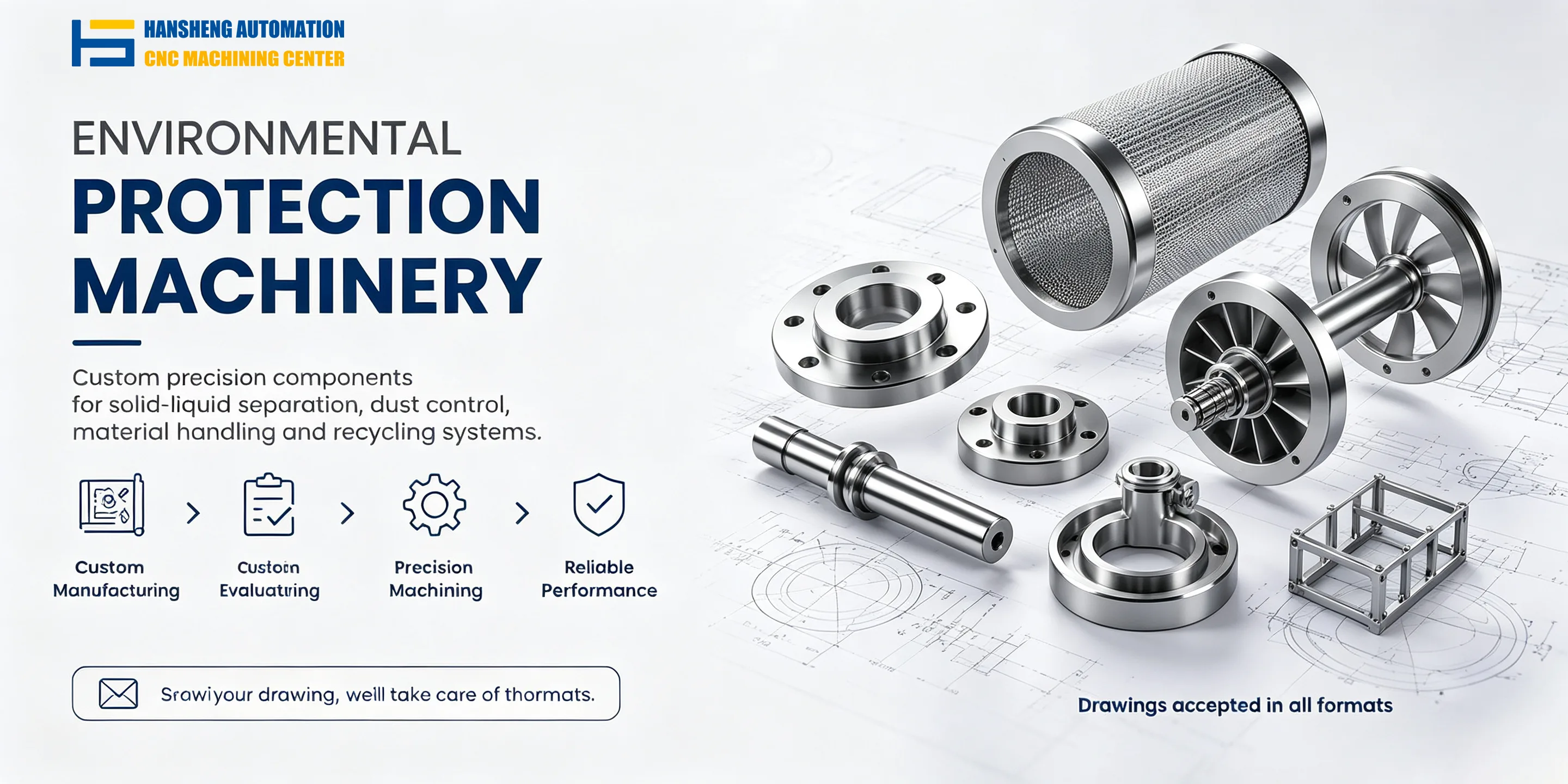
In addition to components used in asphalt processing and environmental protection equipment, Hansheng Automation provides drawing-based precision machining for non-standard industrial parts.
Our machining services also cover precision components for yacht equipment, remote-controlled racing cars, tobacco and packaging machinery, and filling equipment. We support single-piece and small-batch manufacturing according to customer drawings, dimensions, and machining requirements.