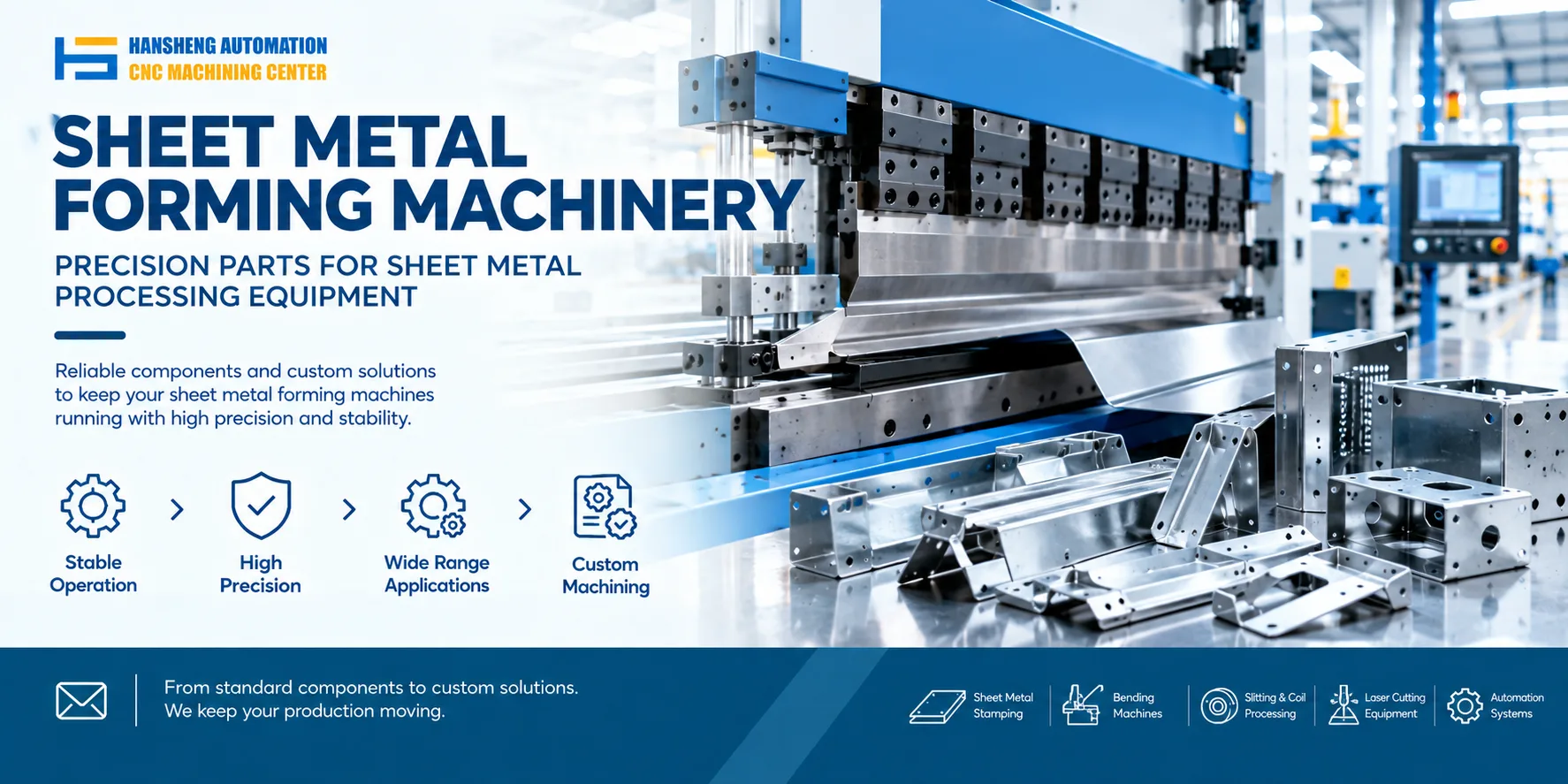
Bending errors on a CNC press brake can result from worn tooling, poor ram alignment, uneven hydraulic pressure, or inconsistent material properties. Correcting these problems requires checking the machine's mechanical condition, hydraulic system, and bending setup.
Specialty steels require additional attention to tooling geometry, material strength, rolling direction, and springback. The bending process should be selected according to the specific steel grade and workpiece requirements.
How to Correct CNC Press Brake Bending Errors
Inspect the tooling condition
Check the punch and lower die for wear, damage, or uneven contact surfaces. Worn or damaged tooling can affect the final bend angle and dimensional accuracy.
Replace tooling that no longer meets the required condition. Before restarting production, confirm that the punch and die are correctly installed and aligned.
Check ram and worktable parallelism
If the tooling is in good condition but bending errors persist, measure the parallelism between the ram and worktable using suitable measuring equipment.
If the measured parallelism falls outside the machine's permitted range, adjust the alignment according to the manufacturer's specifications. Correct alignment helps maintain consistent bending conditions across the workpiece.
Inspect the hydraulic balancing system
If the alignment is correct but errors remain, the hydraulic balancing system may not be distributing pressure evenly between the left and right cylinders.
Check the hydraulic circuit and confirm that both sides of the ram respond consistently under load. The original troubleshooting procedure involves using the machine's approved jog or setup mode, checking ram displacement with a dial indicator, and monitoring pressure changes with a pressure gauge.
These adjustments are machine-specific. Qualified maintenance personnel should follow the manufacturer's service procedure, including the required tooling removal, ram support, and hydraulic pressure isolation measures. Do not adjust the system by trial and error.
Carry out routine maintenance
Regular cleaning, lubrication, and inspection help identify developing problems before they affect bending accuracy.
Inspect the hydraulic system, mechanical components, tooling, and positioning mechanisms at the intervals specified by the manufacturer. Address abnormal wear, loose fasteners, and hydraulic leakage promptly.
How to Bend Specialty Steels
Select suitable tooling geometry
Specialty steels, particularly high-strength grades, may require larger bend radii and higher forming forces than mild steel. Tooling selection must account for material thickness, strength, bend angle, and springback.
A removable roller assembly made from LD material can be used at the lower die radius to reduce friction and wear. The upper punch radius, lower die geometry, and V-opening width should be selected according to the material and required bend profile.
The original recommendations provide the following starting ranges:
| Tooling parameter | Suggested ratio |
|---|---|
| Upper punch radius | 3 to 6 times the material thickness |
| Lower die radius | 4 to 8 times the material thickness |
| Lower die V-opening width | 6 to 12 times the material thickness |
These ratios are general references from the original guidance. They are not universal limits for all specialty steels. The actual values should be checked against the steel manufacturer's bending recommendations and the press brake's tooling and load ratings.
Consider the rolling direction
Whenever the part design allows, arrange the bend line perpendicular to the steel's rolling direction. The relationship between the bend line and rolling direction affects the material's bendability and the risk of cracking.
Before bending, remove burrs and inspect the sheet edges for cracks, notches, and other defects. Grinding may be necessary to remove edge defects, particularly on sheared or thermally cut surfaces.
Damaged edges can initiate cracks during bending. The required edge preparation depends on the steel grade, thickness, and specified bend radius.
Control bending force and springback
Required bending force generally increases with material strength. Higher-strength steels may also exhibit greater springback, so the machine settings used for mild steel should not be transferred directly to a different grade.
Verify the material specification and calculate the required bending force before selecting the tooling and machine settings. Conduct a test bend and measure the angle after unloading. Adjust the CNC springback compensation according to the actual result.
Do not compensate for an unsuitable bend radius simply by increasing the applied force. If the material cracks or the required angle cannot be achieved consistently, review the tooling geometry, material condition, bend direction, and forming method.
Use a flexible production setup
A flexible tooling arrangement makes it easier to accommodate changes in part geometry and production requirements. Removable tooling components can also simplify certain maintenance tasks.
However, flexibility does not eliminate the need for correct machine setup and operator training. Each new material or part configuration should be checked for tooling compatibility, required bending force, and dimensional accuracy before full production begins.
Custom Precision Machining for Industrial Applications
Hansheng Automation provides custom precision machining based on customer drawings. Our work includes precision components for yacht equipment and RC racing cars, along with nonstandard parts for tobacco packaging and filling machinery. We manufacture components according to the supplied drawings and the specific dimensional and structural requirements of each application.