Selecting the right robot cell depends on specific product requirements, production environment, and cost considerations. The following comparison of six-axis and seven-axis robots can help guide the decision.
Six-Axis Robots
A six-axis robot has six joints, each providing a degree of freedom for rotation, twisting, or other movements. This flexibility makes six-axis robots suitable for complex tasks that would normally require human hands.
Key advantages include a high degree of freedom, which allows operation along almost any trajectory or angle; reduced labor costs and material waste; continuous operation with improved throughput; and modular tooling that can be quickly changed for different workpiece types. High-precision sensors on back gauges support accurate positioning, while features such as double-layer sheet recognition and sheet separation contribute to safer production. Consistent motion also helps eliminate human variability and improve product quality.
However, six-axis robots have limitations in bending applications. When workpiece dimensions approach the edge of the motion envelope, trajectory optimization becomes difficult and movement may appear stiff. Robot cell layout and working size can also be restricted.
Seven-Axis Robots
A seven-axis robot typically refers to a six-axis robot with an additional walking axis, or seventh axis. This added axis expands the robot's working radius and extends its usable range. A seventh axis is designed for long operating hours, requires minimal maintenance, and supports continuous automated production.
Seven-axis configurations offer a wider bending size range, better trajectory optimization, higher speed, and smoother motion. They can also overcome bottlenecks in large workpiece handling and increase the bending radius. In addition, seven-axis systems support automatic edge seeking and precise dimension control, often without pit engineering, and can perform negative-angle back bending.
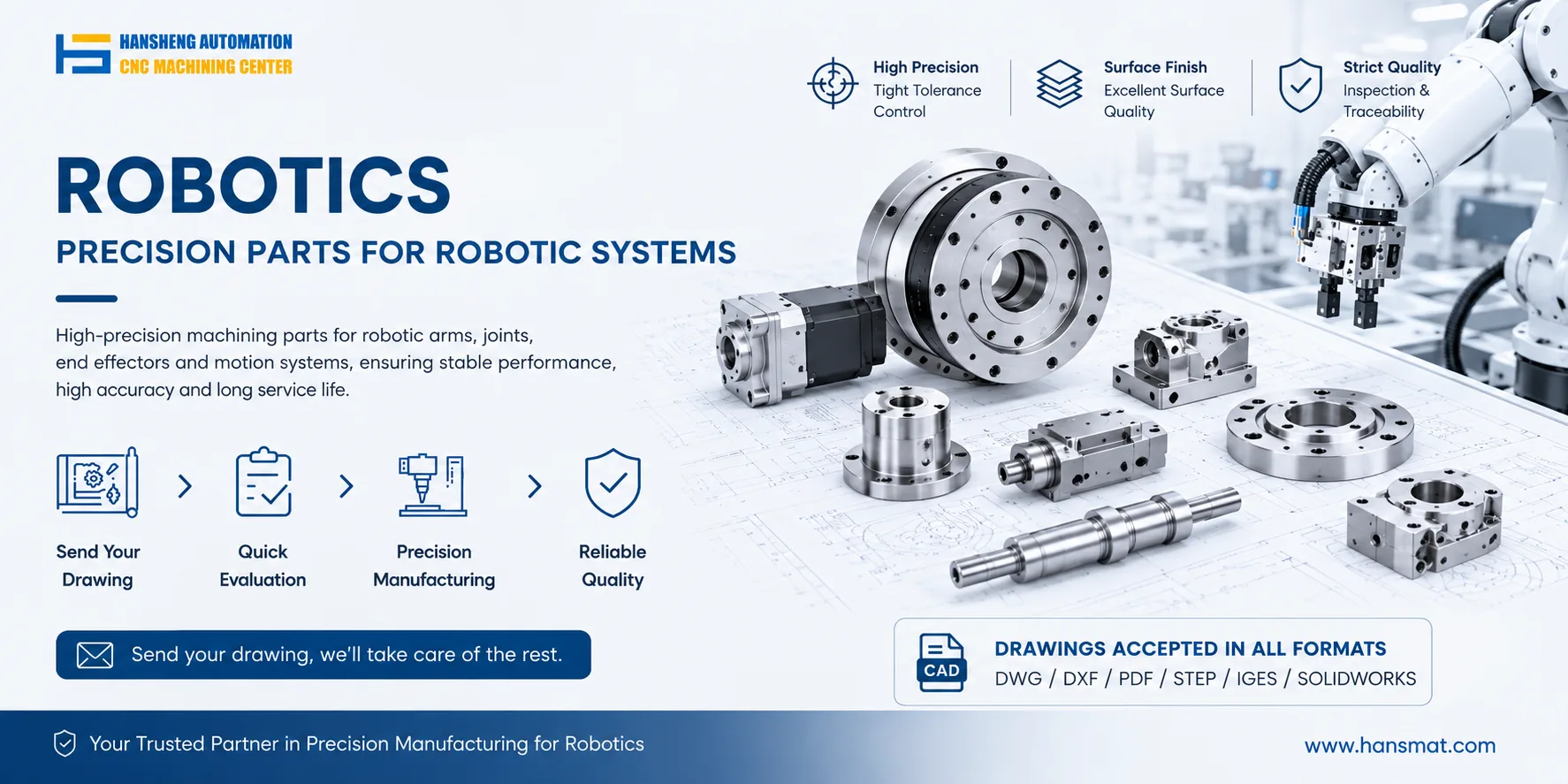
For projects that require a custom seventh-axis guide rail, mounting base, or robot transfer platform, Hansheng Automation provides precision machining based on customer drawings.
Seven-axis robots are more suitable when product dimensions vary widely and the maximum or minimum sizes approach or exceed the trajectory range of a six-axis robot. They are also necessary when two robot cells need to work together on large workpieces.
Selection Guidelines
If product dimensions are relatively consistent and fall within the working range of a six-axis robot, the six-axis option is generally more economical. If product sizes vary significantly or approach the edge of the six-axis motion envelope, a seven-axis robot is the more appropriate choice to maintain production efficiency and product quality.
The final decision should be based on actual workpiece dimensions, required flexibility, available space, and long-term cost. A clear understanding of these factors helps determine whether a six-axis or seven-axis robot cell is the better fit.