The mixing performance of a ribbon mixer depends on how material moves inside the trough and how thoroughly the ribbons fold and exchange it. Two adjustments matter most: blade geometry and shaft speed.
Adjusting Blade Geometry
Blade Shape and Material Flow
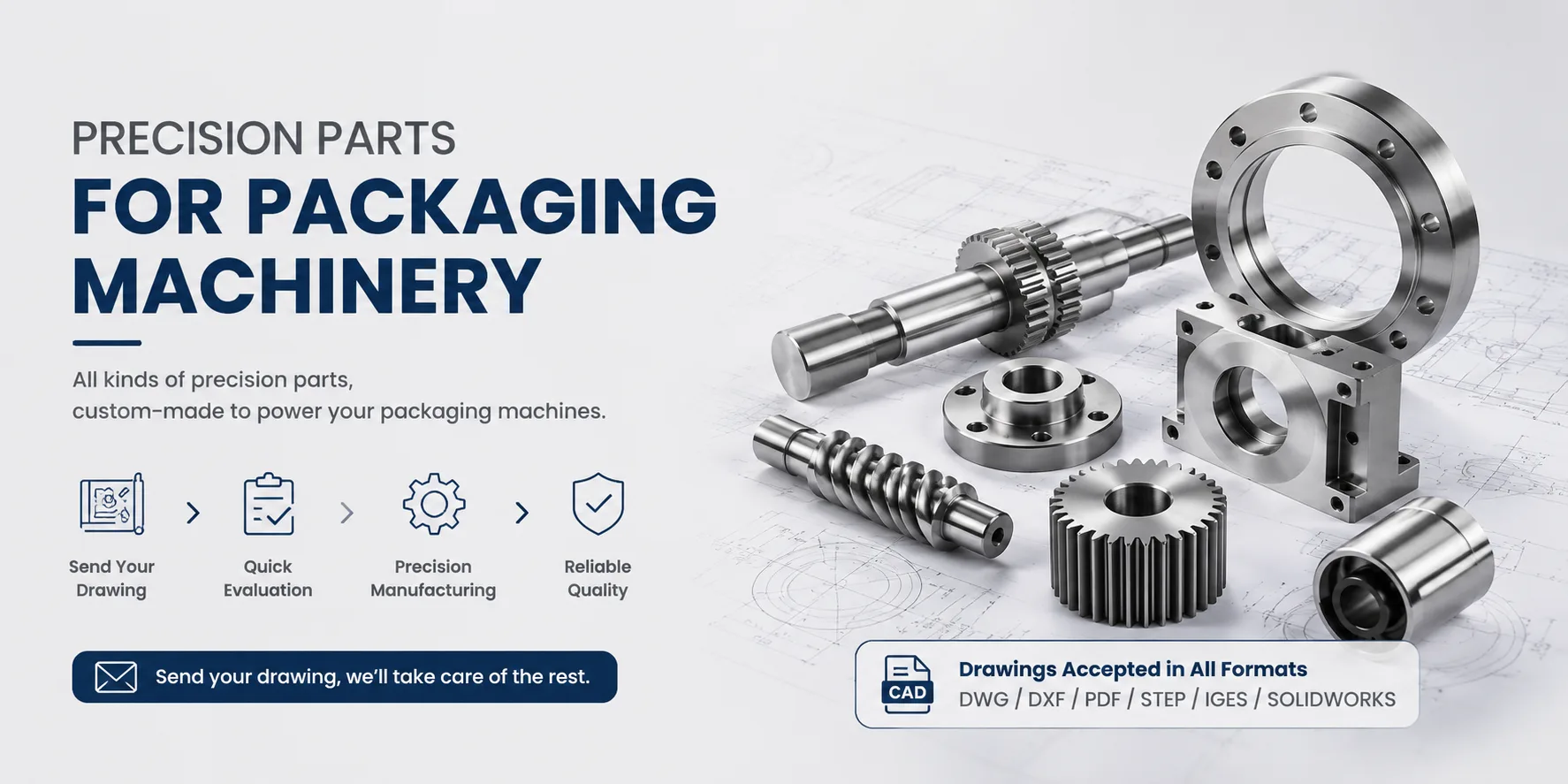
The shape of the mixing blades directly affects flow pattern and uniformity. Changing blade width, angle, or curvature alters the path material takes through the mixer. A wider ribbon, a different pitch, or a steeper angle can increase axial movement or radial turnover. Inner and outer ribbons usually work together: one moves material in one direction, the other moves it back. The clearance between ribbon and trough also matters. Too much clearance leaves stagnant material; too little increases friction and wear. Hansheng Automation can machine ribbon blades, shafts, and wear parts to customer drawings, with material and surface treatment selected for the application.
What to Check During Adjustment
When adjusting geometry, check for dead zones, material buildup, and discharge residue. For cohesive or heat-sensitive materials, a gentler ribbon profile may reduce smearing. For free-flowing powders, a more aggressive pitch can shorten batch time. These changes should be tested with the actual material, not only by calculation.
Adjusting Rotational Speed
Matching Speed to Material and Batch Size
Speed is one of the main factors affecting mixing result. At the right speed, material is lifted, folded, and exchanged throughout the trough, which improves uniformity. If speed is too high, material can wear faster, fly up, or separate by particle size. If speed is too low, the ribbons may only push material without fully mixing it. The right setting depends on bulk density, particle size, moisture, and the required uniformity.
Speed Control Methods
A variable frequency drive allows the operator to change ribbon speed without changing pulleys or gears. This is useful when the mixer handles different recipes or materials. We can machine drive components such as shafts, couplings, and mounting parts according to customer drawings.
Practical Notes
Adjust blade geometry first if the mixer shows dead zones or poor axial movement. Then tune speed to match the material and batch size. After any change, run a uniformity test and inspect wear on ribbons, shaft seals, and trough liners.
Our precision custom machining capability is not limited to ribbon mixers. Hansheng Automation also produces parts for food processing equipment, medical devices, printing machinery, and filling machinery, along with yacht fittings and RC car components. From single prototypes to small production runs, we machine to drawing and deliver parts that fit the customer's assembly.