Wheel mixers are widely used in industrial material processing. They fall into several types based on mixing principle, operating mode, and installation form.
By Mixing Principle
Forced-Action Wheel Mixers
Forced-action mixers use blades or ploughshares mounted inside the drum to agitate materials forcefully. They deliver high mixing intensity in short cycle times, making them suitable for sticky materials or materials with large density differences, such as foundry sand, fertilizer, and building materials. These machines place high demands on blade wear resistance and dynamic balance. Hansheng Automation can machine custom non-standard parts such as blades and ploughshares from customer drawings.
Gravity (Drum) Mixers
Gravity mixers rely on the free fall of materials under gravity as the drum rotates. They have a simple structure and low energy consumption, but perform poorly with materials that have low flowability. They are commonly used for preliminary mixing of dry bulk materials such as ore and grain.
Pneumatic Mixers
Pneumatic mixers use air flow to suspend and mix materials. With no mechanical moving parts, they are easy to clean and provide gentle mixing. They suit light, fragile, or shear-sensitive powders such as milk powder and chemical powders.
By Operating Mode
Batch Mixers
Batch mixers feed, mix, and discharge fixed volumes per batch. Each batch achieves high uniformity, and formula changes are flexible, making this the mainstream type. Concrete mixer trucks fall into this category, with drum capacities commonly between 8 and 12 cubic meters.
Continuous Mixers
Continuous mixers feed and discharge material without interruption, offering high production efficiency for large-scale continuous production with a single formula, such as asphalt mixing plants. Continuous equipment requires tight tolerances on inlet, outlet, and mixing elements. We can machine the relevant parts according to customer drawings.
By Installation Form
Stationary Mixers
Stationary mixers are fixed in production lines. They can be built with larger capacity and power for central mixing stations and similar fixed locations.
Mobile Mixers
Mobile mixers are mounted on trucks or trailers, providing flexibility for on-site work. The most common example is the concrete mixer truck.
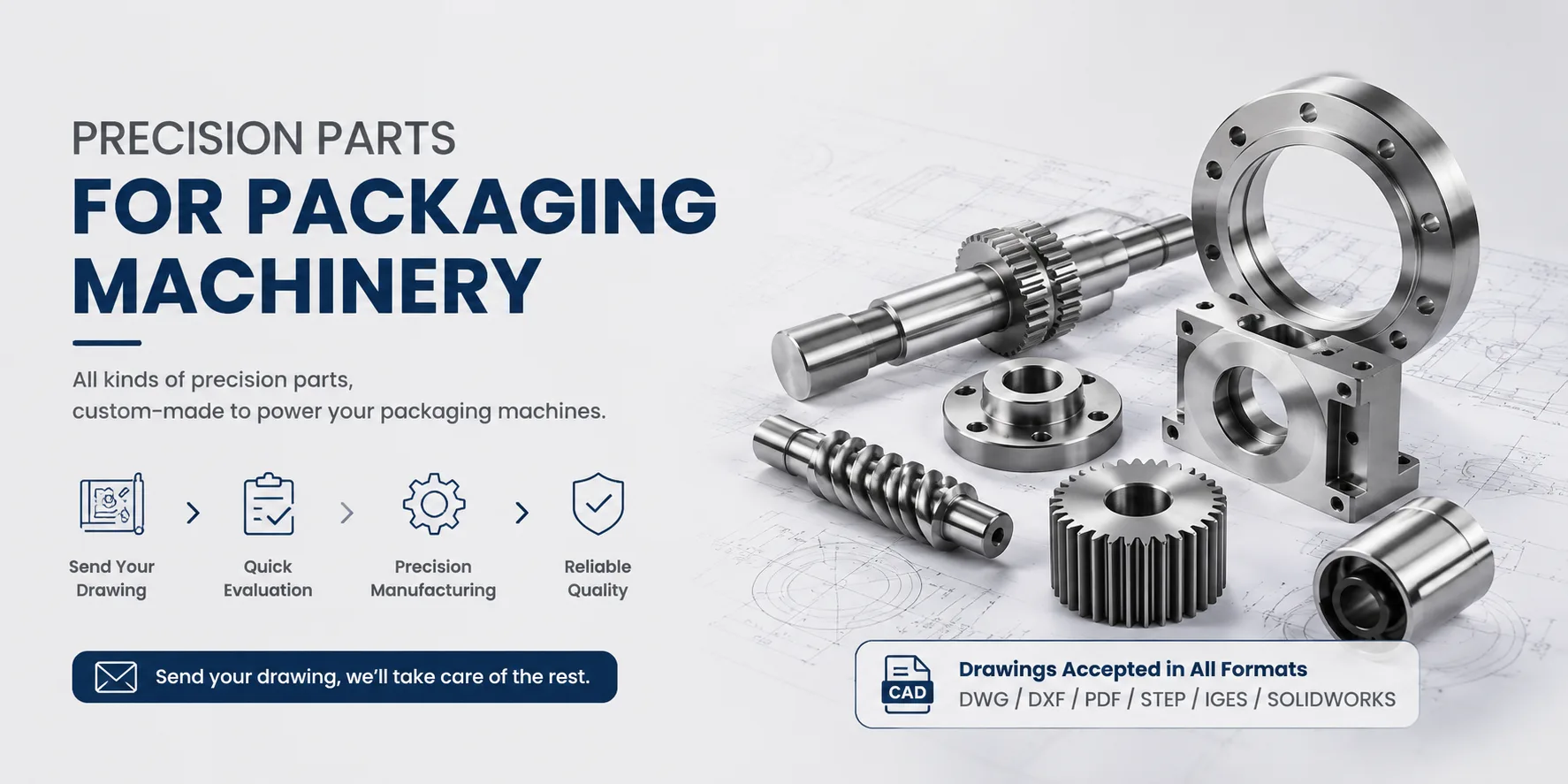
Our precision custom machining capability is not limited to mixing equipment. Hansheng Automation's build-to-print service also covers precision parts for yachts and RC cars, as well as non-standard parts for tobacco packaging machinery and filling machinery. From functional components for filling equipment to precision structural parts for yacht accessories, we can machine and deliver to drawing.